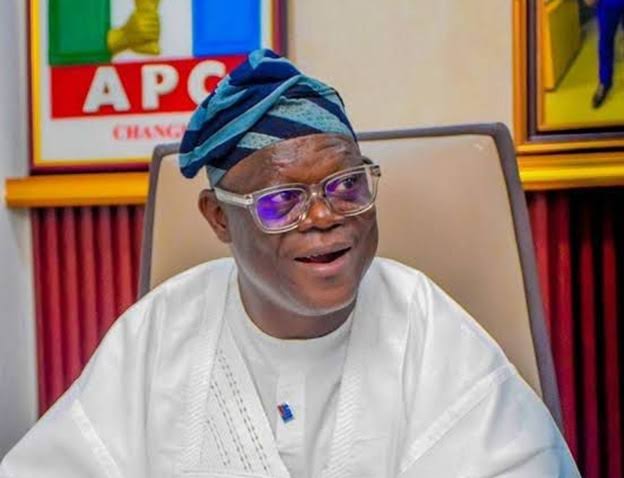
National Secretary of APC, Sen. Ajibola Basiru
National Secretary of the All Progressives Congress (APC), Senator Ajibola Basiru, has suggested that the party leadership ultimately decides who emerges as its candidates for elective offices, regardless of the outcome of primary elections.
Basiru made the remarks while addressing party members at a political gathering, according to a video that has since gone viral on social media.
In the footage, the APC chieftain appeared to downplay the significance of party primaries, insisting that the leadership of the party has the final authority over the selection and endorsement of candidates for various elective positions, including the presidency and seats in the National Assembly.
Speaking in Yoruba language, Basiru said the party leadership would determine those who would fly the APC’s flag in future elections.
“And as for those who will get the senatorial seats and even the presidency, we are the ones who will nominate and endorse them,” he said.
Referring to complaints about the outcome of previous primaries, he added that the leadership still reserves the power to endorse candidates irrespective of who is declared the winner.
“If you say a candidate didn’t win, we are still the ones who will endorse and sign them. They are just playing. We don’t conduct primaries in our party; we choose whoever we want to choose. Even when we conduct primaries, it’s eye service because we all know you didn’t enter through primaries,” Basiru stated in the video.
The comments have triggered reactions online, with many Nigerians questioning what the remarks could mean for internal democracy within political parties and the credibility of the candidate selection process.
Under Nigeria’s electoral framework, political parties are mandated to conduct primary elections to select candidates for public office, while the Independent National Electoral Commission (INEC) monitors the process.
As of the time of filing this report, the APC had not issued an official statement clarifying Basiru’s remarks.