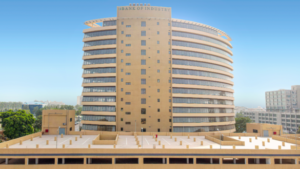
CBN Headquarters Abuja
A member of the Central Bank of Nigeria’s Monetary Policy Committee, Professor Murtala Sabo Sagagi, has urged the apex bank to take additional measures to reduce lending rates for households and businesses, saying the successful completion of the banking sector recapitalisation exercise should translate into more affordable credit.
In a statement to journalists following the 305th MPC meeting, Sagagi said although the recapitalisation programme had strengthened the resilience of the banking sector, structural challenges continued to limit the transmission of monetary policy to lending rates.
He said the CBN should strengthen oversight to ensure improvements in the banking sector are reflected in better lending conditions for businesses and consumers.
“The CBN should closely monitor the extent to which banking sector improvements and the current policy stance are being transmitted into affordable lending rates for households and businesses,” he said.
Sagagi noted that structural impediments, including high risk premiums and limited credit bureau penetration, continued to weaken credit transmission and would require targeted macroprudential interventions.
He also called on the apex bank to proactively identify and address emerging risks following the recapitalisation exercise, including changes in banks’ risk appetite, credit concentration and governance issues in newly merged or enlarged institutions, to safeguard financial system stability.
According to him, preserving financial stability remains critical as banks adjust to their expanded capital base.
Beyond the banking sector, Sagagi stressed the need for stronger coordination between monetary and fiscal authorities to sustain the recent moderation in inflation.
He warned that increased government spending associated with election cycles could trigger demand-driven inflation and reverse recent gains in price stability, recommending a responsible and counter-cyclical fiscal spending framework.
The MPC member also said addressing the root causes of food inflation would require coordinated policy actions beyond monetary tightening.
He identified insecurity in farming communities, poor rural infrastructure and high transportation costs as key drivers of food inflation, adding that expanding access to fertilisers, improved seeds and pesticides, alongside investments in rural roads and security, would help reduce structural inflationary pressures.
Sagagi further advised the CBN to maintain prudent exchange rate management by leveraging Nigeria’s stronger external reserves to cushion short-term volatility arising from global energy market disruptions while sustaining policies that encourage export earnings and diaspora remittances.
His recommendations come after the CBN concluded its banking sector recapitalisation programme aimed at strengthening banks’ capacity to support economic growth.
Recall that at its 305th meeting, the Monetary Policy Committee retained the Monetary Policy Rate at 26.5 per cent, while leaving the Cash Reserve Ratio at 45 per cent for commercial banks and 16 per cent for merchant banks.
The committee also retained the Standing Facilities Corridor at +50/-450 basis points around the MPR and maintained the CRR on non-TSA public sector deposits at 75 per cent.