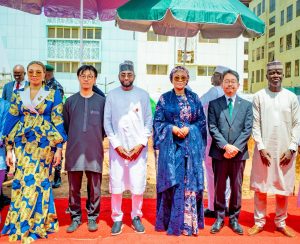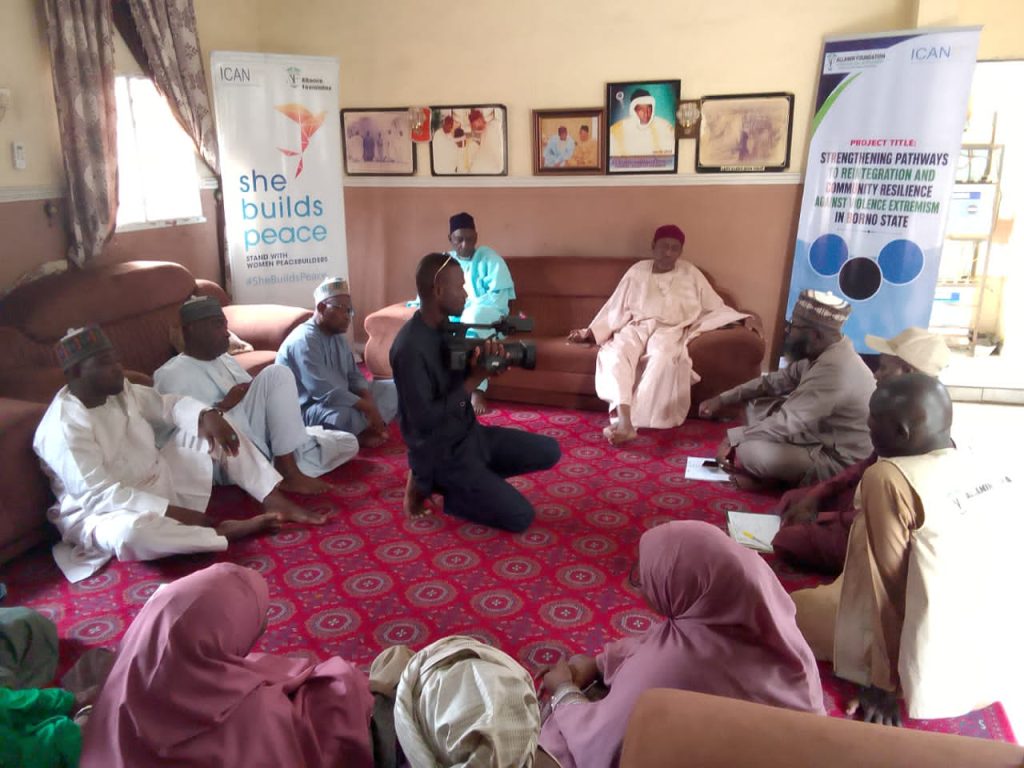
Photo: (seated on cushion, in blue atire) Amb. Jafa'ar Imam, a community leader. On his left is District Head of Bolori, Abba Masta Abba Yusuf along with advocacy visit team members. Photo: Allamin Foundation.
Allamin Foundation for Peace and Development has intensified efforts to promote peace, reconciliation and community resilience in Borno State through a series of advocacy and community engagement visits across Maiduguri and Jere localities.
The outreach, held over the weekend, forms part of the foundation’s ongoing initiative to strengthen reintegration and build resilience against violent extremism in Nigeria’s North-East.
Speaking during the exercise, the Project Manager of the foundation, Barrister Samuel Orihii, said the advocacy visits were designed to deepen collaboration with local communities while laying the groundwork for the implementation of peacebuilding programmes.
According to him, the team visited Pompomari Old Airport, Old Maiduguri, Bolori, Dala Alamdiri and Moromti/Jere communities.
He explained that the programme, supported by the International Civil Society Action Network (ICAN), was aimed at introducing members of the Community Advocacy for Transitional Justice (CATJ) and the Community Women Mediators’ Forum (COMWOF) to traditional rulers and other community stakeholders.
Orihii said the engagements also provided an opportunity to outline plans for identifying widows and orphans who would benefit from the foundation’s peacebuilding and reintegration interventions.
During the visits, the foundation’s Monitoring and Evaluation Manager, Mallam Maigari Hamza, disclosed that the organisation had already provided 20 children with educational and economic reintegration support to help them rebuild their lives after being affected by the conflict.
He noted that community leaders in each of the visited wards were actively involved in identifying widows and orphans impacted by the Boko Haram insurgency for participation in the programme and eventual distribution of livelihood and economic empowerment support.
Representatives of both CATJ and COMWOF explained that shortlisted beneficiaries would undergo an assessment process, with priority given to widows who bear sole responsibility for supporting their families.
They also stressed that transitional justice remains critical to fostering reconciliation, sustaining peace and promoting long-term development in communities recovering from years of insurgency.
The representatives further expressed concern over the growing migration of children to Algeria and other African countries, attributing the trend to the lingering effects of the conflict.
They urged parents, community leaders and young people to support ongoing peacebuilding and reintegration efforts to ensure lasting stability across the region.
Traditional rulers in the various communities commended the Allamin Foundation for its sustained commitment to assisting conflict-affected populations.
They also pledged to ensure fairness and transparency in the selection of beneficiaries for the economic empowerment programme.