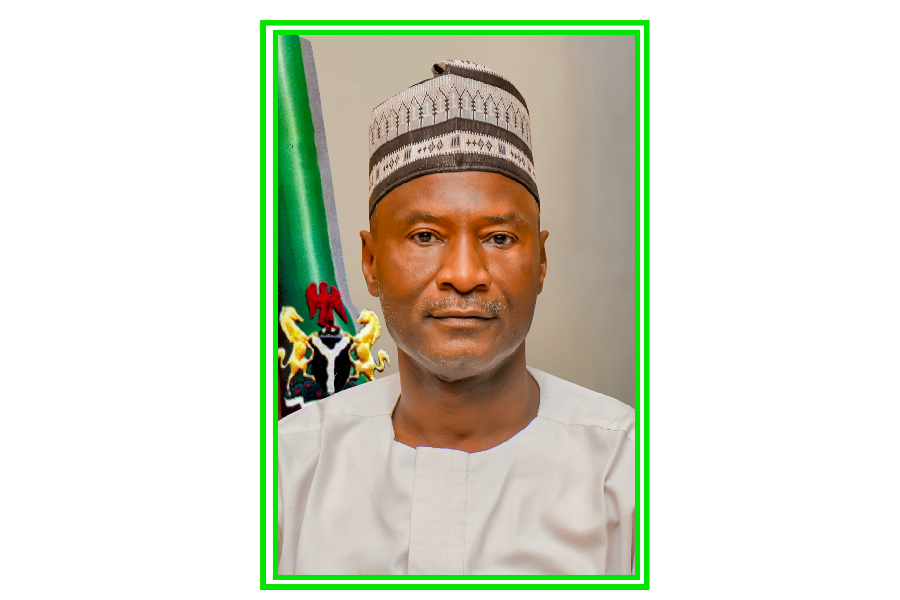
Chairman, Borno State Internal Revenue Service, Prof. Ibrahim Bello
By SADIQ ABUBAKAR, Maiduguri –
In a remarkable feat, the Borno State Internal Revenue Service (BSIRS) has announced that it has exceeded its revenue target for the year 2024 by 46%.
The Executive Chairman of BSIRS, Professor Ibrahim Alhaji Bello, who disclosed this on Thursday in Maiduguri, said the revenue service was able to generate a total of ₦28.3 billion, surpassing the expected target of ₦19.3 billion.
This achievement is all the more impressive given the socio-economic challenges faced by Borno State, which has been affected by the Boko Haram insurgency. Despite these challenges, the state’s revenue service has been able to record significant growth, thanks to the improved digitalization of the revenue collection system and persistent monitoring of taxpayer compliance and remittance.
Professor Bello expressed his deep appreciation and gratitude to the people of Maiduguri and its environs, as well as other Local Government Areas (LGAs) for their overwhelming support, which has greatly contributed to the successes of the state’s revenue generation efforts in 2024.
The year 2024 marked the first full year under Professor Bello’s leadership, as he assumed office and full control of the affairs of the revenue service in July 2023. Under his leadership, the BSIRS has implemented various reforms aimed at improving revenue collection and reducing tax evasion.
He said the achievement of the BSIRS is a testament to the state’s resilience and determination to rebuild and recover from the devastating effects of the insurgency. The increased revenue generation will undoubtedly have a positive impact on the state’s economy and enable the government to provide better services and infrastructure to its citizens.
According to him, the BSIRS has also been recognized as one of the top-performing revenue services in Nigeria, despite the state’s socio-economic challenges. This achievement is a reflection of the state’s commitment to transparency, accountability, and good governance.
The Executive Chairman further highlighted several key strategies that contributed to this success, including public sensitization, the digitization of tax collection, and the harmonization of taxes, which seamless process for the tax payers and eliminated multiple tax collectors approaching the same businesses.
Prof. Ibrahim explained also that the revenue service introduced a gradual payment system, allowing tax payers to pay taxes at their convenience in the year 2024, Borno State Internal Revenue Service generating N28.3 billion higher than the 2024 targeted N19.3 billion .
“The introduction of a robust invoicing mechanism also ensured that taxes from previous years were carried over into the current year, creating accountability.
“Despite these successes, we acknowledged some challenges such as resistance from local government areas to the harmonization program, the impact of the flood disaster, and the decrease in collections from Ministries, Departments, and Agencies (MDAs) due to the floods.
“However, the revenue collection team was able to adapt by shifting from enforcement to persuasion, fostering a cooperative approach with the public.
“Looking ahead, we set an ambitious target of ₦35 billion for the coming year, even though the state government’s official budget expectation for 2025 is ₦25 billion.,” Ibrahim said.
He emphasized that the tax system will continue to evolve, and there will be no added burden on taxpayers, but rather a commitment to ensuring that the collected revenue is channeled into projects that directly benefit the people of Borno.
The Executive Chairman thanked the people of Borno for their understanding and support and promised to continue fostering a collaborative and supportive tax environment, ensuring that the state’s development is fully supported through public contributions.