Budget Office of the Federation has explained that it did not issue financial clearance to the Presidential Foreign Investment Promotion Council (PFIPC), saying the council failed to meet the regulatory conditions required for recruitment and expenditure.
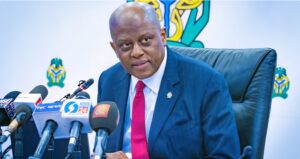
In a statement signed by its Director-General, Tanimu Yakubu, the Budget Office said the absence of financial clearance meant the council’s personnel allocation remained only a provision in the 2026 Appropriation Act and could not be used for recruitment, payroll enrolment or salary payments.
The clarification comes amid ongoing controversy over the PFIPC, which operated like a government agency despite questions surrounding its legal status.
The council had an allocation of N1.303 billion in the 2026 budget, comprising N802.98 million for personnel costs, N200 million for overheads and N300 million for capital expenditure.
The Budget Office said the PFIPC’s inclusion in the federal budget followed official administrative processes initiated through the Presidential Economic Advisory Council established in 2019.
According to the office, the Office of the Accountant-General of the Federation assigned the council an administrative budget code, while the Office of the Head of the Civil Service of the Federation issued an authorised establishment and recruitment waiver.
It stressed that it neither created the administrative budget code nor approved recruitment for the council but relied on documents issued by relevant government agencies.
The office also disclosed that although the PFIPC requested N3.85 billion for personnel costs, it rejected the proposal and independently calculated a lower figure of N802.98 million using the approved establishment, recruitment waiver, public service salary structure and standard personnel-cost methodology.
Yakubu said the amount eventually included in the Executive Budget and approved by the National Assembly was not a negotiated compromise but an independent fiscal assessment by the Budget Office.
He explained that financial clearance serves as formal confirmation that all fiscal and regulatory requirements for recruitment have been met.
According to him, the Budget Office withheld the clearance because the required conditions were incomplete.
He noted that the 2026 Appropriation Bill only became law after receiving presidential assent on March 31, 2026, making it impossible to issue final financial clearance beforehand.
Even after the budget became law, Yakubu said another key requirement remained outstanding because the National Salaries, Incomes and Wages Commission had yet to certify that the proposed staffing structure and remuneration complied with the approved public service compensation framework.
“As a result, there was no financial clearance, no lawful recruitment, no payroll enrolment and no salary payment,” the statement said.
The Budget Office added that although provisions for overhead and capital expenditure appeared in the budget, they did not result in cash releases or procurement because the approval process ended before any expenditure could commence.
Recall that the Central Bank of Nigeria (CBN) confirmed that it opened two domiciliary accounts for the PFIPC on the directive of the Office of the Accountant-General of the Federation.
The apex bank, however, said the dollar and pound sterling accounts were never funded or operated.