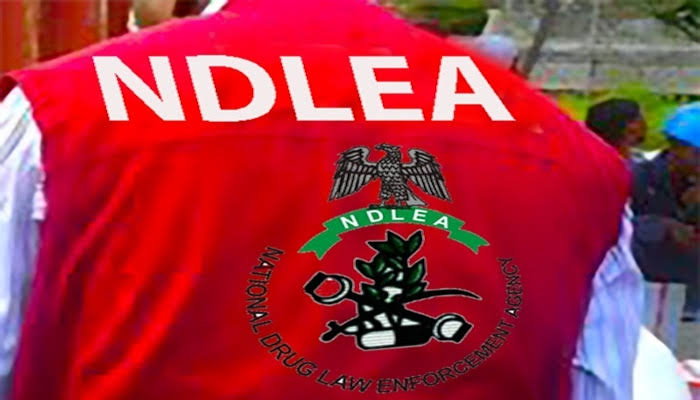
Every time the National Drug Law Enforcement Agency announces another spectacular seizure, there is reason to applaud. But there is also a question we can no longer avoid: Nigeria keeps seizing tonnes of drugs, arresting thousands of suspects and destroying cannabis farms. Why then do drugs remain so frighteningly easy to find on the streets?
That is the uncomfortable paradox at the heart of Nigeria’s war on hard drugs.
The NDLEA is certainly not sitting idle. Between 2021 and 2024, the agency said it seized almost 10 million kilogrammes of illicit drugs, arrested 57,792 suspects and secured 10,572 convictions. It also said more than 22,000 people were counselled or referred for rehabilitation.
And the campaign has intensified. Nigeria reported more than 19,944 drug-related arrests and approximately 4.9 million kilogrammes of illicit substances seized in 2025 alone.
These are not the statistics of an agency that has surrendered. Yet neither are they proof that Nigeria is winning the war.
That is because a seizure is a victory against a shipment, not necessarily against the market that produced it.
Imagine a criminal network losing a consignment worth millions. Painful, certainly. But if the potential profit from the next shipment remains enormous, another consignment will be attempted. Arrest a street dealer and another can occupy his place. Close one drug joint and another can emerge a few streets away.
This is why the NDLEA sometimes resembles a man running on a treadmill: sweating, moving furiously and yet going nowhere.
The problem is not necessarily that the agency is doing too little. It is that Nigeria is asking law enforcement to solve a problem that law enforcement alone cannot solve.
The economics are brutally simple. Poverty, unemployment and underemployment create a large pool of young people searching for income, status and hope. For a small minority, the illicit economy can offer rewards that the legitimate economy does not.
At the other end of the transaction are people who buy drugs for very different reasons: curiosity, peer pressure, recreation, trauma, despair, dependence or escape.
This is where the war must become smarter.
Even the chairman of the NDLEA, General Buba Marwa (rtd) acknowledged in a June 2026 speech that “old strategies cannot solve new problems”, a recognition of how rapidly Nigeria’s drug market is changing.
A drug trafficker and a drug-dependent person are not the same problem.
One is running a criminal enterprise. The other may be battling an illness, trauma or dependency. Treating both primarily as criminals guarantees that part of the problem will keep returning.
Nigeria’s own drug-control framework recognises this. Its national master plan was designed around supply reduction, demand reduction, access to controlled medicines, and governance and coordination. It also envisaged integrating substance-use treatment into primary healthcare and expanding treatment and rehabilitation services.
The question is whether implementation has matched the ambition.
The numbers suggest an enormous challenge. The United Nations Office on Drugs and Crime has documented the health consequences associated with drug use in Nigeria, including significant vulnerabilities among people who inject drugs. Its current strategic vision for Nigeria calls for greater coverage and quality of prevention, treatment and care services, as well as stronger youth resilience and better data.
But treatment cannot remain an afterthought.
We need to stop measuring the war principally by the number of people arrested and start asking how many people were prevented from becoming addicted, how many received treatment, how many recovered and how many stayed recovered.
There is another elephant in the room: money.
The drug business survives because it is profitable. Somewhere behind the courier carrying a parcel, the dealer standing on a street corner and the criminal syndicate moving consignments across borders is a financial network.
Who finances the shipment?
Where does the money go?
Who launders it?
Which businesses, properties, accounts or intermediaries help conceal it?
This is where Nigeria must become much more sophisticated. A serious drug war cannot focus only on the drugs. It must follow the money.
And the fight cannot belong to the NDLEA alone.
Customs, immigration, the police, financial-intelligence authorities, prosecutors, the courts, correctional institutions and the health sector all have roles to play. So do state governments, schools, families, community organisations and civil society.
A porous border is not an NDLEA problem. A weak rehabilitation system is not an NDLEA problem. Youth unemployment is not an NDLEA problem. Financial crime is not an NDLEA problem.
They are Nigeria’s problems.
Nor should we ignore corruption. Drug trafficking generates the kind of money capable of corrupting individuals and compromising institutions. The appropriate response is not to make unsubstantiated accusations against an entire agency, but to ask whether Nigeria is sufficiently protecting its anti-drug machinery from compromise, and whether those who facilitate the trade financially face consequences commensurate with the damage they cause.
The encouraging news is that the Nigerian government appears to understand that the old approach cannot be the whole answer. At the National Drug Use Summit in July 2026, the government reaffirmed a commitment to a balanced, evidence-based approach combining prevention, treatment, rehabilitation and enforcement.
The new national drug-control master plan now being developed for 2026–2030 therefore represents an important opportunity. Nigeria should use it to move decisively from activity-based enforcement to outcome-based drug control.
That means pursuing kingpins rather than merely filling arrest statistics, following the money rather than merely following couriers, and expanding affordable treatment rather than leaving families to improvise. It also means taking prevention into schools and communities, building reliable national data, and creating economic opportunities that make the illicit economy less attractive to vulnerable young people.
None of this means becoming soft on traffickers. It means becoming smarter about what we are fighting.
Nigeria’s drug problem has already acquired dangerous dimensions. If the country continues to treat supply and demand as separate problems, the consequences could become much worse: more addiction, more organised crime, more corruption, more families destroyed and more young Nigerians pulled into an underground economy whose reach extends far beyond drugs.
Synthetic drugs and increasingly sophisticated trafficking networks could make tomorrow’s challenge even harder than today’s.
The NDLEA has demonstrated that the Nigerian state can disrupt trafficking networks, seize enormous quantities of drugs and put major offenders behind bars. International partners have also recognised the significant strengthening of Nigeria’s enforcement response. But tactical victories are not the same as strategic victory.
Nigeria cannot arrest its way out of addiction. It cannot seize its way out of poverty. It cannot raid its way out of hopelessness. And it cannot destroy the drug market without reducing the demand that keeps bringing suppliers back.
The country does not need to abandon the war on drugs. It needs to redefine how it fights it. The next measure of success should not simply be how much narcotics Nigeria seized or how many suspects it arrested.
It should be how many young Nigerians never became addicts; how many addicts recovered; how many criminal networks lost their money and influence; how many communities became safer; and whether, eventually, the drug dealer discovers that his market has disappeared.
Until then, the NDLEA may continue running faster and faster, but Nigeria may remain trapped in the same place. And that is the real and present danger facing the country’s war on hard drugs.