Some of the artefacts
The National Museum in Jos has highlighted Plateau State’s place in Nigeria’s cultural heritage with the launch of a new exhibition titled *“Plateau in the Classical Works of Nigerian Art.”*
Unveiled on Tuesday, the exhibition explores how Plateau has been represented in classical Nigerian artworks housed in museums around the world, while reaffirming the state’s significance in the country’s artistic history.
Speaking at the opening ceremony, the museum’s Director and Curator, Mr. Linus Kasai Kingi, said the exhibition was created to deepen public appreciation of the historical and cultural contributions of the Plateau peoples. He added that it also reinforces the state’s standing as an important centre for heritage and tourism.

According to Kingi, the exhibition features a number of remarkable artefacts, including the famous terracotta sculptures of the ancient Nok culture, widely regarded as iconic expressions of Nigeria’s early artistic traditions.
“This exhibition highlights the many ways Plateau appears in classical works of art displayed in museums across the world, helping to showcase Nigeria’s cultural heritage with pride,” he said.
In his keynote address, educator and researcher Mr. Santos Ayuba described Plateau State as far more ol than a geographic space, portraying it instead as a land with a deep and enduring cultural identity.
Ayuba guided participants through the history and artistry of the Nok civilisation, which extended across parts of Plateau, Southern Kaduna, Nasarawa and Niger states. He explained that Nok terracotta sculptures—believed to be more than 2,000 years old—represent some of the earliest known sculptural traditions in sub-Saharan Africa and helped shape later Nigerian artistic cultures, including those of Ife, Benin and Igbo societies.
“Art is central to culture,” he said. “When a culture loses its art, it risks losing its story, making it harder for future generations to connect with their heritage.”
He also underscored the importance of museums in preserving cultural knowledge. Since its establishment in 1952, he noted, the National Museum in Jos has served not only as a storehouse of artefacts but also as a guardian of both tangible and intangible heritage.

“The museum protects knowledge and traditions for future generations. Our cultural wealth is even more valuable than material resources like oil because culture is the true gold mine,” he added.
Representing the Chairman of the occasion and Honourable Commissioner for Lands, Survey and Town Planning, Barrister Peter Nyam Gai, Mr. Peter Wuyep welcomed guests and reaffirmed the ministry’s support for initiatives that preserve Plateau’s cultural heritage.
He highlighted the complementary roles of traditional institutions and government, describing traditional rulers as custodians of the land and the government as its administrator. According to him, collaboration between both sides is essential for the success of cultural and heritage initiatives.
Also speaking, the Director-General of the National Commission for Museums and Monuments, Mr. Olugbile Holloway, commended the organisers for drawing attention to Plateau within the broader narrative of classical Nigerian art.
Represented by the Director of the Institute of Archaeology and Museum Studies, Ms. Anne Adamu, Holloway said the exhibition would give visitors a deeper understanding of Nigeria’s artistic heritage and Plateau’s contribution to it.
She also acknowledged the role of private sector support in making the project possible, particularly praising Mr. Jethro Mark Da’ar, a Plateau indigene whose contributions were instrumental to the exhibition. She encouraged members of the community to continue promoting Plateau culture and advocating for greater representation of its heritage in museums.
In his goodwill message, Da’ar, the Chief Executive Officer of C-Brilliance Al-Tech Ltd, reflected on his journey from a young innovator in Jos to building several companies. He urged young people to recognise their potential and play an active role in the development of Plateau State.
Traditional leaders also expressed their support for the initiative. The Emir of Wase, HRH Dr. Mohammadu Sambo Haruna, praised the organisers for using art as a tool to preserve history, inspire creativity and strengthen unity. He stressed that Plateau’s greatest wealth lies in its cultural heritage.
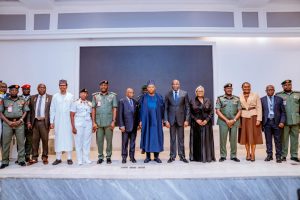
The ceremony concluded with the unveiling of the exhibition brochure and the official opening of *“Plateau in the Classical Works of Nigerian Art.”*
Guests were then invited to tour the exhibition, which features a range of classical Plateau artworks, including Nok terracotta sculptures, ceremonial objects and other artefacts that trace the history, creativity and cultural contributions of the Plateau peoples. Visitors engaged closely with the displays, gaining insight into the technical skill, artistic sophistication and historical importance of the works on show.