Kaduna State Governor, Uba Sani
Kaduna State Governor Uba Sani, has reaffirmed his administration’s commitment to deepening fiscal reforms, strengthening revenue generation and ensuring that every public fund entrusted to government delivers measurable benefits to the people.
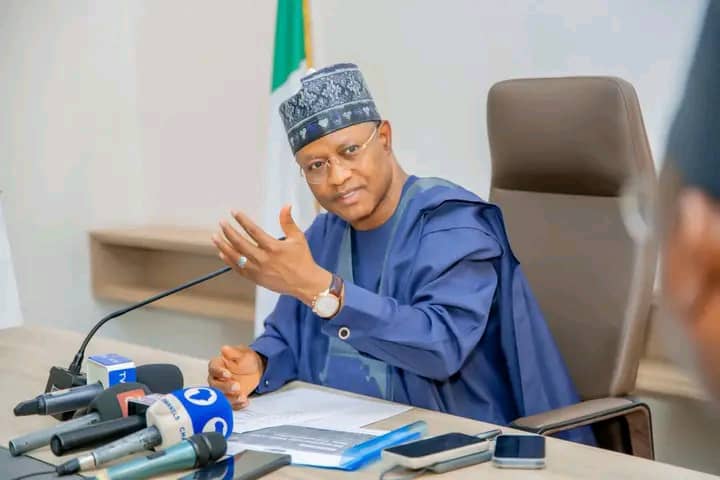
The governor made the pledge on Wednesday while receiving members of the Revenue Mobilisation Allocation and Fiscal Commission (RMAFC), led by its Chairman, Dr Mohammed Bello Shehu, at the Sir Kashim Ibrahim House, Kaduna.
The RMAFC delegation is on a nationwide tour as part of consultations for the review of Nigeria’s horizontal revenue allocation formula.
Speaking during the visit, Uba Sani said his administration had demonstrated that prudent resource management, institutional reforms and strategic investments could produce tangible development outcomes.
He said Kaduna State had recorded significant progress in fiscal sustainability, healthcare delivery and education within the last three years, largely driven by reforms in revenue administration.
According to him, deliberate reforms, improved technology and greater transparency have boosted the state’s Internally Generated Revenue (IGR).
“This achievement did not occur by chance. It is the product of deliberate reforms aimed at diversifying revenue sources, modernising tax administration and improving compliance through technology-driven systems,” the governor said.
He added that the introduction of Project C.R.A.F.T. and the PAYKADUNA platform had simplified revenue collection, enhanced transparency and drastically reduced leakages.
The governor noted that improved accountability had strengthened public confidence in government, resulting in higher voluntary tax compliance as residents increasingly witnessed the impact of public spending on service delivery.
On healthcare, Uba Sani said the administration had expanded and modernised health infrastructure across the state, including the upgrade of one primary healthcare centre in each of the 23 local government areas into a Centre of Excellence.
He added that the government had also procured modern medical equipment and ambulances, while recruiting more health workers and improving their welfare.
The governor said education remained a key priority of his administration, disclosing that Kaduna had achieved near gender parity in school enrolment through sustained collaboration with development partners under the AGILE and ROOSC programmes.
He also revealed that the number of out-of-school children had dropped significantly from an estimated 535,000 in 2023 to 187,720, according to the state’s latest household mapping exercise.
Although acknowledging that challenges still exist, Uba Sani said the steady decline reflected the impact of sustained investments in education.
He attributed the progress to the allocation of 26.5 per cent of the state budget to education, effective utilisation of UBEC intervention funds, implementation of the World Bank-supported Better Education Service Delivery for All (BESDA) programme, expansion of school feeding and free education initiatives, the consolidation of schools in security-challenged communities into safer locations, and the extension of teachers’ retirement age to retain experienced professionals.
The governor said the achievements underscored what could be accomplished through sound fiscal management, strong institutions and sustained investment in human capital.
He also commended the Revenue Mobilisation Allocation and Fiscal Commission for its partnership with states in promoting revenue mobilisation, fiscal oversight, data verification and institutional reforms aimed at improving governance and service delivery.