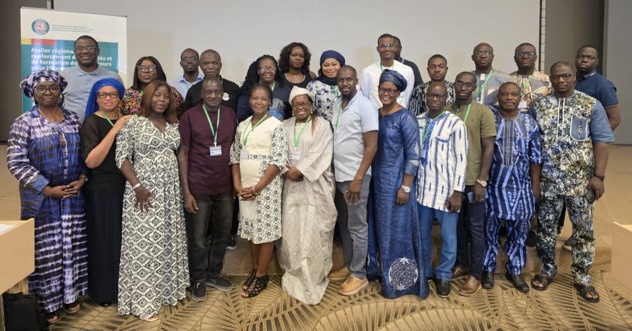
A group photograph of some of the participants at the Training workshop in Lome, Togo
By TOM CHIAHEMEN –
The West African Health Organisation (WAHO) has launched a renewed regional initiative to strengthen health knowledge management and promote seamless information sharing across ECOWAS Member States, marking a significant step towards building stronger, evidence-based health systems in West Africa.
As part of the initiative, WAHO convened a five-day Regional Capacity-Building and Training of Trainers Workshop for the West African Health Information and Documentation Network (WAHIDN) from July 14 to 18, 2026, in Lomé, Togo.
The workshop brought together archivists, librarians, health information specialists and other experts from across the ECOWAS region to enhance the management, preservation and exchange of health information while improving access to critical scientific and documentary resources.
A major highlight of the training was the introduction of the new WAHIDN Common Database, developed on the DSpace platform, which is designed to serve as a unified regional repository for health information. Participants received practical training on document harmonisation, metadata standards, indexing, interoperability and advanced documentary research tools to ensure consistency and easy access to scientific resources across member countries.
Recognising the growing role of emerging technologies in healthcare, the workshop also explored how digital innovation and artificial intelligence can improve the visibility, accessibility and dissemination of scientific health research throughout the ECOWAS region.
The meeting recorded several landmark achievements, including the review and adoption of the revised WAHIDN Statutes and Rules of Procedure, the establishment of a regional pool of certified trainers, and the development of a strategic roadmap to accelerate the rollout of the Common Database across Member States.
Participants further adopted recommendations aimed at advancing regional open science policies, strengthening the capacities of health information professionals and increasing the global visibility of health research produced in West Africa.
To demonstrate the practical application of the new system, participants conducted live presentations of the ROADIS portal and the WAHIDN platform, showcasing how the digital infrastructure will enable institutions across the region to share documentary resources through a common platform. The initiative is expected to facilitate the seamless exchange of scientific knowledge, deepen regional collaboration and support evidence-based decision-making in the health sector.
At the close of the workshop, WAHO reaffirmed its commitment to working closely with ECOWAS Member States to ensure the successful deployment of the WAHIDN Common Database, strengthen institutional capacities in health information management and promote open science as a catalyst for more effective health policies and resilient health systems across West Africa.