Independent National Electoral Commission (INEC), has called on National Assembly for a timely of amendment to Electoral Act and the constitution.
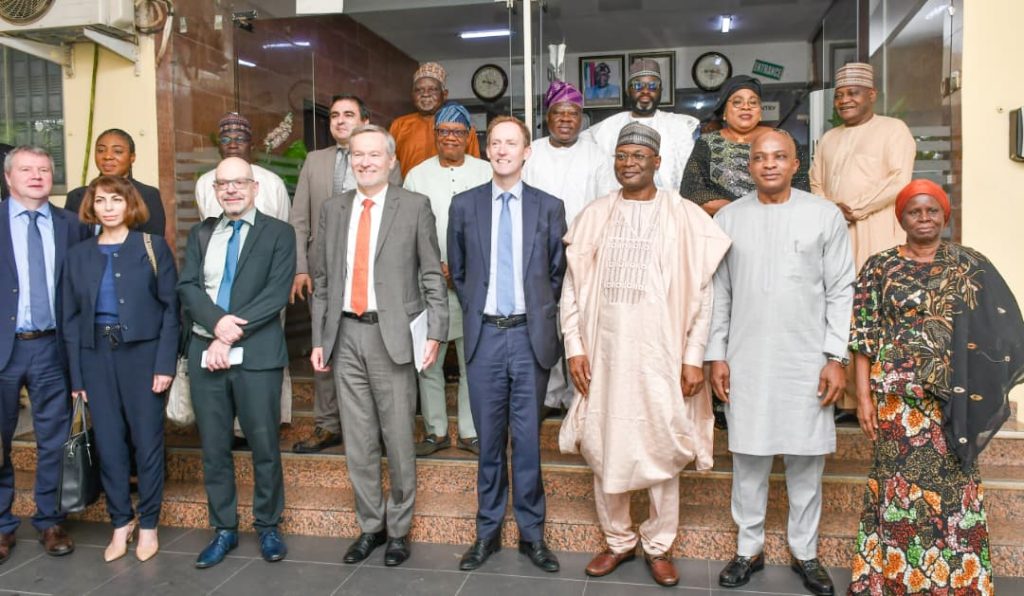
The Chairman of the Commission, Prof Mahmood Yakubu made the call on Tuesday while hosting the European Union Election Observation Follow-up Mission in Abuja.
The visit helped both sides in assessing progress made in implementing recommendations from the 2023 general election.
He emphasized the importance of timely passage of amendments to the Electoral Act and the Constitution, stressing that uncertainty in the legal framework could unsettle election planning. “For instance, we cannot finalize regulations, guidelines, and training manuals for election officials without clarity on the law,” he explained.
Yakubu noted that the follow-up exercise was in line with EU tradition of monitoring reforms halfway between one general election and the next. He recalled that the Commission had previously received similar missions in 2017 and 2022.
He stated that the EU Observation Mission to the 2019 elections made 30 recommendations, including 11 directed at INEC, while the 2023 report contained 23 recommendations, eight of which require action by the Commission.
“Only one of those was marked as a priority, while the remaining 15 including five priority recommendations, were directed at other stakeholders such as the executive, legislature, judiciary, political parties, civil society, media, and professional groups”.
“We have taken action on those recommendations requiring only administrative measures, while collaborating with other institutions on cross-cutting areas. For reforms that need legislative backing, we await the ongoing review process by the National Assembly,” Yakubu said.
He emphasized the importance of timely passage of amendments to the Electoral Act and the Constitution, stressing that uncertainty in the legal framework could unsettle election planning. “For instance, we cannot finalize regulations, guidelines, and training manuals for election officials without clarity on the law,” he explained.
The INEC Chairman added that recommendations from international and local observers informed the Commission’s 142 proposals for electoral reform after the 2023 general elections. He also confirmed that INEC will continue its collaboration with international partners such as the EU, Commonwealth, African Union, and ECOWAS ahead of the 2027 general election.
In his remarks, the Chief Observer of the EU Election Observation Mission, Barry Andrews, commended Nigeria’s significance in the global democratic process. He described the 2023 mission as one of the largest EU deployments, reflecting the strength of relations between the EU and Nigeria.
“Our task is to assess progress made in implementing the recommendations from the 2023 elections. We have noted significant improvements in several areas, though some challenges remain, particularly those requiring judicial, administrative, and constitutional reforms,” Andrews said.
He highlighted transparency in result publication as a key concern and welcomed INEC’s own review of the polls. Andrews also expressed interest in the conduct of off-cycle governorship elections since 2023, noting how lessons learned could inform future improvements.
Andrews, who is also a Member of the European Parliament, stressed that election observation was part of a global effort to support democracy, adding that Nigeria has also contributed observers to elections in Europe.
The visiting EU delegation included: Mr. Barry Andrews, Member of the European Parliament and Chief of Mission; Mr. Gautier Mignot, EU Ambassador to Nigeria and ECOWAS; Mr. Ralph-Michael Peters, Election Expert and Team Lead; Ms. Eirini-Maria Gounari, Election Legal Expert; Mr. Maros Gabriel, Election Administration Expert; and Ms. Laolu Olawumi, Programme Manager, Democracy and Rule of Law, EU Delegation.
Both INEC and the EU pledged to continue deepening their collaboration as Nigeria prepares for the 2027 general elections, with Prof. Yakubu assuring that the Commission would sustain its engagement with international partners, including the Commonwealth, African Union, and ECOWAS.