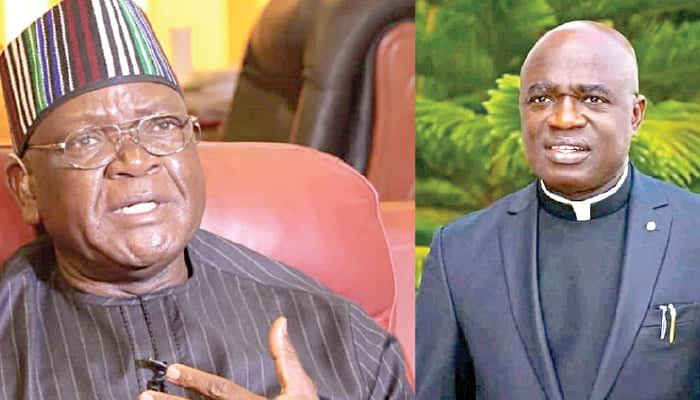
Former Benue State Governor, Samuel Ortom and Governor Hyacinth Alia
The debate on Arise TV’s Arise Exchange over Benue State’s debt profile has intensified political tensions between allies of former Governor Samuel Ortom and the administration of Governor Hyacinth Alia. Both sides traded accusations over fiscal management, transparency, and the true state of the state’s finances.
At the center of the controversy is a sharp disagreement over the debt allegedly inherited by the Alia administration. Ortom’s camp, represented by his former media aide Terver Akase, rejected claims that the state was left with liabilities exceeding N187 billion. Akase accused the current administration of inflating figures to justify its governance challenges.
Speaking during the televised debate, Akase argued that the Ortom administration governed through two economic recessions and severe revenue shortfalls while still working to clear salary arrears and stabilize governance. He said the previous government should not be labeled financially reckless without a transparent audit of state accounts.
A key talking point was the sharp rise in federal allocations to Benue State after President Bola Tinubu removed the fuel subsidy.
According to Akase, monthly allocations rose from roughly N4 billion under Ortom to over N20 billion under Governor Alia — an increase of more than 700 percent.
Ortom’s camp questioned how the significantly higher allocations were being used, citing reports of unpaid local government workers and ongoing financial complaints. Akase urged the Alia administration to publicly disclose monthly federal receipts, internally generated revenue, and expenditure details to ensure accountability.
He also accused the government of lacking transparency in managing public funds and said residents deserved clarity on the state’s actual financial position.
The Alia administration has defended its handling of the economy and borrowing plans. Officials said inherited obligations continue to strain state finances and argued that proposed loans and infrastructure spending are necessary for long-term development.
In several statements, the government dismissed criticism from the Peoples Democratic Party and Ortom loyalists as politically motivated. It maintained that all borrowing followed legislative and constitutional procedures.
Officials aligned with Governor Alia also rejected claims of mismanagement, saying the administration is pursuing reforms to restore fiscal discipline and improve infrastructure across the state.
Data displayed during the program showed that Benue’s debt profile declined significantly under Alia compared to its peak during Ortom’s tenure. The data also indicated that the debt buildup began during Gabriel Suswam’s administration.
The televised exchange reflects growing political rivalry in Benue ahead of future elections, as both camps seek to shape public opinion on responsibility for the state’s economic challenges and the use of increased federal revenue.