

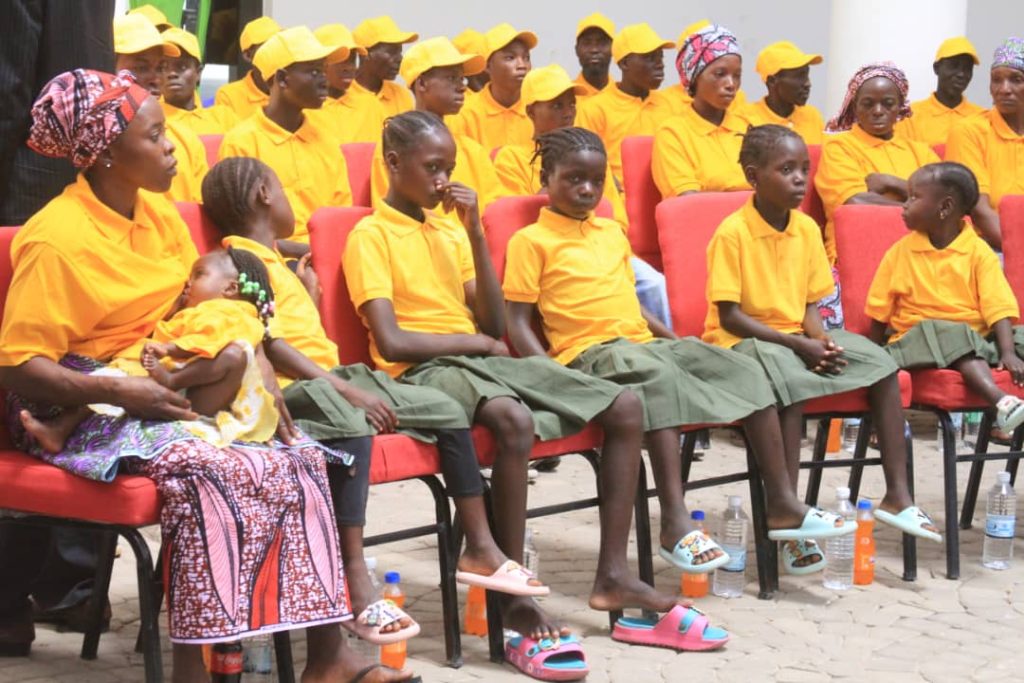
Cross section of the rescued victims
The village erupted in tears, prayers, and embraces when Kurmin Wali’s rescued worshippers eventually made it back home.
After bandits disrupted a church service and dragged men, women, and children into the forest, the small Kajuru community had been living in constant fear for weeks. The small Kajuru community had been ruled by fear for weeks after bandits broke into a church service and pulled men, women, and children into the forest.
Residents claim that while their safe return was a relief, it was just the start.
Silence returned as the festivities subsided. Many of the survivors returned visibly changed. Some recoiled at loud noises. Youngsters clung to their parents.
Others found it difficult to talk about nights when they were cold, hungry, and uncertain if morning would arrive. Freedom had arrived, but peace had not fully followed.
In Kurmin Wali, Governor Uba Sani is widely commended for insisting that all kidnapped worshippers must return alive.
At a time when people were on the verge of despair, community leaders say his dedication, supported by ongoing security operations, gave them hope again. A village elder remarked, “We are grateful to the governor for his unwavering support and refusal to desert us.” “We were strengthened by his assurance that we would return safely.”
However, a new chapter full of challenging questions was opened by the rescue. Subsistence farmers make up the majority of the victims. Missed plantings, abandoned crops, and lost revenue resulted from weeks in captivity.
Many people worry that they might not make a full financial recovery this year because the dry season has already begun. One survivor muttered, “Bandits took not just our freedom, but our time.”
Abducted children miss school and now have trouble focusing in class. Parents speak of nightmares, sudden fear and long silences.
There are few medical facilities in the area, and there are no counsellors on staff. Families deal with trauma that is difficult to explain through prayer, neighbours, and shared suffering.
Fear persists despite the increase in security patrols since the rescue. Some residents are reluctant to get a good night’s sleep. Others stay away from far-off farmlands where bandits used to hide.
According to a woman who was held captive for weeks, “freedom is not complete without peace of mind.” “Our hearts are still in the forest, even though we are at home.”
The Kaduna State Government made a number of pledges during the rescue and reunion, including support for livelihood reconstruction, rehabilitation, and increased security.
Now, Kurmin Wali’s real test will be whether or not he keeps those promises. According to community leaders, in order to provide freedom with long-lasting significance, rescue operations must be followed by trauma healing, financial aid, and a constant security presence.
The community continues to remember Governor Uba Sani’s contribution to the worshippers’ safe return. His determination is gratefully recognised. However, locals say that survival is not the end of the story.
One survivor declared, “We survived,” while choking back tears. We are now asking for help so that we can live again.
It will take more than sympathy to rebuild for many families. They require visible protection, counselling, school support, seeds, and tools.
If these are absent, fear might resurface. Kurmin Wali’s story is representative of a larger crisis in Kaduna, where every vulnerable community must receive healing, justice, and a sustained commitment to peace after being rescued.


