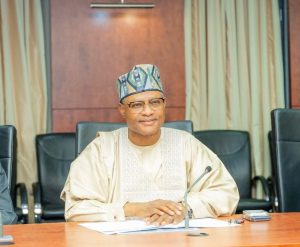
CBN Governor, Yemi Cardoso
In a strategic move to support economic recovery, the Central Bank of Nigeria (CBN) has reduced the Monetary Policy Rate (MPR) by 50 basis points—from 27.5% to 27%—following the conclusion of the Monetary Policy Committee (MPC) meeting held on September 22 and 23, 2025.
The decision, made by the 12-member committee at its 302nd meeting, reflects growing confidence in Nigeria’s macroeconomic trajectory.
Speaking at a press briefing in Abuja, CBN Governor Olayemi Cardoso explained that the rate cut was driven by sustained disinflation over the past five months and expectations of continued moderation in inflation throughout the rest of the year.
“The committee’s decision to lower the monetary policy rate was predicated on the sustained disinflation recorded in the past five months, projections of declining inflation for the rest of 2025, and the need to support economic growth,” said Cardoso.
Adjustments to Reserve Ratios and Liquidity Measures
Alongside the rate cut, the MPC also implemented key changes to banking sector regulations:
The Cash Reserve Ratio (CRR) for commercial banks was reduced to 45% (down from 50%), while the CRR for merchant banks was retained at 16%.
A new 75% CRR on non-TSA public sector deposits was introduced to strengthen liquidity management.
The liquidity ratio was held steady at 30%.
The asymmetric corridor around the MPR remains at +260/-250 basis points, ensuring flexibility in policy transmission.
The standing facilities corridor was also adjusted to improve market efficiency and support interbank transactions.
Cardoso noted that these measures were designed to align monetary tools with current market dynamics and ensure a more effective policy transmission mechanism across the financial system.
Macroeconomic Conditions Support Policy Shift
The MPC expressed confidence in Nigeria’s macroeconomic stability, citing improvements across multiple indicators.
These include:
A stable exchange rate
Increased capital inflows
Improved external reserves
Sustained GDP growth
The committee emphasized the acceleration of disinflation in August 2025—the most significant moderation in five months—as a key milestone.
According to the MPC, this deceleration in inflation was driven by policy tightening, increased crude oil production, and continued moderation in petrol (PMS) prices. “Other factors that contributed to the deceleration include the continued moderation in the price of PMS and the notable increase in crude oil production,” the Committee noted.
While recognizing this positive trend, the MPC also warned about the risks posed by excess liquidity in the banking system—largely attributed to increased fiscal spending fueled by stronger government revenues.
“Being mindful of the need to preserve the prevailing macroeconomic stability, the MPC noted the risk posed by the excess liquidity in the banking system,” it stated.
Economic Growth Strengthens in Q2 2025
Data from the National Bureau of Statistics (NBS) supports the CBN’s optimistic outlook. Nigeria’s Gross Domestic Product (GDP) grew by 4.23% year-on-year in Q2 2025, up from 3.48% in the same period of 2024.
The agriculture sector expanded by 2.82%, improving from 2.60% in Q2 2024.
The industry sector surged by 7.45%, compared to 3.72% a year earlier.
The services sector posted a 3.94% growth rate, slightly up from 3.83%.
The industry sector’s share of GDP climbed to 17.31%, up from 16.79% in Q2 2024, highlighting stronger performance in key productive sectors.
In nominal terms, Nigeria’s aggregate GDP stood at ₦100.73 trillion in Q2 2025, marking a 19.23% increase from ₦84.48 trillion in the same quarter of 2024.