Omoyele Sowore
Human rights activist and former presidential candidate of African Action Congress (AAC), Omoyele Sowore, has faulted President Bola Ahmed Tinubu’s recent comments on Afrobeat legend Fela Anikulapo-Kuti, describing them as hypocritical and detached from the musician’s lifelong resistance to state power.
Reacting via his verified X (formerly Twitter) handle, Sowore argued that Fela, whose legacy was recently elevated globally with a Grammy Lifetime Achievement Award, would have been at loggerheads with today’s political leadership if he were still alive.
“If Fela Anikulapo-Kuti were still alive, he would almost certainly have clashed with today’s political power. After publicly calling Tinubu a criminal, he would likely have been arrested, with the DSS charging him cybercrime offences,” Sowore wrote.
He further recalled Fela’s history of confronting state oppression, insisting that the Afrobeat pioneer’s outspoken activism would not have been tolerated in contemporary Nigeria.
“His outspoken condemnation of the demolition of poor people’s homes would have drawn further retaliation, possibly lead the Nigeria Police Force to tear-gas his shrine, just as they once did in response to his protests,” he added.
Sowore also suggested that Fela’s performances would have faced violent disruptions, echoing the harassment the musician endured during his lifetime.
“Meanwhile, Lagos thugs would have been unleashed to disrupt and attack his shows, punishing him for what would be labeled disrespect toward Asiwaju Bola Ahmed Tinubu,” he stated.
Fela’s Global Recognition Rekindles Debate

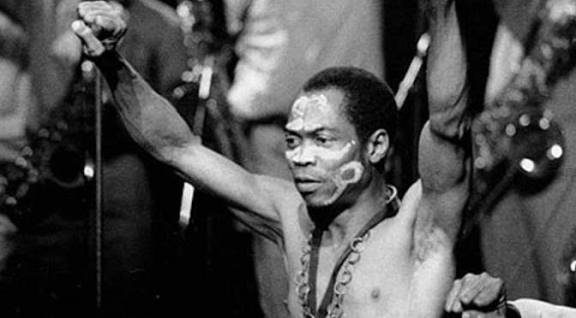
Sowore’s remarks come against the backdrop of Fela Kuti’s posthumous recognition by the Recording Academy, which recently honoured the Afrobeat pioneer with a Grammy Lifetime Achievement Award, nearly three decades after his death.
The prestigious award was presented on Saturday, January 31, 2026, at the Special Merit Awards ceremony held at the Wilshire Ebell Theatre in Los Angeles, on the eve of the 68th Annual Grammy Awards.
With the honour, Fela became the first African artist to receive the Lifetime Achievement Award, a recognition established in 1963 and previously bestowed on global music icons such as Bing Crosby.
According to the Recording Academy, the award celebrates performers who have made “outstanding artistic contributions to the recording field over their lifetimes.”
Fela, who died in 1997 at the age of 58, remains globally revered not just for his revolutionary sound, but for his fearless criticism of corruption, military rule, and social injustice in Nigeria.
Legacy Beyond Music
While political leaders across Nigeria have paid tribute to Fela’s musical genius following the Grammy recognition, Sowore’s intervention has reignited conversations about whether the radical activist Fela represented would truly align with today’s political establishment.
To Sowore and many of Fela’s admirers, the late musician’s legacy cannot be separated from his confrontations with authority — a history that makes any official praise, in their view, worthy of scrutiny.