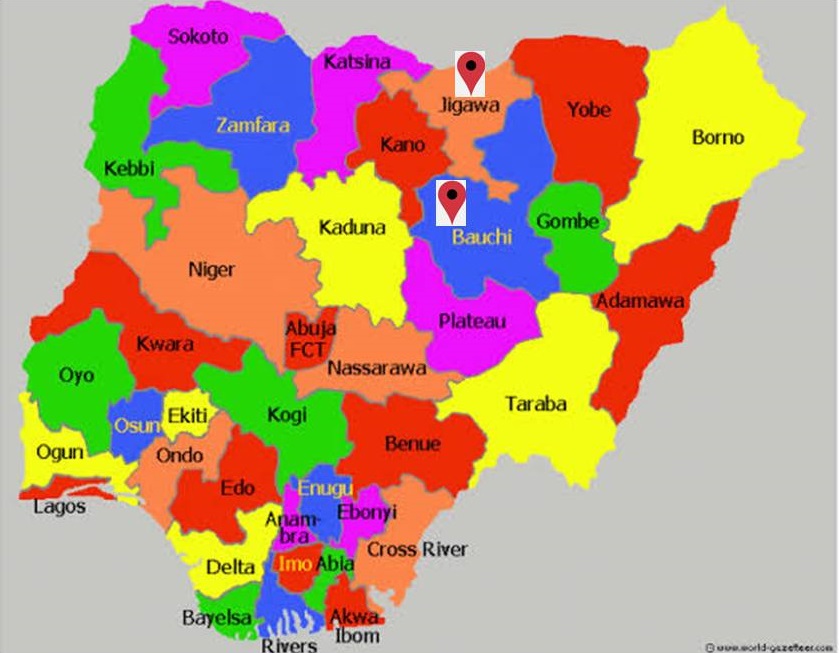
Map of Nigeria
Nigerian Meteorological Agency (NiMet) has issued a public health advisory warning of an increased risk of Cerebrospinal Meningitis (CSM) in parts of the country, identifying 11 states as high-risk areas.
In a notice shared on its official X handle, the agency described meningitis as a dangerous infection that affects the protective membranes surrounding the brain and spinal cord.
NiMet explained that the illness is commonly caused by the bacterium Neisseria meningitidis and spreads mainly through respiratory droplets, especially in crowded or poorly ventilated environments.
According to the advisory, states considered most vulnerable include Sokoto State, Zamfara State, Kebbi State, Katsina State, Kano State, Jigawa State, Adamawa State, Gombe State, Bauchi State, Yobe State and Borno State.
Residents in these areas were urged to stay vigilant and promptly report symptoms to health authorities.
NiMet also classified some states as lower-risk locations, though residents were advised not to lower their guard. These include Plateau State, Oyo State, Cross River State, Edo State, Ekiti State and Enugu State.
“Stay informed. Follow public health guidance and participate in community awareness campaigns,” the agency said.
“Protect yourself and your community. Early awareness, vaccination, and prompt treatment save lives,” it added.
The meteorological agency warned that meningitis can worsen rapidly and become life-threatening within a few hours if left untreated. However, it noted that early diagnosis and prompt administration of antibiotics can significantly increase survival chances and reduce complications.
NiMet identified children and young adults, people living in overcrowded conditions, individuals exposed to dry and dusty weather, and those with weakened immune systems as groups most vulnerable to the disease.
The agency also listed symptoms residents should watch out for, including sudden high fever, severe headache, neck stiffness, nausea or vomiting, and sensitivity to light.
“Vaccination is one of the most effective ways to prevent meningitis. Practise good hygiene. Wash hands regularly and avoid sharing personal items like cups or utensils.
“Ensure good ventilation in homes, schools, and public spaces. Seek early medical care. Watch out for symptoms such as high fever, severe headache, neck stiffness, vomiting, and sensitivity to light,” it stated.
Health experts say increased awareness and early response remain critical in preventing outbreaks, particularly during the dry season when meningitis cases are more common in parts of northern Nigeria.