By CHRISTIANA LOT, Jos –
Plateau State Governor, Caleb Mutfwang, has identified leadership failure not structural deficiencies as the root cause of Nigeria’s institutional decay.
He made the assertion in Jos while declaring open the 13th National Delegates Conference of the Forum of State Independent Electoral Commissions of Nigeria (FOSIECON), themed “ Local Government Elections in Nigeria: Issues, Challenges and Opportunities.”
“A lot has been said about the role of state electoral commissions in our democratic journey… but in truth, all of it comes down to one thing leadership,” Mutfwang said.
Citing ” Why Nations Fail”, he noted that “when leaders lack conscience, nations suffer,” adding that some non-democratic countries progress faster because their leaders are people-oriented.
He criticized flawed electoral processes, recalling past local government elections in Plateau where results were declared before voting or opposition parties were disqualified.
“When we came on board, we decided to hold local government elections. Were they perfect? No. But I can say with confidence that we raised the bar.
“The opposition party won the most coveted seat in Mangu Local Government. Even in my hometown, the councillor is from the opposition. That didn’t happen by accident we allowed the commission to do its job without interference.” He added.
The governor opposed calls to scrap State Independent Electoral Commissions (SIECs), instead advocating for reforms that enhance their credibility.
“The answer is not to throw everything away, but to fix what’s broken,” he said, noting that Plateau consulted INEC for a neutral electoral chair, avoiding political appointees.
Governor Abdullahi Sule of Nasarawa State echoed Mutfwang’s position, warning that scrapping SIECs would not address Nigeria’s electoral challenges.He identified interference, poor funding, and public distrust as core issues.
“If you scrap the state commissions, you’re not solving the root problem you are just moving it around
“Everybody wants control. But control doesn’t build democracy. Control doesn’t bring development. What we need are leaders who fear God, who have a vision, and who are willing to serve the people,” he said.
Sule also expressed readiness to conduct direct local government elections if supported by the legislature and judiciary.
Representing INEC Chairman Prof. Mahmood Yakubu, Plateau State Resident Electoral Commissioner Dr. Oliver Agundu described the conference as timely and urged SIECs to enhance voter education, stakeholder collaboration, and credibility.
He emphasized that elections should be seen as part of a broader democratic cycle requiring constant review and innovation.
Delivering the keynote address, Professor Samuel Egwu identified political interference, caretaker committees, and flawed processes as key threats to local democracy. He warned that the credibility of many local elections has collapsed under state control.
“On the strength of the quality of elections conducted by many SIECs, one would be correct to appropriate the concept of electoral authoritarianism,” he noted, calling for urgent reforms to strengthen SIECs through transparent appointments, guaranteed funding, and clearer constitutional powers.
Earlier, FOSIECON National Chairman, Chief Jossy Chibundu Eze, decried the lack of financial autonomy for SIECs and called for a shift from blame to reform. He urged lawmakers to strengthen, not scrap, the commissions, and commended Plateau State for hosting the conference.
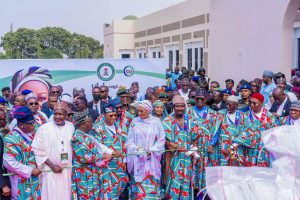
The conference, which brought together electoral stakeholders from across the country, aims to promote credible, transparent, and autonomous local government elections as a foundation for strengthening Nigeria’s democracy.