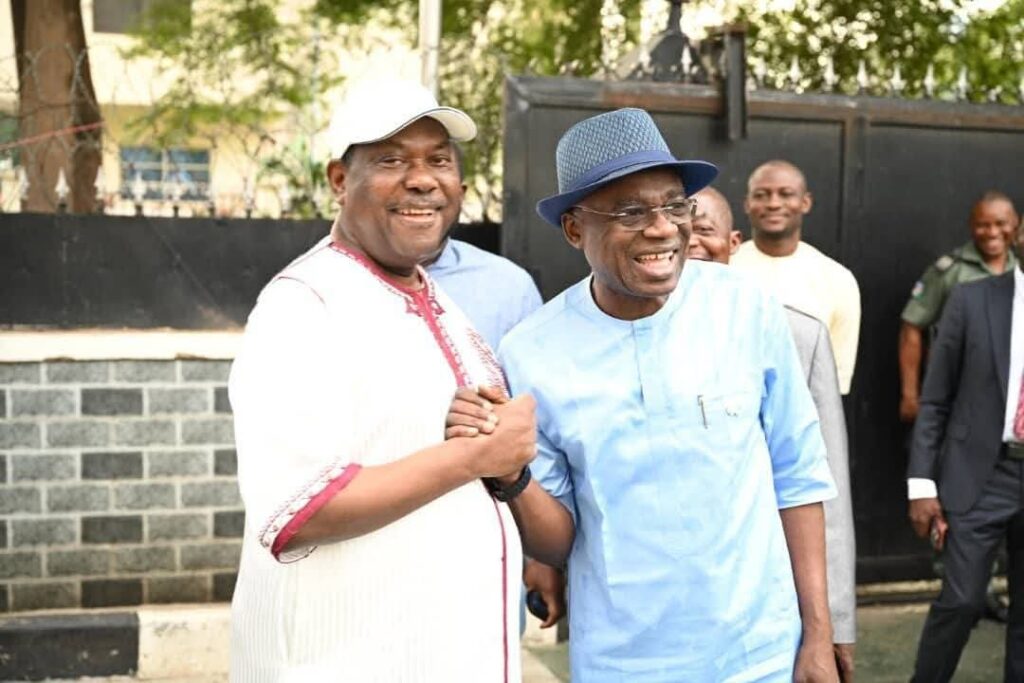
Benue State Governor, Hyacinth Alia and SGF George Akume
By TYAV SAM TYAV, Makurdi –
The feud that has existed between the Secretary to the Government of the Federation (SGF), Senator George Akume and the Benue State Governor Hyacinth Alia has become a thing of the past.
A statement by the Principal Special Assistant to the Governor on Media Publicity and Communications Strategy Bridget Tyam disclosed that the two politicians have reconciled for the benefit of the Benue people.
SSA informed that the reconciliation, took place after several months of public and behind-the-scenes engagements, emphasizing that the reconciliation has marked a strategic realignment with potentially far-reaching consequences for the political stability and security of the state. It signifies a united front for the ruling All Progressives Congress (APC) in Benue and an opportunity to refocus leadership priorities.
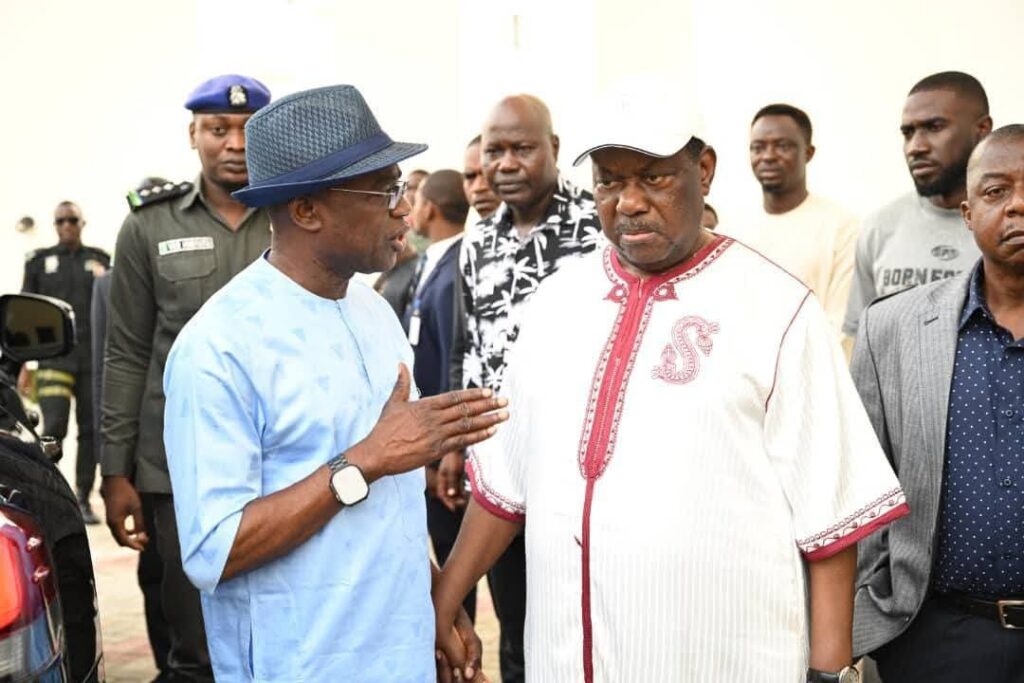
The feud between the two leaders, the statement said became a source of concern not only to the people of Benue but also to the national leadership of the APC.
“As former governor and a political heavyweight in the North-Central region, Senator Akume holds substantial influence, while Gov Alia, as the sitting governor, commands executive authority and popular legitimacy. Their rivalry created a vacuum in leadership cohesion, which weakened the ability of the party and the government to speak with one voice on critical matters, especially security, governance, and development.
“With both leaders now aligned, Benue stands to benefit from a more coordinated and strategic engagement with the Federal Government. Senator Akume, as SGF, sits at the heart of national policymaking and has the ears of the President. Gov Alia, on his part, can now leverage that proximity to push for urgent federal intervention in terms of military deployments, humanitarian support, and the establishment of resettlement and rehabilitation initiatives for displaced persons. Unity between the two opens doors for pragmatic dialogue and policy synergy that can address the root causes of insecurity.
According to the statement, the reconciliation has also provided a solid platform for regional diplomacy and peacebuilding stressing that with a cohesive leadership, Benue could now initiate and implement meaningful measures with neighbouring states and through platforms such as the North Central Governors’ Forum and the National Council of Traditional Rulers, insisting that such conversations, backed by a united political will, could put an end to the violent, genocidal, land-grabbing systematic attacks on Benue State territorial boundary.
The statement, further, revealed that the healing of political wounds within the APC in Benue could lead to greater focus on development and service delivery.
“The past months have witnessed distractions, infighting, and bureaucratic sabotage that slowed down the implementation of key state projects. A harmonious working relationship between Akume and Alia is likely to stabilize the bureaucracy, attract more federal funding, and reignite confidence among investors, development partners, and local communities who yearn for good governance.
” It is also important to highlight the symbolic significance of this reconciliation for the people of Benue. In a state often burdened by ethnic divisions, partisan hostilities, and historical grievances, the willingness of two political gladiators to bury the hatchet sets an example in leadership maturity. It sends a strong message that the interests of the people must come before ego, and that peace and development are achievable when leaders place public good over personal ambition.
“As Benue steps into this new chapter, the hope of millions of its citizens now rests on the sincerity and sustained commitment of both Akume and Alia to work together. Their reconciliation must go beyond political optics and translate into joint actions that bring peace to troubled communities, restore livelihoods, and reposition the state on the path of unity and prosperity. For a state that has bled for too long, this moment could well be the beginning of its healing.
“Another significant outcome of this reconciliation could be the reinvigoration of grassroots political structures across the state. With the SGF and the Governor now speaking in unison, local government administrations—many of which have been polarized along factional lines—can now begin to function with a renewed sense of purpose. This is particularly important for effective community policing, intelligence gathering, and rapid response to security threats. When grassroots actors feel aligned with the central leadership, collaboration becomes more organic, and the burden of state-building is shared more evenly across all levels of governance.”