In its bid to strengthen regional health governance to optimize the response to emerging and re-emerging health threats within the Economic Community of West African States (ECOWAS), the Regional Centre for Surveillance and Disease Control (RCSDC), has moved to the operational stage with a Technical Advisory Council (TAC), to provide technical and scientific advice to the Executive Director and the Governing Board of the Centre.
The primary role of the TAC is to ensure the scientific excellence of the RCSDC’s activities and to make strategic recommendations on global best practices in the management of emerging health threats in the region.
Towards this objective, a three-day workshop, organized by the RCSDC to follow up on the establishment of the TAC Board, opened at the Transcorp Hilton in Abuja, the Nigerian capital.
The follow-up workshop is regarded as a major step in consolidating the governance of the TAC, ensuring the legitimacy of its members, strengthening the coherence of its actions and initiating the coherence of its actions and initiating its concrete implementation in a context where the state of the epidemiological situation must guide the Centre’s strategic priorities.
In his welcome address at the opening ceremony of the workshop, the Executive Director of the ECOWAS-RCSDC, Dr. Mamadou Diarrassouba, described the establishment of the TAC as a strategic imperative for advancing health security in the regions, as he underscored the critical role the council would play in shaping the scientific and strategic direction of the RCSDC.
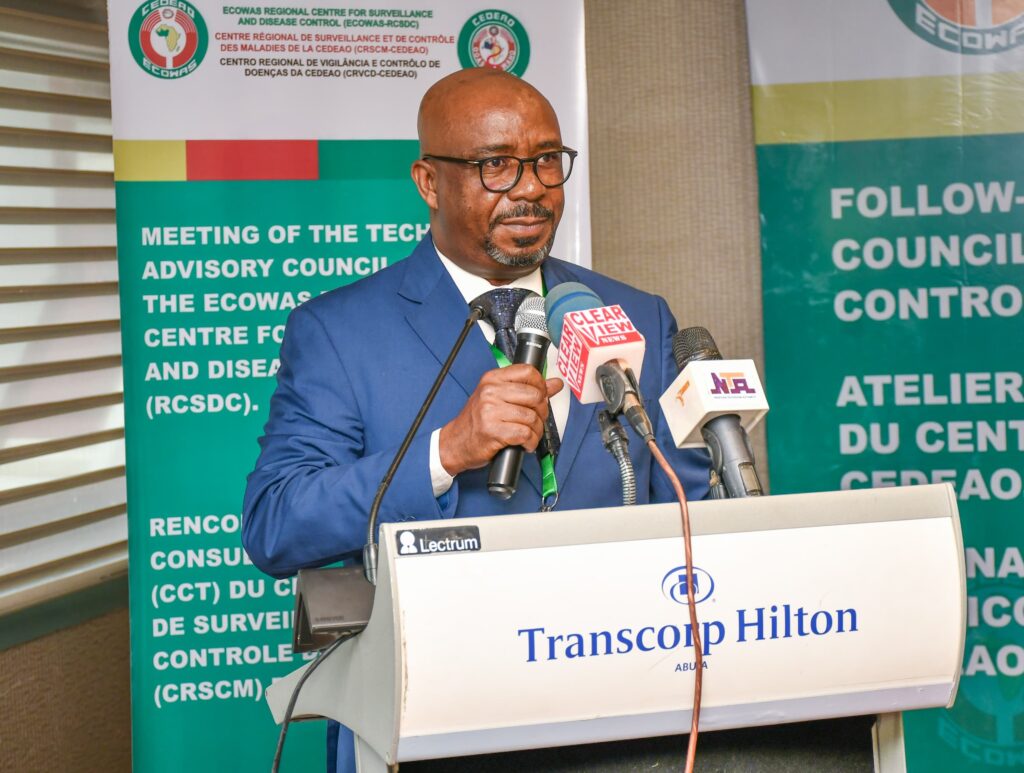
ED, ECOWAS-RCSDC, Dr Mamadou Diarrassouba
According to Dr. Diarrassouba, the TAC would serve as the backbone of regional efforts to respond to public health threats, providing evidence-based guidance rooted in global best practices.
“West Africa continues to face numerous challenges, including fragile health systems, socio-political tensions, humanitarian crises, and the adverse impacts of climate change,” he lamented.
He added that the TAC would help navigate these complexities with technical rigour and foresight, assuring that the RCSDC was already making progress in coordinating health surveillance and strengthening institutional capacity across member states.
Dr. Diarrassouba however stressed that the support of the TAC would significantly enhance its effectiveness and reach.
Also speaking during the opening ceremony, Dr. Etien Koua of the World Health Organization (WHO) Regional Office for Africa, conveyed the readiness of the world health body to support the effort and applauded ECOWAS for taking bold steps toward regional health autonomy.
“This council is not just administrative—it is a strategic body that must be credible, relevant, and impactful. WHO pledges to support the operationalization of the TAC and help align it with both regional and global health security frameworks,” said Dr. Kpua, who was represented by Regin Echekwa.
She identified collective intelligence and collaboration as key to overcoming current and future public health threats.
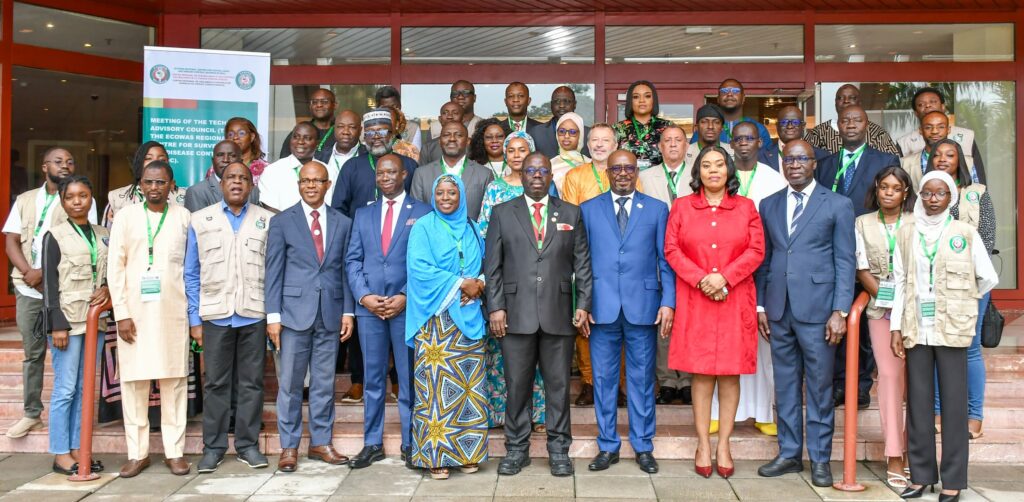
Group Photograph of participants at the follow-up workshop
“We must approach this task with urgency and shared purpose. The clock is ticking,” she said.
Director of Early Warning Directorate at the ECOWAS Commission, Dr. Onyinye Onwuka, described the creation of the TAC as a demonstration of institutional maturity within the regional bloc.
She said the Directorate, which focuses on five thematic areas including health, would work closely with the RCSDC to strengthen surveillance systems and data integration.
“COVID-19 has shown us that public health shocks can be more devastating than armed conflict. This TAC is timely, and we see it as a vital pillar in regional human security,” Dr. Onwuka stated.
She also outlined several areas for possible collaboration, including joint vulnerability assessments, community-based surveillance, scenario modelling, and integration of health data into broader early warning frameworks.
The three-day workshop, which runs from July 23 to 25, is expected to conclude with the formal adoption of the TAC’s key documents, the election of its bureau, and the setting of strategic priorities tailored to the region’s epidemiological landscape.
Delegates from ECOWAS Member States, technical and financial partners, health experts, and international organisations are attending the workshop in Abuja.