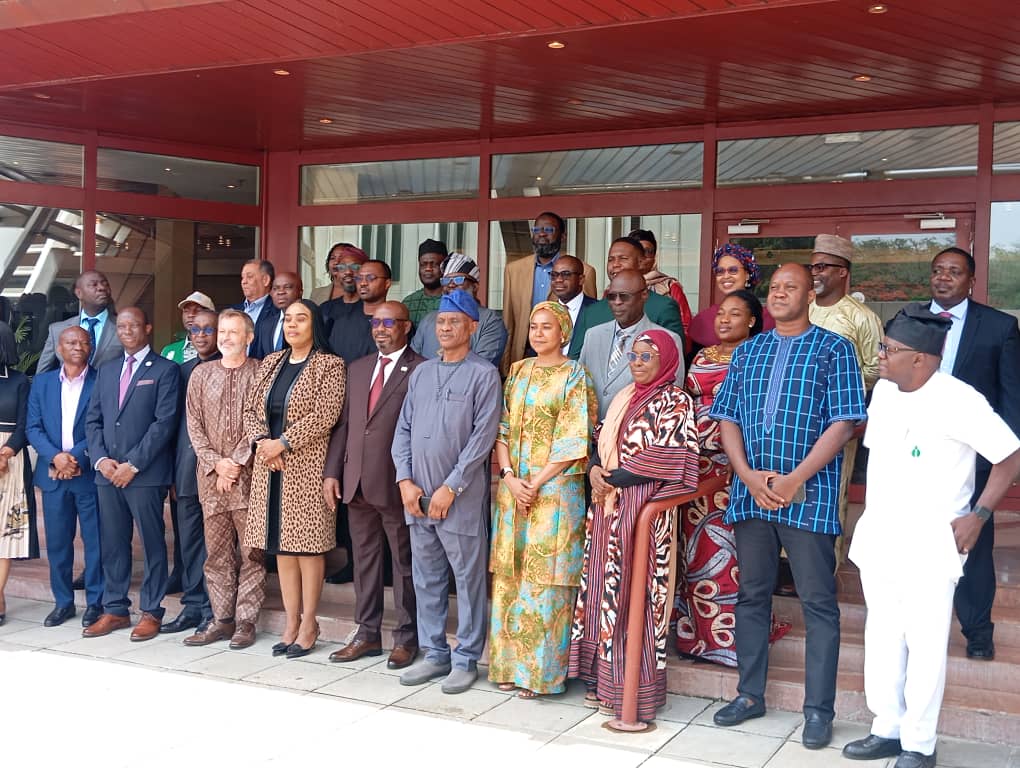
Participants at the 3-day Annual Meeting of the Technical Advisory Council (TAC) of ECOWAS-RCSDC in a group photograph at the Transcorp Hilton, Abuja...Wednesday
By TOM CHIAHEMEN, Abuja –
The West African Health Organization (WAHO), and the Economic Community of West African States (ECOWAS), have been commended for their unwavering commitment to strengthening regional health security and enhancing the collective capacity of the member-nations to prevent, detect, and respond to public health threats.
Nigeria’s Minister of State in charge of Health and Social Welfare, Dr. Iziaq Adekunle Salako, made the commendation in his opening remarks at the Annual Meeting of the Technical Advisory Council (TAC) of the ECOWAS Regional Centre for Disease Surveillance and Control (RCSDC), which began in Abuja on Tuesday.
Salako, who was represented by the Director of Health Planning, Research and Statistics, Dr. John Ovuoraye,noted that the three-day meeting of the TAC was both timely and strategic, given that West Africa continues to confront complex and evolving health challenges, including emerging and re-emerging infectious diseases.
“These threats underscore the urgent need for stronger surveillance systems, improved data sharing mechanisms, and more coordinated cross-border responses. Indeed, no Member State can effectively address these challenges in Isolation; they require sustained collaboration, solidarity, and collective action,” he said.
According to the Minister, the establishment of the RCSDC represented a shared recognition of these realities and a firm commitment to building a resilient, responsive, and well-coordinated regional health security architecture.
The Centre serves as a critical platform for technical cooperation, policy harmonization, and operational coordination among Member States.

- The Director, Health Planning, Research & Statistics at the Federal Ministry of Health, Dr. John Ovuuraye (3rd from left), Director, ECOWAS Early Warning Directorate, Dr. Onyinye Onwuka (right) and other dignitaries at the opening of the TAC Meeting in Abuja (Photo: CATTIGAN.COM)
“Nigeria remains fully committed to the objectives of the RCSDC and to the broader ECOWAS health security agenda. We will continue to support initiatives aimed at strengthening disease surveillance systems, enhancing early warning and alert mechanisms, and improving preparedness and emergency response capacities across the sub-region,” the minister declared.
In a keynote address at the opening ceremony, the Director of Early Warning Directorate of the ECOWAS Commission, Dr. Onyinye Onwuka, commend the TAC for its steadfast commitment to strengthening regional health security and guiding the strategic direction of the RCSDC.
She observed that the Abuja meeting was taking place at a time when the intersection between public health and security had never been more evident.
“The lessons of recent outbreaks have reinforced a critical truth: health crises are not isolated events—they are regional threats with far-reaching socio-economic and security implications, ” she said.
Dr. Onwuka, who described the role of Early Warning systems as pivotal, said the ECOWAS Early Warning Directorate had continued to monitor and analyze emerging risks across the region, including health-related threats.
” Increasingly, we observe that disease outbreaks are not only humanitarian concerns but also catalysts for instability—affecting livelihoods, governance, and social cohesion. This underscores the urgent need for stronger integration between Early Warning and public health surveillance systems, ” she said.
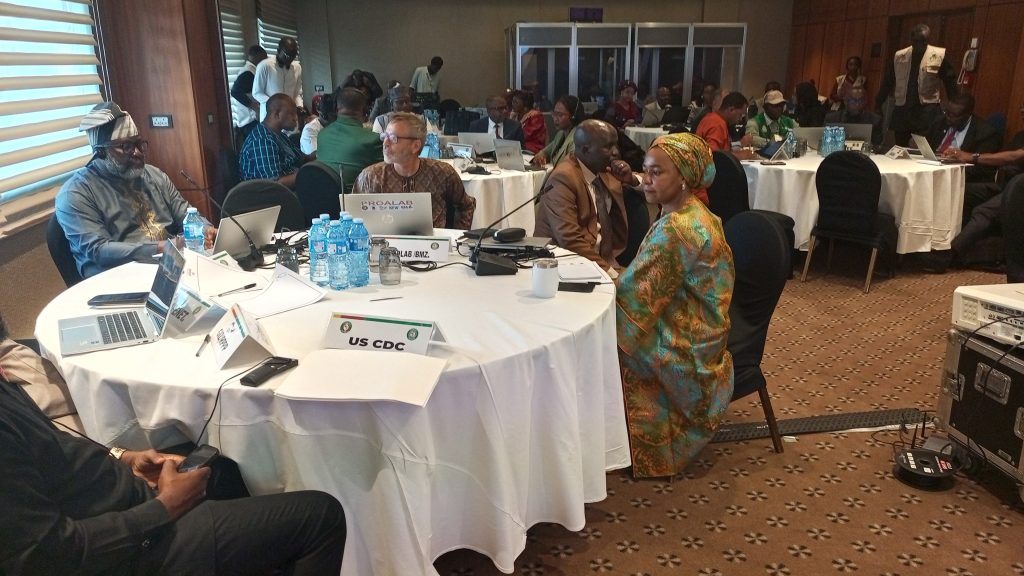
Some of the participants at the meeting (Photo: CATTIGAN.COM)
She highlighted three key priorities for the collective actions of the stakeholders : strengthening data integration and information sharing ; enhancing preparedness and response coordination and ; investing in resilience at the community level.
Onwuka, who noted that the RCSDC was standing as a cornerstone of ECOWAS’ commitment to regional health security, said, however, that its success depends on sustained political will, adequate resourcing, and continued technical guidance from this Council.
She encouraged participants a the 3-day meeting to remain focused on practical, forward-looking solutions that would enhance their collective ability to detect, prevent, and respond to health threats. ” Let us also recognize that prevention is always more cost-effective than response. Strengthening early warning and surveillance systems is not merely a technical necessity—it is a strategic investment in the stability and prosperity of our region. “
Earlier in his welcome address, the Executive Director, ECOWAS-RCSDC, Dr. Mamadou Diarrassouba, observed that the meeting was holding in a regional context that remains complex: climate change, rapid urbanization, population movements related to humanitarian crises, and the frequent emergence or re-emergence of infectious diseases.
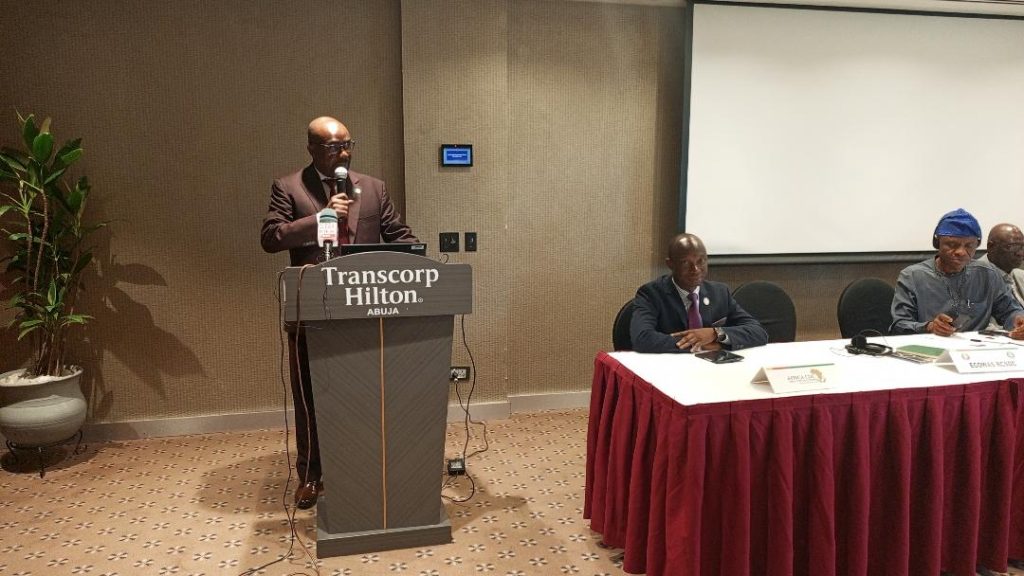
Executive Director, ECOWAS-RCSDC, Dr. Diarrassouba, giving his welcome speech at the TAC Meeting (Photo: CATTIGAN.COM)
“These factors heighten the need for strong regional health governance, enhanced surveillance, early detection, and a coordinated, evidence-based response,” he said.
He reminded participants that the role of this Council was clear and essential: “to provide the Executive Director with high-quality technical and scientific advice, to ensure the scientific excellence of the RCSDC’s activities, and to formulate strategic recommendations based on global best practices for the prevention, detection and management of emerging health threats in our region.”
Diarrassouba announced that during the meeting, the 2025 Annual Report of the RCSDC, the regional epidemiological situation in 2025 and the highlights of the strategic plans developed by the RCSDC would be presented.
“We will also discuss important topics on funding opportunities, the fight against antimicrobial resistance and the revival of the ECOWAS AMR Technical Working Group. In addition, as part of the renewal of the RCSDC’s 2027–2031 Strategic Plan for Preparedness and Response to Health Emergencies,” the Executive Director said.
“Our work will also have to take into account the financial and human constraints of the moment, while respecting the scientific standards necessary to formulate informed opinions. These opinions will effectively guide the strategic direction of the RCSDC and strengthen the health resilience of our region,” he added.
The RCSDC was established in 2025 in the face of health risks in the ECOWAS region — fuelled by the effects of climate change, rapid urbanization, population movements linked to humanitarian crises, and the frequent emergence/re-emergence of infectious diseases — regional health security has become a major determinant of social development.and regional integration.
These repeated epidemics, which weaken health systems, disrupt trade and threaten the free movement of people and goods; require coordinated, anticipatory and evidence-based responses. This informed the birth of TAC – a scientific body designed to guarantee the technical excellence, strategic coherence and legitimacy of regional interventions in the preparation and response to public health emergencies. Since the establishment of the TAC, the initial work has laid the institutional foundations for its work.
The Abuja meeting of the TAC also aims to provide the Executive Director of the RCSDC with robust and consensual technical guidance for the updating of the ECOWAS Regional Strategic Plan for Preparedness and Response to Public Health Emergencies (SP-PRPHE) 2027–2031. Articulating recent epidemiological analyses, lessons learned from past responses, national capacities and partnership opportunities, the TAC will need to propose strategic priorities that will make the region more resilient to current and future health crises.
The overall objective of this exercise is to strengthen regional health governance to optimize the response to emerging and re-emerging health threats in ECOWAS.
The meeting is also being attended by Messier, the Executive Director of the Regional Animal Health Center, Dr. Kouassi Eugéne KOFFI; a Representative of the Director of the WHO Regional Office for Africa, Dr. Mohamed Yakub Janabi, the Director of the West African Regional Coordination Center of Africa CDC, Dr. Kokou Alinon and President of TAC, Dr. Papa Samba DIEYE, among other top public health officials across West Africa.