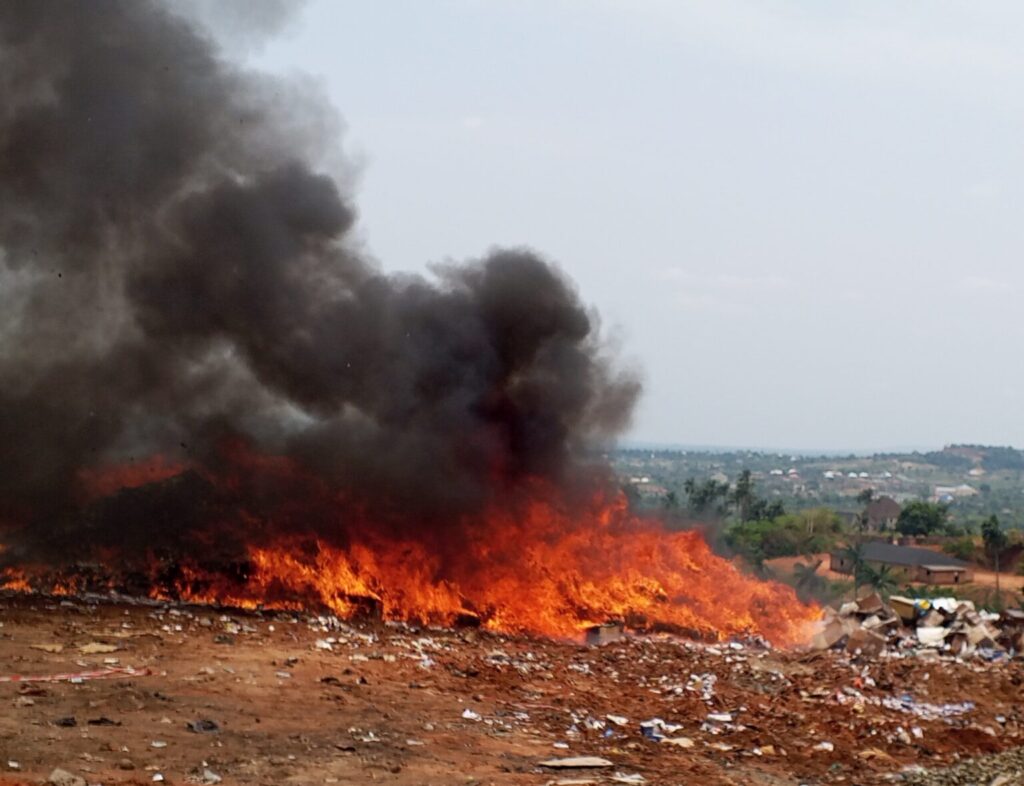
NAFDAC officials at the destruction exercise
In a sweeping move to protect public health, the National Agency for Food and Drug Administration and Control (NAFDAC) has destroyed counterfeit, expired, and dangerous medical products valued at over ₦15 billion at the Moniya dumpsite in Ibadan.
The massive disposal, which took place on Wednesday, involved a wide range of substandard pharmaceuticals, including codeine-laced syrups, Tramadol, Analgin, Co-codamol, Oxytocin, and expired vaccines—substances considered highly dangerous if left in circulation.
Speaking at the scene, NAFDAC Director-General, Prof. Mojisola Adeyeye, said the destruction was more than just a regulatory action—it was a public health imperative.
> “We cannot allow these harmful products to find their way back into the market. This is about saving lives,” Adeyeye stated, in remarks delivered by Dr. Martins Iluyomade, the agency’s Director of Investigation and Enforcement.
She noted that many of the destroyed products had been seized during targeted raids across Nigeria, including black-market outlets and illegal pharmaceutical factories.
In one shocking case, a container labeled as Diclofenac was discovered to be packed with over 277 cartons of fake anti-malaria tablets—more than 100,000 tablets in total. NAFDAC confirmed the suspect behind the shipment is now in custody and will face prosecution.
> “The scale of criminal activity in the fake drug trade is staggering,” Adeyeye said. “We must remain vigilant and proactive.”
In addition to pharmaceuticals, NAFDAC also destroyed illegally manufactured cosmetics and unregistered packaging materials discovered during a raid inside a military barracks in Lagos.
The agency expressed gratitude to partners like the Nigeria Customs Service (NCS) for intercepting more than 25 containers of banned substances, which were among the items destroyed on Wednesday. These included Tramadol, Artesunate injections, and even frozen poultry.
> “Removing these violative products from circulation is a win for every Nigerian,” said Adeyeye.
She called on Nigerians—especially community leaders, religious figures, pharmacists, and journalists—to help raise awareness and report suspicious drug-related activities.
> “Everyone has a role to play. Public vigilance is key to winning this fight,” she urged.
NAFDAC also commended support from the Nigeria Police Force, Nigerian Army, DSS, and the Pharmacists Council of Nigeria (PCN), describing them as crucial allies in the ongoing war against fake and substandard medical products.
With Nigeria facing persistent threats from counterfeit drug networks, the agency reaffirmed its commitment to intensifying enforcement, protecting consumers, and safeguarding national health.
NAN