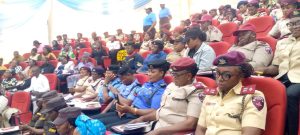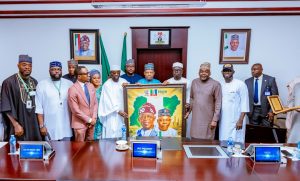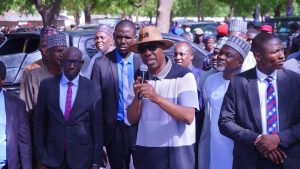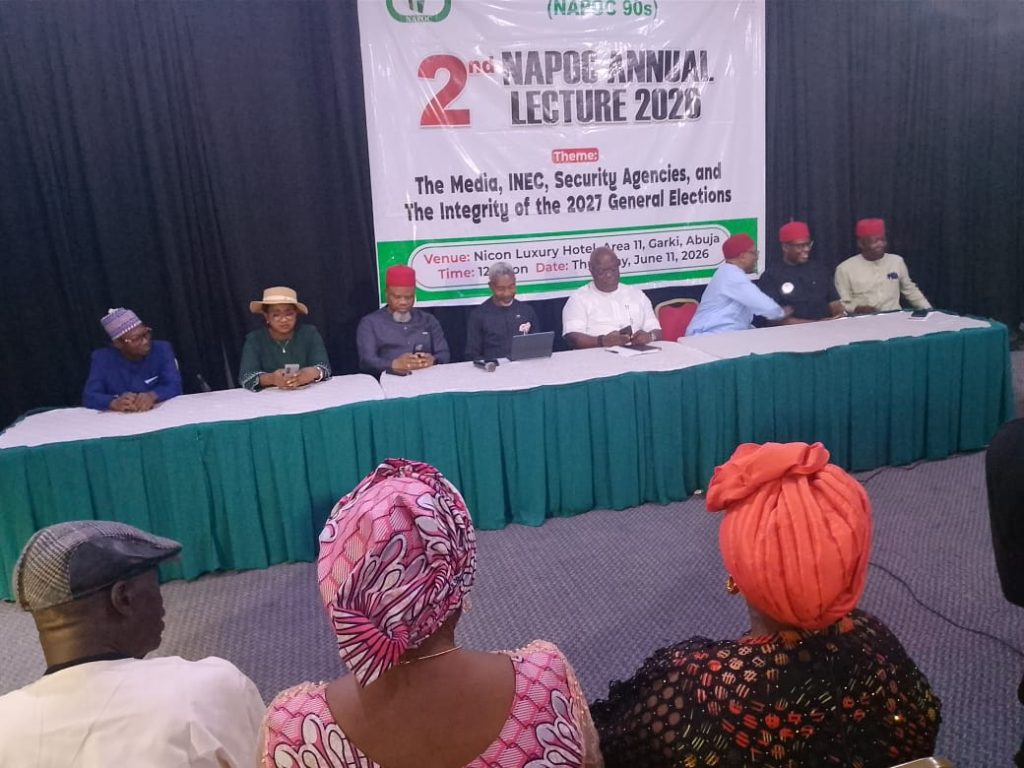
The National Association of Political Correspondents (NAPOC) on Thursday held its 2nd Annual Lecture Series in Abuja, bringing together key stakeholders in Nigeria’s democratic process to deliberate on the theme: “The Media, INEC, Security Agencies and the Integrity of the 2027 General Elections.”
The event took place at the prestigious NICON Luxury Hotel and attracted policymakers, electoral officials, media professionals, academics, and security experts.
The lecture was designed to stimulate early discussions on the preparations for the 2027 general elections and the roles critical institutions must play in ensuring credible, transparent, and peaceful polls.
According to NAPOC, the initiative reflects its commitment to strengthening democratic institutions and promoting responsible political reporting as Nigeria approaches another election cycle.
Speaker of the House of Representatives, Tajudeen Abbas, attended as the Special Guest of Honour, while President of the Nigerian Institute of Public Relations (NIPR), Ike Neliaku, chaired the event. The keynote lecture was delivered by the Vice Chancellor, Baze university, Abiodun Adeniyi, who examined the interconnected roles of the media, the Independent National Electoral Commission (INEC), and security agencies in safeguarding electoral integrity.
Speaking on the significance of the theme, NAPOC’s Coordinating Committee Chairman, Deba Uwadiae, noted that credible elections require strong collaboration among the media, electoral authorities, security agencies, and policymakers.
He emphasized that the forum provides an opportunity for reflection, dialogue, and the development of strategies to address emerging challenges ahead of the 2027 polls.
Discussions at the lecture focused on combating misinformation and disinformation, enhancing election security, improving electoral logistics, and strengthening public confidence in democratic institutions. Participants highlighted the need for synergy among stakeholders to prevent electoral violence, ensure voter protection, and guarantee transparency throughout the electoral process.
Recent statements by INEC leadership have underscored the importance of collaboration between electoral and security institutions, with the commission maintaining that credible elections are fundamental to national stability and democratic governance.
Electoral experts have also warned of emerging threats such as social media manipulation, artificial intelligence-driven disinformation, and security challenges that could undermine the credibility of future elections if not adequately addressed.
The NAPOC Annual Lecture is expected to generate policy recommendations and strengthen cooperation among stakeholders as Nigeria prepares for the 2027 general elections, with participants expressing optimism that sustained engagement will help deepen democracy and enhance public trust in the electoral process.
The National Association of Political Correspondents (NAPOC) was formed in 1988 by political journalists assigned to cover the national headquarters of the defunct National Electoral Commission (NEC) at Onikan, Lagos.
This was at the start of Gen. Ibrahim Babangida’s political transition programme that led to the aborted Third Republic. The “90s” tag refers to the cohort of reporters who covered IBB’s transition, the June 12, 1993 election, and the annulment crisis.
NAPOC members were the frontline reporters on:
- IBB’s transition programme 1986-1993: Party formation, Option A-4 open ballot, NEC operations
- June 12, 1993 election: Widely seen as Nigeria’s freest/fairest poll, later annulled
- Abacha era 1993-1998: Military crackdown on press. Many independent journalists from that era faced arrests, detention, and harassment. NAPOC reporters documented it.
They still operate as a body of veteran political journalists.
Recent activities:
- Book: Nigeria’s Aborted 3rd Republic and the June 12 Debacle: Reporters’ Account
- Launched Sept 20, 2022 at National Press Centre, Abuja
- 33 contributors, all NAPOC members
- Editors: Deba Uwadiae, Dr. Emeka Nwosu, Dr. Segun Olanipekun, Prof. Abiodun Adeniyi
- Covers intrigues, interviews, and behind-the-scenes of June 12
- Annual NAPOC Lecture Series (NALS)
- Inaugural held June 11, 2025 at Shehu Musa Yar’Adua Centre, Abuja
- Theme: “The Legacy of Option A-4 and June 12 Election”
- Chair: Emeka Ihedioha. Special Guest: Dele Alake
- Speakers: Prof. Tonnie Iredia, Prof. Jideofor Adibe
- Goal: “strategic platform for exchange of productive ideas on how to advance political culture and entrench good governance”
- National Honors 2025
- NAPOC commended Pres. Tinubu for conferring OON on 2 members: Labaran Maku and Abdul Oroh
- Said it “affirms the administration’s commitment to press freedom”
4. Notable NAPOC-linked journalists from 90s
While NAPOC is an association, many prominent press-freedom figures of the 90s were in that beat:
- Nosa Igiebor – Tell editor, jailed by Abacha 1995-1996
- Bayo Onanuga – TheNEWS editor, detained by Abacha
- Chris Anyanwu, Kunle Ajibade, George M’bah, Ben Charles-Obi – Jailed 1995 for “coup plot” reporting
- Deba Uwadiae – Now U.S.-based, NAPOC Coordinating Committee chair
- Dr. Emeka Nwosu – Former NAPOC president, Board of Trustees chair
*5. Why they matter
NAPOC 90s reporters operated during Nigeria’s most dangerous period for press freedom. Decrees like *Detention of Persons Decree No. 2* and Treason Decree No. 29 of 1993 were used to jail journalists. They ran “guerrilla tabloids” from hiding to keep reporting.