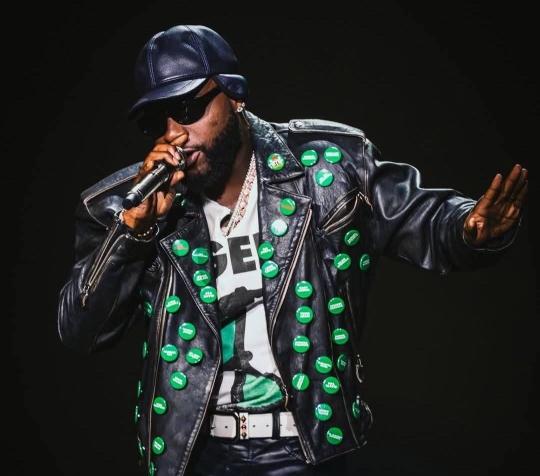
Afrobeat star, Davido during his performance at the 2026 FIFA World Cup concert
Former presidential aide Reno Omokri has criticised Afrobeats star Davido for using an international platform to draw attention to the abduction of schoolchildren and teachers from Oriire Local Government Area of Oyo State, arguing that publicising such incidents could strengthen terrorist groups rather than pressure them.
In a lengthy statement shared on social media, Omokri said terrorists often benefit from widespread publicity and global outrage generated by high-profile abductions.
“Publicity Helps Terrorists. It Does Not Pressure Them. They Treasure it!” he wrote.
Although he did not directly mention Davido’s performance at the FIFA World Cup 2026 Countdown Concert in Los Angeles, Omokri said the singer’s actions, which had attracted international attention to the plight of the abducted victims, could inadvertently aid their captors.
“Davido means well, but doing what he did… actually helps the terrorists who took those children more than it aids the rescue of the kids and their teachers,” he stated.
According to Omokri, terrorist groups rely on publicity to amplify fear and expand their influence.
Quoting former British Prime Minister Margaret Thatcher, he said: “Publicity is the oxygen of terrorism.”
He argued that global attention often shifts pressure away from terrorists and onto governments, creating incentives for kidnappers to retain high-profile hostages.
Drawing from his experience as a former spokesman to ex-President Goodluck Jonathan, Omokri said international campaigns around the abduction of the Chibok schoolgirls complicated efforts to secure their release.
“I was a Presidential spokesman under President Jonathan, and the rescue efforts for the #ChibokGirls were hampered the day Michelle Obama held up the #BringBackOurGirls banner, making it a cause célèbre,” he said.
“From that point on, the girls became so high profile that it was more profitable, from a terror standpoint, for Boko Haram to hold on to them at whatever costs.”
He further claimed that the increased attention led to tighter security around the hostages, making rescue operations more difficult.
Omokri also referenced his own advocacy efforts for the release of Leah Sharibu, saying he had travelled internationally and met several world leaders in pursuit of her freedom.
“For four years, I travelled around the world, meeting world leaders in my effort to secure Leah Sharibu’s release,” he said, adding that he funded the campaign personally.
However, he said security officials later advised him that the publicity surrounding Sharibu’s case may have reduced the chances of her release by increasing her value to her captors.
“I was informed by top level security officials that my activities were actually making Leah Sharibu’s release less likely, because by raising her profile, I was making her too valuable as a hostage to her captors,” Omokri stated.
He said his position was reinforced after consulting the UNESCO Handbook for Journalists on Terrorism Coverage, which he claimed highlights the risks of excessive publicity surrounding terrorist activities.
“That piece of literature is very clear on how terrorism thrives the more journalists, celebrities, and politicians publicise acts of terror,” he said.
Omokri maintained that Nigerian authorities were actively working to secure the release of the abducted children and teachers, citing recent rescue operations by security agencies as evidence of ongoing efforts.
“What this situation requires is not publicity, especially on a global stage. That is what the terrorists want,” he said.
He concluded by urging Nigerians to approach the issue rationally rather than emotionally.
“I wish Nigerians could look at this in a sentient manner instead of being emotional over an issue that we can only resolve if we are rational!”