Women serving in uniformed organisations across Nigeria are facing increasing pressure to balance official responsibilities with domestic obligations, a challenge experts say requires stronger institutional support, improved family partnerships and greater attention to emotional wellbeing.
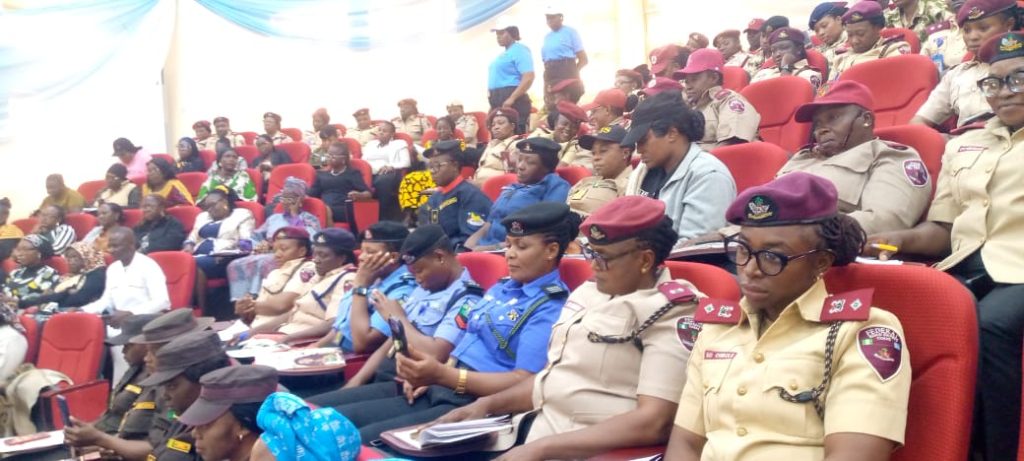
The concern was raised on Wednesday in Jos during a career development workshop organised by the Federal Road Safety Corps (FRSC) for female personnel, where participants examined strategies for balancing workplace expectations with family responsibilities.
Speaking at the workshop themed “Balancing Domestic Responsibilities with Official Expectations Among Women in Uniform,” the Plateau State Sector Commander of the FRSC, Dr. Adelaja Ogungbemi, said women continue to play critical roles both at home and in the workplace, making it necessary to equip them with the skills required to navigate the demands of both spheres.
According to him, his decision to organise the workshop was informed by years of working with female officers and observing the unique challenges they face in combining professional duties with family responsibilities.
“Over time, from my experience in this job, I have come to realise that women have a very strong role to play in our society. I have worked with many female officers who have performed exceptionally well, and since then I have continued to think about the need to improve the capacity of our women.
“There are many challenges they face in managing the home front alongside the demands of work. That is why I decided to organise this programme — to help address some of those challenges and ensure that women continue to perform effectively both at home and in their various places of work,” he said.
Ogungbemi noted that women make up a significant proportion of personnel in the Plateau State Sector Command, stressing that continuous capacity building would enable them to remain productive while effectively managing family obligations.
Also speaking, the Zonal Commanding Officer of the FRSC, Assistant Corps Marshal Joseph Udoabba, said creating opportunities for women to serve and lead remains essential to achieving gender balance within public institutions.
He pointed out that several FRSC zones and state commands are currently headed by women, describing the development as evidence of the Corps’ commitment to gender inclusion and equal opportunities.
“Looking at the 12 zones that the Corps has, some are headed by the female gender, while some states are also headed by women. What we are trying to do is balancing, and we are making progress because of the Corps’ gender-sensitive policy.
“Women must always be prepared because when preparedness meets opportunity, something great happens,” he said.
In a paper titled: “ _Stress and Emotional Management for Working-Class Women,”_ Dr. Joy Panle of the Department of Guidance and Counselling, University of Jos, said changing economic realities have expanded the responsibilities of women, exposing many to increased levels of stress and emotional strain.
She explained that working-class women are often expected to contribute significantly to household welfare while simultaneously meeting workplace targets and pursuing career advancement.
According to her, childcare responsibilities, financial pressures, workplace demands, interpersonal conflicts and expectations for career progression remain among the major causes of stress affecting women.
Panle, however, maintained that women can successfully manage these pressures through healthy coping mechanisms, emotional awareness and effective stress-management practices.
“Investing in emotional health and adopting healthy stress management practices can enhance women’s resilience and improve their productivity, leading to a more balanced and fulfilling life,” she said.
The Chairperson of the Plateau State Gender and Equal Opportunities Commission, Hon. Olivia Dazyam, said balancing family responsibilities with professional expectations should not be viewed as a pursuit of perfection but as a process that requires planning, support and shared responsibility.
“One of the greatest challenges women face is how to care adequately for their families without neglecting their professional duties, and how to remain effective at work without losing the warmth and stability expected at home.
“Balance does not mean doing everything perfectly at the same time. It means making wise choices, setting priorities and creating healthy boundaries. There are seasons when family demands more attention and there are seasons when work requires greater focus. Wisdom lies in recognising what matters most at each moment,” she said.
Participants at the workshop also engaged in panel discussions and experience-sharing sessions aimed at equipping women in uniform with practical tools for career growth, stress management and family stability.