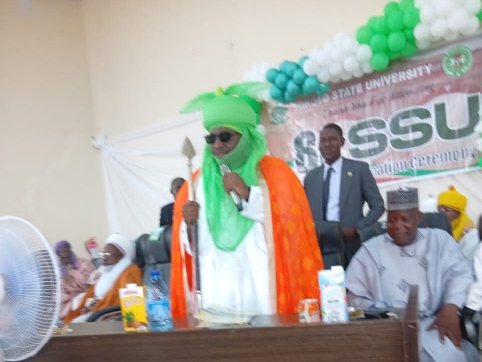
Emir of Dutse and Chancellor of Sokoto State University (SSU), Alhaji Nuhu Sanusi, has urged Nigerians to embrace production, innovation and entrepreneurship as the surest path to national development, insisting that no nation attains greatness through wishful thinking alone.
Sanusi made the call while delivering the Convocation Lecture at Sokoto State University as part of activities marking the institution’s combined 4th, 5th, 6th, 7th and 8th convocation ceremonies. He said Nigeria must adopt a development-oriented mindset capable of transforming its abundant human and natural resources into sustainable economic growth.
According to the monarch, the country is at a critical stage where citizens must begin to think beyond conventional approaches by investing in productive ventures and entrepreneurial activities capable of creating wealth and improving the nation’s global standing.
He noted that such a shift would not only strengthen the economy but also reposition Nigeria as a country of opportunity and hope.
Sanusi said he was encouraged by what he described as a growing change in the mindset of many Nigerians, adding that more citizens are beginning to make meaningful contributions towards national development.
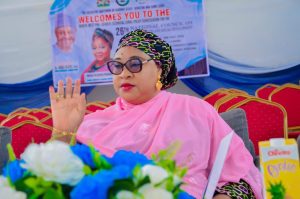
The traditional ruler also challenged women to play a more active role in entrepreneurship and innovation, urging them to maximise their potential and contribute significantly to economic development.
“What a man can do, a woman can do better. If you educate a woman, you educate a whole community.”
“Majority of those graduating from our Quranic schools in Jigawa State are women, that means that we have a very bright future.”
Representing Governor Ahmed Aliyu at the event, the Sokoto State Commissioner for Religious Affairs, Prof. Jabir Sani Maihula, reaffirmed the state government’s commitment to strengthening education and entrepreneurship through sustained investment and adequate funding.
Also speaking, the guest lecturer, technocrat and entrepreneur, Engr. Umar Buba Bindir, urged students across the country to embrace creativity, innovation and entrepreneurship as practical solutions to unemployment and poverty.
Bindir questioned the description of Sokoto as Nigeria’s poorest state, arguing that such a label does not reflect the state’s vast human capital and natural resource potential.
He warned that unless students, researchers and policymakers move beyond the pursuit of academic certificates to developing practical innovations capable of creating jobs and wealth, the state’s economic challenges would persist.
The former public administrator encouraged students to identify Sokoto’s comparative advantages through research and convert their findings into commercially viable enterprises capable of driving long-term economic growth.
He identified agriculture as one of the state’s greatest economic opportunities and urged students of soil science and related disciplines to conduct research on the state’s soil composition to determine crops with the highest productivity and market value.
Drawing a comparison with leading global institutions, Bindir highlighted the economic impact of the University of Cambridge on the United Kingdom.
“Cambridge University alone contributes more than £300 million to the economy of the country, equivalent to hundreds of trillions of naira,” Bindir stated, adding that Nigeria’s resource base far exceeds Britain’s.
Earlier, the Vice-Chancellor of Sokoto State University, Prof. Mohammed Bello Yerima, said the institution was intensifying efforts to become a leading centre for entrepreneurship education with a focus on producing graduates equipped to create jobs, generate wealth and drive economic development.