Federal Government has commenced the 2026 National Learning Assessment (NLA), a nationwide exercise aimed at evaluating learning outcomes among pupils and students across Nigeria, as part of efforts to address learning poverty and improve the quality of education.
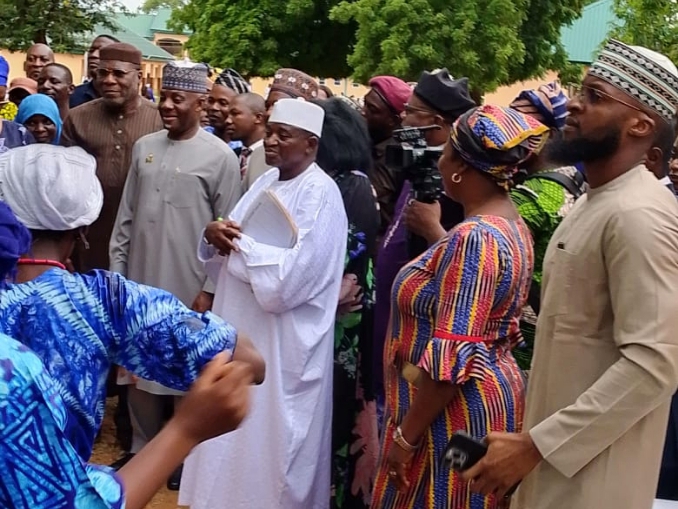
Minister of Education, who monitored the exercise in selected schools across the Federal Capital Territory (FCT) on Thursday, said the assessment would provide reliable data to determine whether Nigerian children are acquiring the expected literacy, numeracy and cognitive skills at different stages of their education.
The assessment is being conducted for pupils in Primary Three and Primary Five, as well as students in Junior Secondary School Two (JSS2) and Senior Secondary School Two (SSS2), covering English Studies, Mathematics, Basic Science and cognitive or non-cognitive skills, depending on the level.
Speaking during visits to Government Secondary School, Kuje, and other participating schools, including a private primary school, Topaz Model Primary School, the minister said the exercise was designed to answer a fundamental question: whether children are truly learning in school.
“It is not enough for children to be in school. We must know whether they are acquiring the knowledge and skills expected at every stage of their education,” he said.
The minister commended the learning environment at Government Secondary School, Kuje, describing it as clean, conducive and supportive of effective teaching and learning.
He said the students appeared healthy, confident and well cared for, stressing that a safe and clean environment contributes significantly to improved learning outcomes.
At the private school in Topaz Model Primary School, the minister acknowledged that although the classrooms were relatively overcrowded, the school management had made commendable efforts to provide quality learning conditions.
He noted that private schools continue to complement government efforts by expanding access to education and reducing the number of out-of-school children.
“Private schools continue to play an important role. Without them, many more children would be out of school. Our responsibility is to support them while ensuring that standards are maintained,” he said.
The minister disclosed that Nigeria had not conducted learning assessments consistently over the years, noting that the last nationwide exercise was carried out in 2023 by the Universal Basic Education Commission (UBEC), while the previous one was conducted in 2019 by the Federal Ministry of Education.
To institutionalise the process, he said the ministry had adopted a policy that would make the National Learning Assessment a regular exercise every three years, with UBEC directed to make budgetary provisions beginning with the next cycle in 2029.
According to him, previous studies indicated high levels of learning poverty, with many Nigerian children unable to read and understand age-appropriate texts by the age of 10.
Although those figures were based on earlier studies, he said they underscored the urgent need for reforms in the education sector.
“The purpose of this assessment is to establish where we are today. Once we have reliable data, we can identify weaknesses, design targeted interventions and measure progress over time,” the minister said.
He added that, unlike previous exercises, this year’s assessment harmonises different learning assessments into a single national framework, providing a standardised benchmark for measuring learning outcomes across the country.
The initiative forms part of the Nigeria Education Sector Renewal Initiative and aligns with President Bola Ahmed Tinubu’s education reform agenda aimed at improving learning outcomes and building a knowledge-driven economy.
Also speaking, the FCT Education Secretary, Danlami Hayyo, said the FCT Administration had renovated more than 120 public schools under the leadership of the Minister of the Federal Capital Territory, Barrister Nyesom Wike.
He said the renovations covered classrooms, hostels, sanitation facilities and other critical infrastructure to create more conducive learning environments.
Hayyo described the National Learning Assessment as a critical step toward improving educational standards nationwide and pledged the FCT Administration’s continued support for its successful implementation.
The results of the assessment are expected to provide policymakers with credible evidence on the state of learning in Nigerian schools and guide future interventions aimed at strengthening literacy, numeracy and overall educational outcomes.