Borno State Government has reaffirmed its commitment to the full enforcement of the 2022 Child Protection Law, pledging to work closely with security agencies, traditional and religious leaders, the media, civil society organisations, and other stakeholders to safeguard children’s rights across the state.
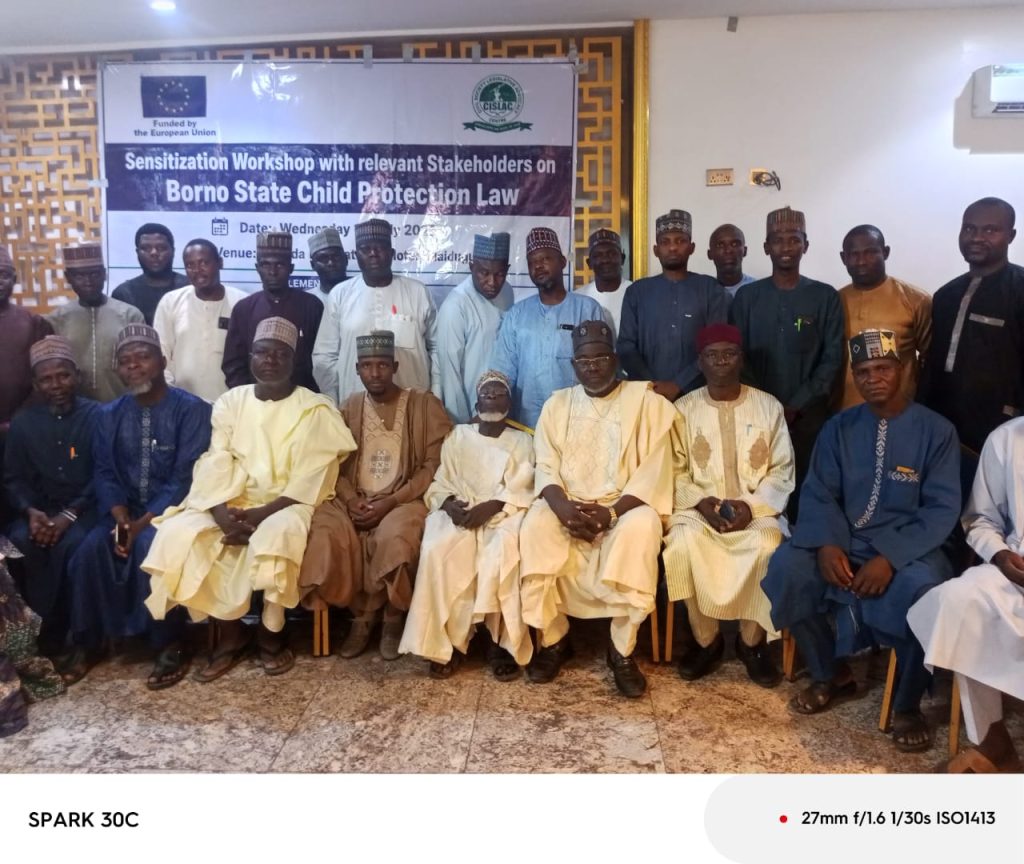
The Director of Child Development in the Ministry of Women Affairs and Social Development, Hajiya Bawagana Kyari, made the pledge on Wednesday during a one-day sensitisation workshop on the Borno State Child Protection Law, 2022, held in Maiduguri.
She said the law, passed in 2021 and gazetted in 2022, requires broad public awareness to ensure effective implementation.
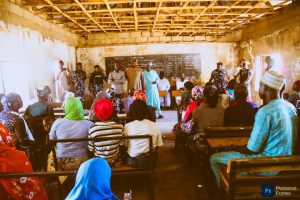
Kyari explained that the workshop was organised to educate stakeholders on the provisions of the law, implementation procedures, offences, penalties, and the responsibilities of institutions involved in protecting children. Participants included representatives of security agencies, the media, traditional and religious institutions, women, youths, and children.
The event, held at Amada International Hotel Annex, was funded by the European Union and implemented by the Civil Society Legislative Advocacy Centre (CISLAC), SOS Children’s Villages, and the Jirehdoo Foundation.
Speaking at the event, CISLAC Executive Director, Awwal Ibrahim Musa, represented by Advocacy Officer Solomon Adoga, urged stakeholders to champion the enforcement of the law and help protect children under the age of 18 from abuse, exploitation, trafficking, child labour, and other violations.
The workshop facilitator, Professor Ibrahim Ahmed of the Faculty of Law, University of Maiduguri, said the Child Protection Law was developed after extensive consultations and amendments to address cultural and traditional concerns while aligning with national and international child rights standards.
Professor Ahmed said the law seeks to protect children from abuse, neglect, exploitation, sexual offences, child trafficking, recruitment into armed groups, and harmful practices. He stressed the need for effective enforcement structures and stronger collaboration among government agencies and community leaders.
Participants called for increased public awareness and active involvement of individuals and organisations in implementing the law.
They also urged authorities to address the growing problems of street begging, child hawking, school dropouts, and children living on the streets to ensure every child in Borno enjoys a safe and protected future.