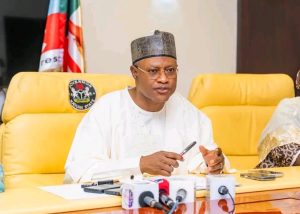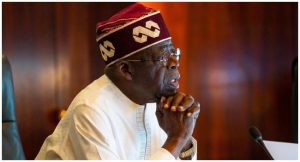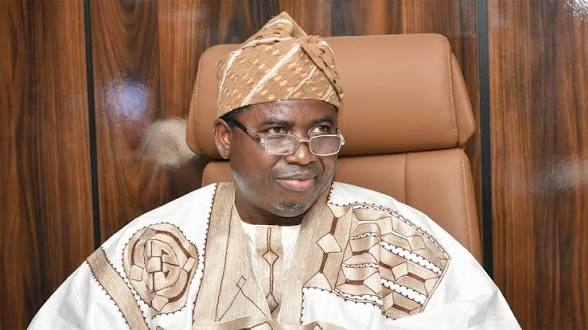
INEC chairman Joash Ojo Amupitan
Chairman of the Independent National Electoral Commission (INEC), Professor Joash Ojo Amupitan (SAN), has called for a stronger partnership between the Commission and the National Orientation Agency (NOA) to tackle voter apathy, misinformation and civic disengagement ahead of the 2027 General Election.
Speaking on Wednesday while receiving the Director-General of the NOA, Mallam Lanre Issa-Onilu, during a courtesy visit to the INEC headquarters in Abuja, Amupitan said the success of the 2027 elections would depend not only on technology and logistics but also on sustained voter education and public enlightenment.
He described the meeting as more than a routine courtesy call, saying it represented a convergence of two institutions with complementary constitutional responsibilities for promoting democratic values and civic participation.
According to the INEC chairman, while the Commission has continued to strengthen electoral administration through innovations such as the Bimodal Voter Accreditation System (BVAS) and the INEC Result Viewing Portal (IReV), these efforts would have limited impact if citizens remained uninformed or disillusioned about the electoral process.
Amupitan said the National Orientation Agency was strategically positioned to bridge that gap because of its nationwide presence and expertise in communicating with communities in local languages and culturally relevant ways.
He cited provisions of the National Orientation Agency Act, 1993, which empower the agency to promote democratic norms, educate citizens on their rights and responsibilities, discourage electoral malpractice and mobilise Nigerians for active participation in national affairs.
“The partnership between INEC and the NOA on voter education is not a secondary option; it is an absolute necessity,” he said.
The INEC chairman expressed concern over declining voter turnout and the spread of fake news and disinformation, describing them as serious threats to Nigeria’s electoral process. He urged both institutions to develop grassroots voter education campaigns that would not only encourage citizens to vote but also deepen public understanding of the safeguards introduced to enhance electoral transparency.
He said Nigerians needed to be reassured that technological innovations had significantly reduced opportunities for manipulating election results through ballot box snatching or manual alteration of results.
Amupitan also highlighted what he described as the operational successes of the February 21, 2026, Federal Capital Territory Area Council elections and the June 20, 2026, Ekiti State governorship election. He said the polls recorded more than 90 per cent early opening of polling units, effective biometric accreditation using BVAS and prompt uploading of results to the IReV portal.
Despite these improvements, he noted that the elections exposed persistent voter apathy and widespread confusion among many voters, particularly in urban areas, over polling unit realignments and voter registration transfers.
According to him, the experience underscored the urgent need for sustained civic education well ahead of the 2027 general election.
Commending Issa-Onilu’s leadership of the NOA, Amupitan said modern civic orientation must embrace digital communication, community engagement and youth-focused messaging to remain effective.
Looking ahead to the 2027 elections, he called for closer institutional collaboration between INEC’s voter education department and the communication teams of the NOA to combat vote-buying, misinformation and other threats to credible elections.
He pledged INEC’s commitment to supporting the partnership through the sharing of resources, data and technical expertise to ensure effective voter education across the country.
“I have no doubt that your tenure will mark a golden era of civic consciousness in Nigeria, and I am proud that INEC is walking this path side-by-side with you,” the INEC chairman told the NOA Director-General.
Responding, the NOA DG, Mallam Issa Onilu, said the agency’s nationwide structure puts it in a unique position to drive the partnership beyond election periods.
“Regarding deciding who will be our leaders… it is just the right of the citizens to do that we all have the responsibility to protect and I’m sure we also promote it. So that’s where we come up,” Onilu said.
He noted the knowledge gap exposed during the last election, especially among Gen Z first-time voters.
“The last election in particular saw something happen in this country. The people we refer to as Gen Z came of age… When it came to its own drawback, we saw a huge gap in knowledge and we saw a lot of productive time committed to issues that should never be discussed because there was only so much knowledge. And that was very dangerous for us as a country,” he said.
Onilu outlined NOA’s reach: “We have a total of 818 offices nationwide. We have offices in all local governments, we have offices in the 36 states and 6 zonal directorates… All that we do is to communicate government policies, programmes, and projects to Nigerians and to generate feedback.”
He said patriotism and trust must be deliberately cultivated, not enforced.