By ABIMBOLA ADELAKUN –
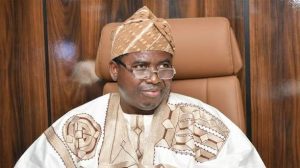
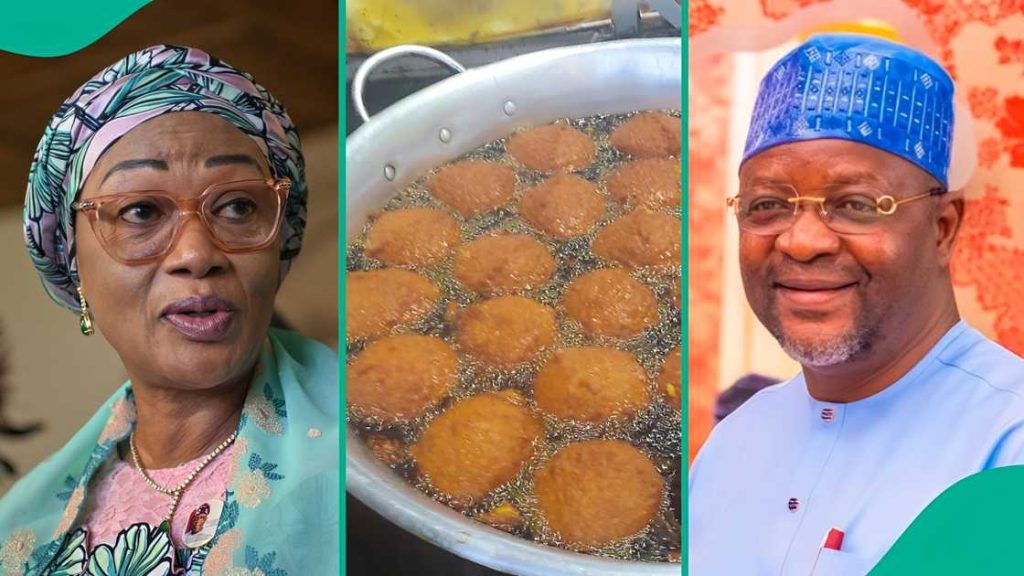
Presidential adviser Sunday Dare jumped into the “akara and kúlíkúlí” conversation and came out as someone living an unexamined life. He gave his mother’s petty trading as an example of what was possible from meagre means. Dare could have left it there, but he had to prove himself a regular APC supporter who disregards the open road to traipse through the bush. In advising us not to miss Mrs Remi Tinubu’s point about entrepreneurship, he added, “Go and read Dangote’s story, where he started from. He also started as a trader.” A quick question for him: If it were possible for a petty trader to end up like Aliko Dangote, why did your mother’s akara and banana subsistence trading not become a multi-billion-dollar business? You could have been the son of a billionaire rather than a pathetic political apologist.
There is enough publicly available information about Dare’s life to make him a stand-in for the league of leaders who live an unexamined life. They are those people who remain oblivious to the structures that helped them grow into who they are today. They imagine they rose from poverty by sheer dint of their resilience, a lack of reflection that makes them push away the same ladders that helped them ascend when they get into political power. Dare is part of the generation Nigeria gave its best; they lived in a relatively functioning Nigeria, not the place of extreme angst we have today. People of his generation went to school in a Nigeria where public education still existed; no, his mother did not raise him on just akara money. He must have received a good quality education at public expense (as it should be). Even when parents paid some money, it was still a relatively subsidised education. The classrooms were not as decrepit, unfit to raise even pigs.
Today, the government—especially in the South—has all but ceded the duty of education to the private sector. They no longer build new schools; the existing ones are too cramped to accommodate the growing population. Lagos State, where I assume Dare lives, has roughly 20 per cent public school enrolment. The rest of its children are in private schools. Almost everyone’s first resort for their children’s education is now private schooling, which is by no means synonymous with good education. Much of it is poor education given to poor children so they can remain poor. You do not know how bad the situation is until a new academic year comes around and churches start prayer sessions for parents to afford their children’s school fees by divine provision. Where else does that happen other than in a country that refuses to take its future seriously?
Education in Nigeria has today become a form of social apartheid, a far cry from the days when Dare went to school, and the children of the high and low attended the same public school. Today, their own children are abroad while those of àkàrà sellers are toughing it out in a neighbourhood private school that pays its teachers N20,000 salary. One of the long-term consequences of this privatisation of education is the lengthening of the path of social mobility for the children of the poor. Even worse, parents raising a child in today’s Nigeria not only pay for private schools but also face the harsh effects of the APC’s neoliberal policies. With the small income they currently earn, they must pay the unsubsidized costs of gas and energy, along with multiplier effects across every sector of the economy. So, yes, the conditions that helped your parents raise you with àkàrà proceeds have been altered. Asking people to do the same things with far less is dishonest.
The trouble with Mrs Tinubu’s defenders is that many of them do not care about understanding the difference between petty trading, small business, and entrepreneurship. They lump everything together, which is why a very educated man like Dare can imagine Dangote traded wòsìwósì to become a billionaire. Petty trading is like subsistence farming; it helps with basic survival, but it cannot grow into national food security. One is at the mercy of nature and a mere survival mechanism, while the other has not only mastered nature but also generates value. Petty trading is precarious; people who engage in it mostly operate outside the formal system and face a future without social security benefits (such as pensions). Our people romanticise it a lot, and that reflects the failure of imagination that keeps Africa poor. It is no coincidence that the countries with the widest informal economy are also the poorest. Each time people celebrate it, I ask them to show me examples of countries that have developed based on the informal economy. In fact, the more developed a country is, the more its informal economy shrinks.
The other trouble with them is their short memory. We had this exact conversation when Vice President Yemi Osinbajo was going to the markets to share N10,000. They said we were “elitist” and that that money would go a long way in setting people up for financial independence. Seven years later, where are the Osinbajo millionaires? How many of them have made anything with their lives? I challenge them to bring out their TraderMoni success stories. In fact, all the “empowerment” (the currently most abused word in Nigeria) programs that governors and lawmakers embark on should be audited. They have given out everything from motorcycles to wheelbarrows, Keke NAPEP, sowing machines, petty cash, noodles, and beverages. What exactly has been achieved other than recycling poverty? I can give many personal examples of people I have supported to start one business or another, but it hardly goes anywhere because those funds land on the parched ground of deprivation. If the high cost of energy does not wipe out their narrow profit margins, they lose the rest to illness or even police (or task force) trouble.
Now, it is possible that Mrs Tinubu’s heart was in the right place, but she was just clueless. If that is the case, she needs better advisers, not the likes of Dare, whose livelihoods depend on keeping her flattered. She needs people of integrity who are not intimidated by her to tell her she is not cultivating hope by asking people already sinking in poverty to persist on the same unproductive path. It is clear she is out of touch and, unfortunately, also surrounded by many yes-men and yes-women who are clearly not helping. That must explain why her other “First Lady” projects (the national gardening project and aṣọ ẹbí) turned out to be massive gaffes and had to be quietly discontinued. What we need from the APC is an agenda for national prosperity, not this endless almsgiving masquerading as economic policy. The Nigeria of our dreams is not the one where millions of women of various ages will continue to line the streets selling wóróbo, perpetually vulnerable to natural elements and economic vicissitudes. This is not an argument about “dignity of labor” but an insistence on the dignity of the laborer.
Look, we are tired of a Nigeria where we are perpetually told to manage (live on a plate of rice for N1500!); we want to live in abundance. We need an industrialised Nigeria where multinational businesses absorb as many people as possible into formal employment; where millions of small businesses are well-supported with infrastructure and policies; and where the social security net is wide enough to cover all of us. In that Nigeria that we dream of, people will still sell àkàrà and kúlíkúlí, but they will do so through access to credit from lending institutions. They will not need to rely on the pittance from politicians who suspiciously time their charity to the year of their re-election.
Abimbola Adelakun can be reached via aadelakun@punchng.com
SOURCE: https://globalupfront.com/