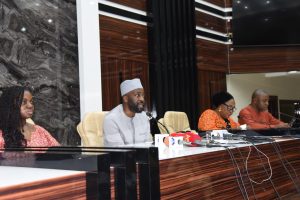
Benue State Governor, Hyacinth Alia
PART ONE: EDUCATION
With less than 8 weeks to May 29, 2025 today, I have undertaken an altruistic and apolitical assessment of the midterm performance of the administration of Governor Hyacinth Iormem Alia of Benue State. It is about halftime! Every week from Sunday, April 6 until Sunday, May 25, 2025, I will publish a sectoral assessment of Governor Alia’s administration. I begin with the Education sector.
Since assuming office on May 29, 2023, Governor Hyacinth Iormem Alia of Benue State has initiated numerous projects and policies aimed at transforming the state’s educational landscape. His administration has focused on human resource development, infrastructure enhancement, academic excellence, and strategic initiatives to improve the quality and accessibility of functional education.
Projects and Policies Implemented
1. Human Resource Development and Welfare:
– Teacher Recruitment and Welfare: The administration approved the recruitment of over 9,000 teachers through a transparent Computer-Based Test (CBT) process, marking a first in the state. Additionally, it implemented a minimum wage of N75,000 for public school teachers, ensuring prompt payment of salaries and pensions, which has significantly boosted teacher morale and financial stability.
– Professional Development: Training programs for teachers, Early Childhood Care and Development Education (ECCDE) caregivers, and Education Secretaries were facilitated to enhance professional standards.
2. Infrastructure Development:
– School Facilities: The government constructed modern classrooms, digital and non-digital libraries, toilets, and boreholes. Existing schools underwent renovation and rehabilitation to provide a conducive learning environment.
– SUBEB Headquarters Enhancement: Significant improvements were made to the State Universal Basic Education Board (SUBEB) headquarters, including constructing a new office complex,
remodeling office blocks, establishing a Digital Resource Centre with over 30 computers, and enhancing security measures.
3. Advocacy and Strategic Initiatives:
– Increased Enrollment and Inclusivity: Statewide advocacy campaigns led to increased enrollment in public schools. The administration revived nursery sections in public primary schools, promoted girl-child education in 30 nomadic communities, and reduced the number of out-of-school children through community engagement programs.
– Agricultural Education Training Programme (AETP): School farms were reintroduced to blend learning with practical skills, fostering a holistic educational approach.
It is noteworthy that under the administration of Governor Alia, Benue State University of Agriculture, Science and Technology (BSUAST) was conceived, even as I understand that the Benue House of Assembly has already passed a bill approving its establishment. Not only are the proposed degree programs to be offered by the University novel, aimed at problem-solving (one of the 21st century skills), the decision to establish the University in Zone A Senatorial District affirms Governor Alia’s sense of fairness and equity. Until this decision, Zone A was the only Senatorial District in Benue State that was without a state or federal university. I hope that the pioneering efforts towards establishing the University will position it as a truly global university with global perspectives, innovation, partnerships, and traditions.
4. Academic Excellence:
– Competitions and Achievements: Students sponsored by the government achieved notable successes, including victory in a bilateral debate in Indonesia, second place in the President’s Schools Debate Nigeria, and fourth place in the National JETS Quiz Competition.
– ICT Integration: Computer-based learning was introduced at the UBEC Model Smart School in Makurdi, aligning with modern educational trends.
5. Policy and Budgetary Allocations:
– Budget Allocation: The administration allocated 15% of the 2024 budget to education, surpassing the federal level’s 7%, demonstrating a strong commitment to the sector.
– Establishment of BEQA: The Benue State Education Quality Assurance Agency (BEQA) was established to monitor and evaluate schools, aiming to improve educational standards and accountability.
Notable Achievements
– Enhanced Teacher Support: The administration’s focus on teacher recruitment, welfare, and professional development has led to a more motivated and effective teaching workforce.
– Improved Learning Environment:
Infrastructure developments have provided students with better facilities, contributing to an enhanced educational experience.
– Recognition in Competitions: Students’ successes in national and international competitions have elevated the state’s educational profile.
Deficiencies
Despite these strides, certain areas require attention:
– Sustainability of Initiatives: Ensuring the continuity and maintenance of infrastructure projects and programs is crucial.
– Equitable Resource Distribution: Some rural areas may still lack adequate educational facilities and qualified teachers, leading to disparities in educational quality. I know some of those communities, and Gov. Alia’s collaboration with local government chairmen in addressing deficiencies in education services to those areas is a desideratum.
– Monitoring and Evaluation: While BEQA has been established, its effective implementation and the extent of its impact remain to be fully assessed.
Proposals for Improving Quality and Accessibility of Functional Education (May 2025 – May 2027)
1. Strengthen Monitoring and Evaluation:
– Fully operationalize BEQA to conduct regular assessments of schools, ensuring compliance with educational standards and identifying areas needing improvement.
2. Focus on Rural Education:
– Implement targeted programs to address educational disparities in rural areas, including deploying qualified teachers, assisting in the remuneration of teachers at private schools in rural communities (as the administration of Governor Aper Aku did), providing necessary infrastructure, and promoting community involvement.
3. Sustain and Expand Teacher Development:
– Establish continuous professional development programs and create a support system for teachers to share best practices and resources.
4. Leverage Technology:
– Expand ICT integration across more schools to enhance digital literacy and prepare students for a technology-driven world.
5. Community and Private Sector Engagement:
– Foster partnerships with communities and the private sector to mobilize additional resources, expertise, and support for educational initiatives.
6. Policy Continuity and Feedback Mechanisms:
– Establish mechanisms to gather feedback from educators, students, and parents to inform policy decisions and ensure that initiatives meet the actual needs of beneficiaries.
By addressing these areas, the administration can build upon its achievements to further enhance the quality and accessibility of functional education in Benue State over the next two years.
***In Part 2, I will focus on AGRICULTURE.
© Shilgba
shilgba@gmail.comLeonard Karshima Shilgba, PhD, MS, BS, NCE, FCEA
Professor of Mathematics
Dean, Faculty of Science
Pioneer Ag. Vice Chancellor/President
Pioneer Vice President (Academics Affairs)Admiralty University of Nigeria (ADUN)
Chairman, 9th Governing Board of National Business and Technical Examinations Board (NABTEB)
Tel: +234 (0)7035939505
WhatsApp: +234 (0) 9074346000Skype ID: Doankeleo
www.adun.edu.ngwww.leonardshilgba.com