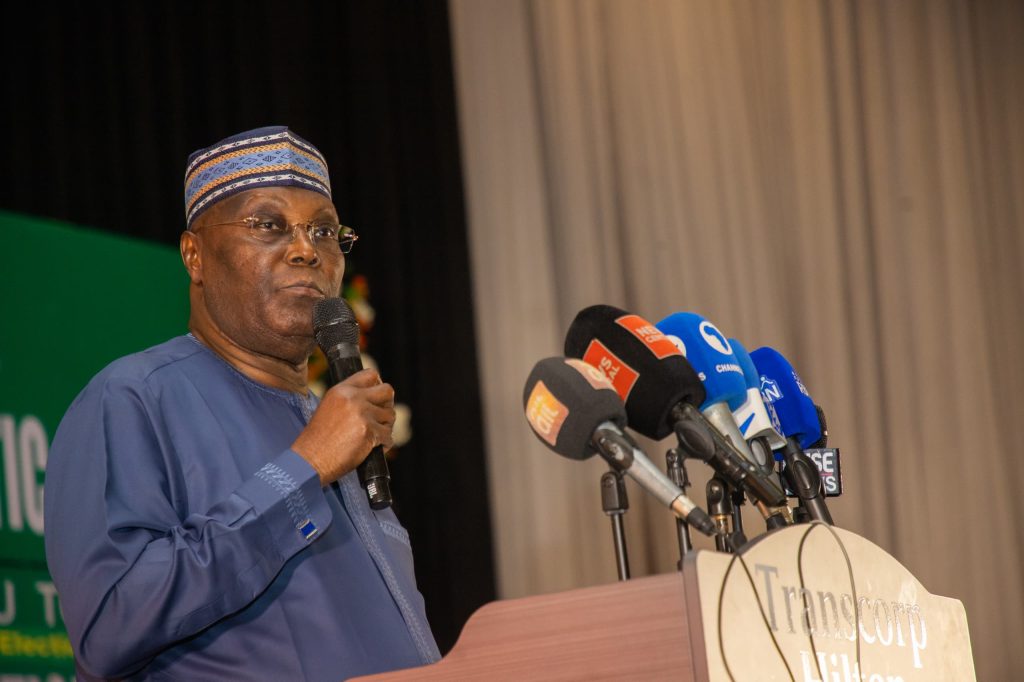
ADC Presidential candidate, Atiku Abubakar. Photo credit: @Atiku/X
African Democratic Congress (ADC) presidential candidate, Atiku Abubakar, has called for an urgent nationwide investigation into an International Monetary Fund (IMF) report which, according to him, revealed that public expenditures equivalent to about two per cent of Nigeria’s Gross Domestic Product were not reflected in the country’s official budgets.
In a statement issued on Saturday, Atiku described the revelation as “the most consequential act of fiscal impunity in Nigeria’s recent democratic history,” alleging that the unrecorded expenditure amounts to approximately ₦8.8 trillion.
Citing the IMF’s July 1, 2026 Article IV consultation, Atiku, who was the former Vice President, said the reported discrepancy stemmed from large-scale government projects allegedly executed outside the statutory budget process.
“My attention has been drawn to a deeply troubling report by the International Monetary Fund, published on July 1, 2026 by Reuters, which reveals that the Tinubu-led APC administration failed to record public expenditures amounting to approximately 2 percent of Nigeria’s Gross Domestic Product in recent official budgets.
“At the current valuation of Nigeria’s economy at approximately ₦441.5 trillion, this figure translates to a staggering ₦8.8 trillion in public funds spent entirely outside the statutory framework of Nigeria’s official budget documents, unaccounted for, unaudited, and hidden from the Nigerian people,” he said.
The former vice president urged the media, civil society organisations, the National Assembly and other democratic institutions to focus attention on what he described as a constitutional emergency.
“I view this revelation with the gravest alarm and call upon all Nigerians – the media, civil society, the National Assembly, and every democratic institution in this country – to set aside every distraction and direct their full attention to what is, by any reasonable standard, the most consequential act of fiscal impunity in Nigeria’s recent democratic history,” Atiku stated.
According to him, the IMF report suggests that major public projects were carried out outside the official budgetary framework, a development he said bypassed constitutional oversight mechanisms.
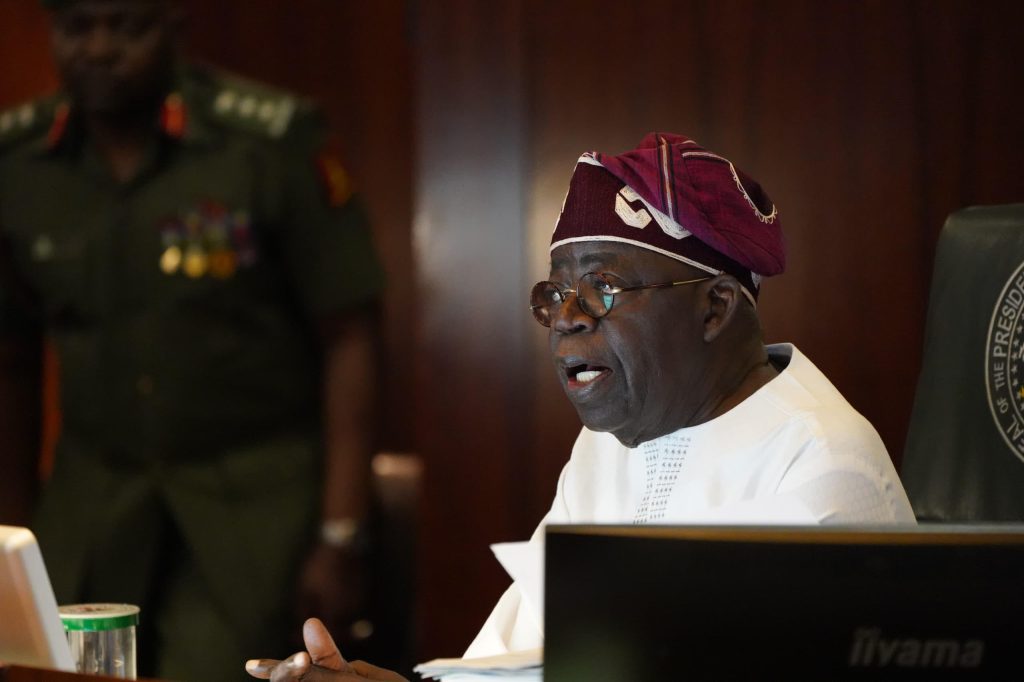
“The Tinubu administration is awarding multi-trillion naira contracts, moving massive public capital, and commissioning infrastructure projects entirely beyond the reach of the Auditor-General, the nation’s procurement laws, and the legitimate oversight of the National Assembly,” he alleged.
Atiku further claimed that the alleged practice mirrors what he described as an “off-budget economy” that existed during President Bola Tinubu’s tenure as governor of Lagos State.
“What the IMF has now documented at the federal level is that same Lagos playbook, replicated at national scale and with national consequences. The man who perfected the art of the off-budget economy in Lagos has brought that ‘Beta’ form to Abuja, and the price is being paid by 220 million Nigerians,” he said.
The ADC presidential candidate also alleged that ₦800 billion had been unlawfully deducted from statutory allocations due to state governments, claiming the funds were diverted without constitutional backing.
He argued that the alleged ₦8.8 trillion in unrecorded expenditure, combined with the disputed state allocation deductions, could be used to finance political activities ahead of the 2027 general elections.
“We state clearly and without equivocation that this ₦800 billion, combined with the ₦8.8 trillion in unrecorded federal expenditures, points unmistakably to the construction of a massive, multi-source political war chest being assembled ahead of the 2027 general elections.
“When a government operates a secret treasury of this scale at precisely the moment it needs to purchase electoral outcomes, the conclusion is not difficult to reach. The Tinubu administration is not reforming Nigeria’s economy. It is financing its own political survival with money that belongs to the Nigerian people,” he alleged.
Atiku also criticised the administration’s economic reforms, including the removal of fuel subsidy, exchange rate policies and rising interest rates, arguing that Nigerians had endured hardship while substantial public funds were allegedly managed outside the official budget.
“The IMF has now exposed that narrative as a big fat lie. While the poor were told to bleed, the government maintained access to a ₦8.8 trillion shadow treasury, entirely outside public view, entirely beyond legislative oversight, and entirely at the disposal of those who hold executive power,” he said.
The former vice president said the alleged amount could have been deployed to stimulate economic growth and support businesses instead of remaining outside public scrutiny.
As part of his demands, Atiku called on the National Assembly to immediately open investigative hearings into the IMF findings, while urging the Auditor-General of the Federation to conduct a comprehensive audit of all off-budget expenditures referenced in the IMF report.
He also asked the Federal Government to publish a full account of all funds allegedly spent outside the approved budget, identify the projects and contractors involved, restore the disputed ₦800 billion to state governments, and direct anti-corruption agencies to commence independent investigations.
“The evidence is on the record. The figures are not in dispute.
“The only question that now confronts every Nigerian citizen, every elected representative, and every democratic institution in this republic is whether we will summon the collective will to demand accountability, or whether we will allow ₦8.8 trillion in unrecorded public expenditure… to become the accepted, unremarkable condition of governance in Nigeria.
“We will not accept it. And we call on every Nigerian who believes in the integrity of the public treasury, the sovereignty of the Nigerian people over their own resources, and the future of this republic to refuse to accept it as well.”This version is rewritten in a newsroom style for originality while preserving the direct quotes from the press release, making it suitable for publication and optimized for search engines.