
National Examinations Council (NECO) marked its silver jubilee from May 7 to 9, 2026, celebrating 25 years of educational assessment in Nigeria under the theme: _“Celebrating 25 Years of NECO’s Excellence in Educational Assessment.”_
The anniversary offered an opportunity to reflect on the evolution of the examination body from a fledgling institution battling credibility concerns to an internationally recognised examination council with operations extending beyond Nigeria’s borders.
Established on July 10, 1999, during the administration of former Head of State Gen. Abdulsalami Abubakar, NECO emerged following years of public agitation and recommendations by several government panels between 1977 and 1997 advocating for a credible indigenous examination body tailored to Nigeria’s educational realities.

The council succeeded the National Board for Educational Measurement (NBEM) and officially commenced operations in 2000 with the mandate to conduct the Senior Secondary Certificate Examination (SSCE) for internal and external candidates, the Basic Education Certificate Examination (BECE), and the National Common Entrance Examination (NCEE).
Over the last 25 years, more than 35 million candidates have participated in NECO examinations nationwide. Registrar and Chief Executive, Prof. Dantani Ibrahim Wushishi, said the figure reflects “the trust reposed in NECO and its unwavering commitment to fairness, credibility, and integrity.”
Today, NECO conducts examinations in eight countries, including Nigeria, Benin Republic, Togo, Niger Republic, Equatorial Guinea, Côte d’Ivoire, and Saudi Arabia, as part of efforts to expand its international presence and strengthen global acceptance of its certificates.
Speaking during the anniversary celebration, Wushishi said the council had transformed significantly over the years.
According to him, “NECO had evolved from a struggling national institution facing public distrust and infrastructure challenges into an internationally recognised examination body known for professionalism and integrity.”
“Today, NECO is recognised on international platforms as a credible examination body contributing to educational integrity and mobility,” he added.

As part of the silver jubilee celebrations, outstanding schools and states were recognised for academic excellence. Dority International Early Learning School emerged as the best-performing secondary school, while Bayelsa State recorded the highest percentage of candidates with five credits and above. Lagos State also emerged with the highest number of candidates.
Early Challenges and Reforms
In its formative years between 1999 and 2007, NECO faced serious challenges ranging from inadequate infrastructure to low public confidence and concerns over the validity of its certificates, especially in comparison with the West African Examinations Council (WAEC).
The pioneer Registrar, Emeritus Prof. Dibu Ojerinde, who received a Lifetime Achievement Award during the celebration, played a key role in stabilising the institution during its early years.
One major turning point in NECO’s operations was the introduction of digital processes, including online registration and electronic result-checking systems, reforms widely credited with improving efficiency and restoring public confidence.
Despite its progress, the council also experienced internal crises.
Between 2018 and 2022, NECO came under scrutiny over governance and procurement irregularities. Reports indicated that contracts worth about N25 billion were allegedly awarded without due compliance with the Public Procurement Act, while concerns were also raised over inflated printing costs and weak internal control systems.
Following investigations into the allegations, former President Muhammadu Buhari approved the termination of the appointment of the then Registrar, paving the way for a fresh reform agenda.
Subsequently, the council established new departments, including ICT, Internal Audit, and Procurement, aimed at strengthening institutional oversight, improving accountability, and enhancing examination integrity.

The Federal Government also announced plans for NECO to spearhead the implementation of Computer-Based Examinations (CBE) beginning in 2026 as part of efforts to curb examination malpractice through real-time monitoring and improved security systems.
Push for Credibility and Digital Expansion
NECO’s management says the future of the council will be anchored on technology-driven assessment systems, institutional reforms, and stronger collaboration with stakeholders in the education sector.
Chairman of the Governing Board, Prof. Modupe Adelabu, said the next phase of NECO’s growth would revolve around “Merit, Integrity, Opportunity.”
Wushishi also highlighted several achievements recorded in recent years, including the construction of office projects in 10 states, deployment of e-verification systems, issuance of digital certificates, and the establishment of a data analysis studio to strengthen operational efficiency.
According to him, the council had also procured additional operational vehicles to improve logistics and examination administration nationwide.
He assured that NECO would continue to deepen anti-malpractice measures, expand digital services, and strengthen collaborations with international examination bodies.
Lingering Challenges
Although NECO has made notable progress, challenges remain.
The council has continued to battle issues such as examination malpractice, occasional delays in the release of results, and infrastructure deficits, particularly in rural examination centres. In its early years, clashes in examination timetables between WAEC and NECO also generated criticism from stakeholders.
However, education authorities believe ongoing reforms, especially the transition to CBT and tighter security frameworks, could significantly address many of these concerns.
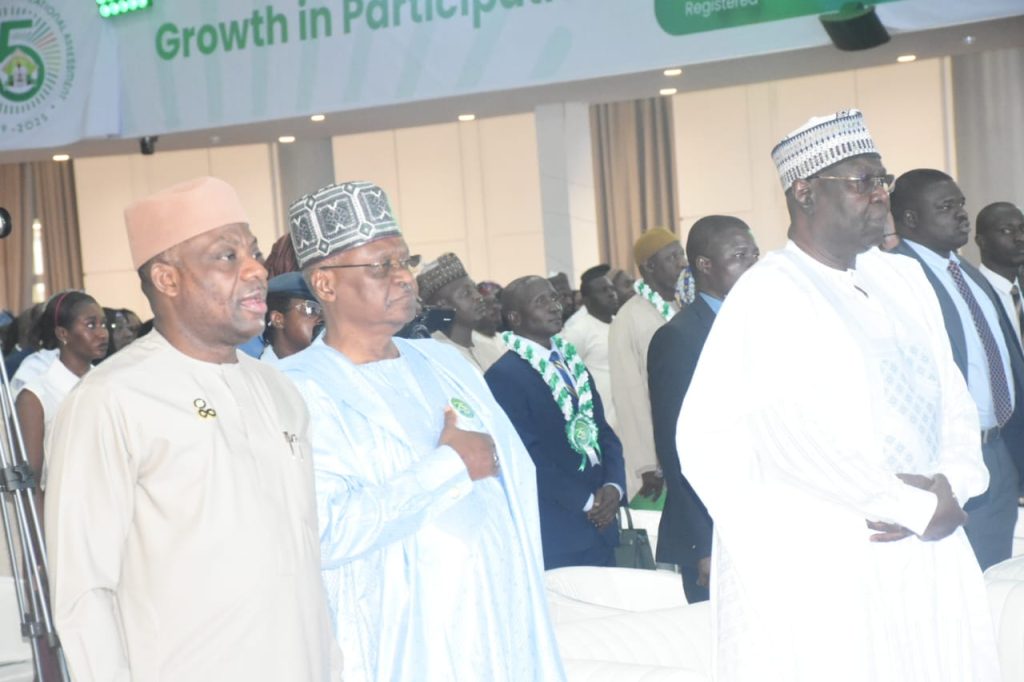
Minister of Education, Dr. Maruf Alausa, commended NECO for expanding access to credible certification opportunities since its establishment in 1999.
He noted improvements in examination centres, examiner training, and secure data management, while urging educators and stakeholders to support reforms aimed at promoting digital literacy, critical thinking, and problem-solving skills among students.
For NECO, the silver jubilee is not only a celebration of longevity but also a moment of reflection and renewed commitment.
Wushishi described the anniversary as “more than a celebration of institutional longevity… an opportunity for reflection, recognition of achievements, and renewed commitment to innovation and excellence.”
As the council enters its next phase, its priorities remain clear: expanding CBT examinations, improving access for qualified candidates, and aligning its assessment processes with global best practices in examination security, assessment design, and data management.
From its creation in 1999 as a response to demands for a truly Nigerian examination body, NECO has grown into a major educational institution that has assessed more than 35 million candidates and expanded its footprint across Africa.
Its next chapter, stakeholders say, will be defined largely by technology, institutional reforms, and the pursuit of global credibility in educational assessment.