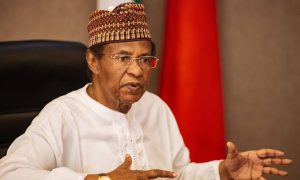
Executive Chairman of the Plateau State Internal Revenue Service (PSIRS), Dr. Jim Pam Wayas,
Plateau State has recorded its highest Internally Generated Revenue (IGR) in history, generating ₦45.1 billion in 2025 and crossing the ₦40 billion mark for the first time, according to official figures released by the Plateau State Internal Revenue Service (PSIRS).
The figure represents 86.2 per cent of the state’s ₦52.3 billion revenue target for the year and marks a major milestone in Plateau’s fiscal performance, underscoring a steady upward trajectory in revenue mobilisation over the past three years.
The Executive Chairman of the Plateau State Internal Revenue Service (PSIRS), Dr. Jim Pam Wayas, disclosed this while briefing journalists in Jos on the revenue performance for the just-concluded fiscal year.
He said the figure represents 86.2 per cent of the state’s ₦52.3 billion revenue target for 2025 and reflects sustained growth in revenue mobilisation over the past three years, attributing the performance to reforms within the revenue system, including the centralisation and automation of processes, as well as the elimination of cash-based collections.
“For the first time in the history of Plateau State, we have crossed the ₦40 billion threshold in internally generated revenue. In 2022, total collections stood at ₦15.9 billion. In 2023, we improved on that, and in 2024 we moved beyond ₦30 billion. As of the end of 2025, we recorded ₦45.1 billion.
“We have automated and centralised all our processes. There is no cash collection anywhere in the system, and that has significantly reduced leakages. Plateau is now among the states operating a zero cash-collection regime,” he stated.
Wayas noted that the Plateau State Internal Revenue Service also recorded its strongest performance since its creation. Out of a ₦34 billion budget for 2025, the service generated ₦32 billion, representing about 94 per cent performance.
On the contribution of Ministries, Departments and Agencies (MDAs), Wayas said they generated ₦12.5 billion out of a ₦17.9 billion target in 2025, representing about 70 per cent performance, an improvement compared to earlier years.
He, however, cautioned that future revenue growth could be affected by recent national tax reforms, which expand reliefs and exemptions for taxpayers, particularly under the Pay-As-You-Earn (PAYE) system.
“The new tax reforms are designed to give more money back to taxpayers. For example, the tax-free threshold has been increased to ₦800,000, and there is now a ₦500,000 rent relief allowance. If states are not careful, these concessions could lead to revenue losses,” he said.
Wayas stressed that the state’s revenue drive was not aimed at imposing hardship on residents but at improving efficiency and broadening the tax base. He commended taxpayers and other stakeholders for their cooperation, noting that revenue collection was a collective effort.
“Our focus is not to create hardship for the people. What we are doing is to improve compliance, strengthen capacity, and ensure that those who should pay taxes do so transparently.
“The achievement of ₦45.1 billion is not the work of the revenue service alone. It is the result of collaboration with MDAs, stakeholders, and compliant taxpayers across the state,” he added.