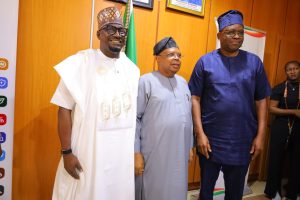
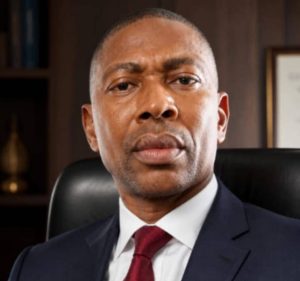
West African Health Organisation (WAHO), a specialised Institution of the Economic Community of West African States (ECOWAS), officially launched in Cotonou, Benin, a regional workshop on the alignment and harmonisation of training curricula for physician specialists and dental surgeons in the ECOWAS region.*
The opening ceremony was presided over by the Minister of Health of Benin, Professor Benjamin HOUNKPATIN, in the presence of representatives of ECOWAS Member States, the African and Malagasy Council for Higher Education (CAMES), professional colleges, deans of health sciences faculties, as well as numerous regional experts and technical partners.
In his opening address, Benin’s Minister of Health emphasised that curriculum harmonisation is a major challenge for the health security of West African populations. He recalled that the quality of specialised training directly influences the quality of care, patient safety and the credibility of health systems, while contributing to regional integration through the recognition and equivalence of diplomas.
The Director General of WAHO, Dr Melchior Athanase J. C. AÏSSI, represented by Professor Joseph OLORUNDA, Professional in charge of Training and Human Resources for Health, recalled that “the region faces a persistent shortage of human resources for health, marked by a low density of qualified professionals and disparities in the quality of training”. He indicated that, since 2007, WAHO, in collaboration with its partners, has been working to harmonise curricula, develop accreditation criteria and strengthen training policies to promote the mobility of health professionals and improve the quality of health services in Member States.
Speaking on behalf of Sierra Leone, the current Chair of ECOWAS, Dr Joan Shepherd, President of the Postgraduate College of Nurses and Midwives of West Africa, commended WAHO’s efforts in strategically structuring specialised health training. She emphasised the importance of having qualified specialists to address the high burden of disease in the region and to improve the health status of populations in a sustainable manner.
Professor Ulrich VODOUHE, Vice-Dean of the Faculty of Health Sciences in Cotonou, speaking on behalf of the deans of the faculties of health sciences, emphasised that harmonising curricula will help to improve the quality of training, facilitate the movement of learners and improve the retention of health personnel in the region. On his part, Professor Philip MSHELBWALA of the West African College of Surgeons based at the University of Abuja, and representing the professional colleges, emphasised the need for interdisciplinary collaboration in order to produce training standards adapted to West African realities.
CAMES, represented by Professor Doumma ALI, Director of Programmes in charge of the Inter-African Advisory Committees on Competitive Examinations, welcomed the WAHO initiative, emphasising that curriculum harmonisation is an essential lever for academic integration and the mobility of learners and teacher-researchers, in line with its 2024-2028 Strategic Plan.
Professor Agnon Koffi BALOGOU, President of the Regional Council for Health Professional Education (RCHPE), pointed out that the work resulting from these initiatives now extends beyond the regional framework, with several training models developed within the ECOWAS region now being used in other African regions.
During this workshop, participants will further advance the alignment of the harmonised curricula which centred on the nomenclature of equivalences of certificates and diplomas, the duration and conditions of admission to training programmes, educational content, teaching methods and assessment mechanisms. The expected documentation from the workshop is expected to serve as the minimum benchmarks for specialised training in health sciences in the ECOWAS region.
Through this initiative, ECOWAS and WAHO reaffirm their commitment to strengthening the quality of training for medical specialists and dental surgeons, promoting the free movement of skilled health professionals and consolidating the region’s health sovereignty.