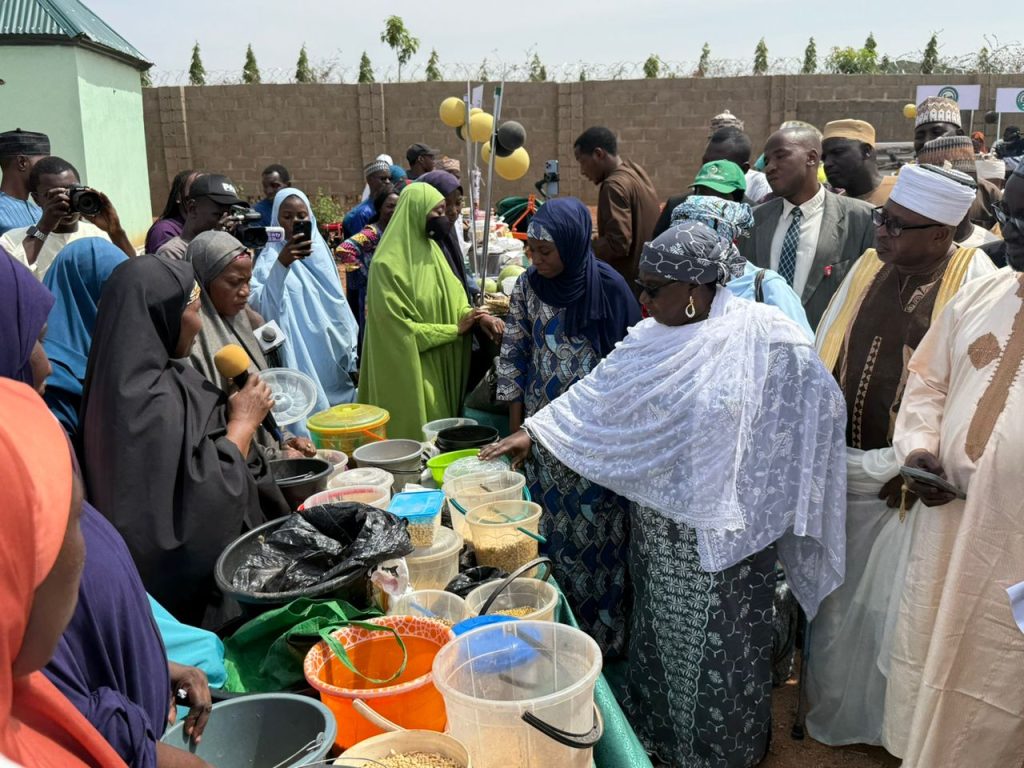
Kaduna State Governor, Uba Sani, has said that empowering women with mechanized farming tools is critical to boosting agricultural productivity, strengthening food security and expanding economic opportunities across Nigeria.
The governor stated this in Kaduna during the celebration of International Women’s Day organized by the Women in Mechanized Agriculture Association (WIMA).
Represented by his deputy, Dr. Hadiza Sabuwa Balarabe, Sani described the gathering as more than a ceremonial event, saying it symbolised what he called a “quiet revolution” taking place across farms, markets and agribusiness centres, largely driven by women.
According to him, agricultural mechanization is transforming farming systems globally and Nigeria must embrace the shift to remain competitive and meet the rising food demands of its growing population.
He explained that mechanization goes beyond the use of machines, noting that it enhances efficiency, boosts productivity, reduces the burden of manual labour and creates new economic opportunities for farmers, particularly women.
The governor observed that many women farmers carry the dual responsibility of managing farm activities while taking care of household duties, stressing that access to mechanized equipment would significantly ease their workload and improve their income.
Sani noted that agriculture remains the backbone of livelihoods for millions of Nigerians, with women playing vital roles across the agricultural value chain, including production, processing, marketing and food distribution.
Despite their contributions, he said many women farmers still face significant challenges such as limited access to land, finance, technology and mechanized services, factors he said continue to hinder their productivity.
He assured that the Kaduna State Government remains committed to empowering women and youths through policies and investments that promote agribusiness development and expand access to modern farming technologies.
Earlier, the President of the Women in Mechanized Agriculture Association (WIMA), Aisha Yakubu Bako, said the association was established in 2019 to provide mechanization services to farmers while empowering women as service providers in the agricultural sector.
She said the organisation has grown from six members at inception to about 2,900 women who now provide mechanized farming services such as ploughing, harvesting, threshing, drying, irrigation pumping and crop spraying across several states.
Also speaking, a representative of PropCom Plus, Kator Abagu, said the programme has partnered with WIMA to establish solar-powered mechanization hubs and introduce climate-smart agricultural technologies aimed at improving productivity and the livelihoods of smallholder farmers.