Former Chief Economic Adviser to ex-President Olusegun Obasanjo, Prof. Ode Ojowu, has called for a fundamental rethink of the political leadership recruitment process ahead of the 2027 elections, stressing that only leaders with integrity, competence and inclusiveness can guarantee sustainable development.
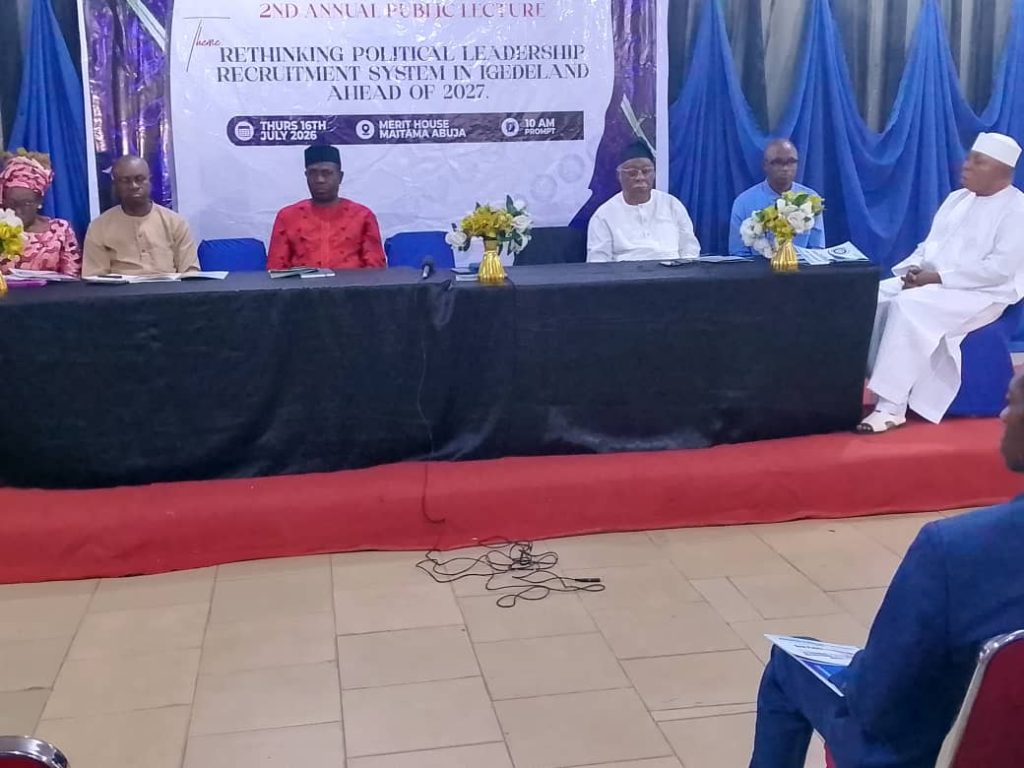
Ojowu, a former Chief Executive Officer of the National Planning Commission, made the call on Thursday in Abuja at the 2nd Public Lecture 2026 organised by the Association of Igede Media Professionals (AIMP) with the theme: “Rethinking Political Leadership Recruitment System in Igedeland Ahead of 2027.”
The event attracted prominent Igede sons and daughters from across the country, including traditional rulers, policymakers, media practitioners, political leaders, captains of industry, and other stakeholders to deliberate on strategies for strengthening political participation, promoting unity and ensuring quality leadership within the community.
The guest lecturer was the spokesperson of the Nigeria Labour Congress (NLC), Barr. Benson Upah.
In his remarks as chairman of the occasion, Ojowu said the choice of the theme reflected the need for deep introspection on the quality of political leadership emerging from the community.
He commended AIMP for creating a platform for dialogue and reflection, describing such engagements as essential for shaping the future of the Igede people.
Ojowu also praised the selection of Upah as guest lecturer, noting that his background in labour advocacy, public communication and national engagement made him well suited to speak on leadership and governance.
He stressed that leadership recruitment should go beyond selecting individuals to occupy public offices, saying the process must be guided by values, fairness and competence.
“Leadership recruitment is not merely about who emerges. It is about the processes, values and structures that determine the quality of governance and the inclusiveness of our society.
“As we look towards 2027, leadership recruitment systems must be rethought to ensure that competence, integrity and inclusiveness are prioritised over narrow interests,” he said.
According to him, minority groups must embrace wisdom, strategy and resilience in pursuing political representation, while ensuring that their quest strengthens unity, fairness and justice.
Speaking with journalists after the lecture, Ojowu lamented that merit was no longer the primary consideration in political appointments in Nigeria.
“To be honest, Nigeria is not ruled by capability. Nigeria is not ruled by what you can do. Nigeria is largely influenced by where you come from and the zoning arrangements within the political system,” he said.
He recalled that his own appointment into public service was based on professional competence and merit rather than political patronage.
Ojowu, however, noted that the Igede people have also contributed to their political challenges by failing to remain united.
He observed that while the Igede nation remains a minority, internal divisions have weakened its collective bargaining power.
“Everybody wants to lead. Nobody can lead until people come together to present a common candidate. Instead of presenting one strong voice, individuals now pursue positions separately, making it difficult to achieve meaningful political gains,” he said.
He urged the Igede political elite to close ranks and work together in the overall interest of the people.
Also speaking, the member representing Oju/Obi Federal Constituency in the House of Representatives, Hon. David Ogewu, called on the people of Igedeland to embrace peace, unity and mutual trust as the foundation for sustainable development.
According to him, unity remains the greatest asset of any community.
“My message is very simple. Unity brings progress. Understanding one another will give us everything we need as a people. We must support one another and play politics in a way that advances the collective interest of the entire Igede nation,” he said.
The lawmaker acknowledged that the Igede people, like other minority ethnic groups, face several political challenges in Benue State but expressed optimism that greater opportunities would come through sustained engagement and dialogue.
He also described his relationship with the Benue State Governor as cordial, saying both leaders share common values that promote peace and understanding.
Ogewu further urged the people to begin rebuilding trust within the community.
“We have to embrace a sense of unity and trust. We cannot only focus on issues outside; we must first put our house in order.
“Both the younger and older generations must unite and think progressively. That is how we can move Igedeland forward,” he stated.
Earlier, the President of the Association of Igede Media Professionals (AIMP), Comrade Sunday Ode, called for a fundamental reform of the political leadership recruitment process in Igedeland.
He warned that the quality of leadership produced by the Igede nation would continue to suffer unless competence, integrity, and accountability become the basis for selecting political leaders.
According to him, approach to recruiting political leaders would determine the future of Igedeland as the 2027 general elections draw closer.
He lamented that political leadership in many communities had become an entitlement or a commercial venture, resulting in poor representation, abandoned development projects, and weak governance.
He said the Association, as the umbrella body of Igede professionals in the print, broadcast, and digital media, remains committed to promoting accountability, progressive development, and the preservation of Igede cultural heritage through responsible journalism and public engagement.
The AIMP President also appealed to political leaders to regard the media as partners in the development of Igedeland rather than adversaries, saying the Association remains committed to truth, accountability, and the collective progress of the people.
He expressed appreciation to the guest of honour, guest speaker, sponsors, partners, and other participants for supporting the initiative and expressed optimism that the deliberations would produce practical recommendations capable of improving leadership recruitment in Igedeland ahead of the 2027 general elections
Participants at the lecture described the event as timely, expressing hope that the recommendations would help reshape political leadership recruitment in Igedeland ahead of the 2027 general elections while fostering greater unity and development within the Igede nation.