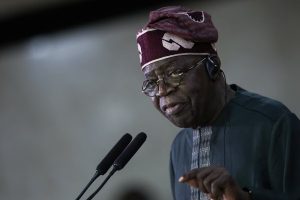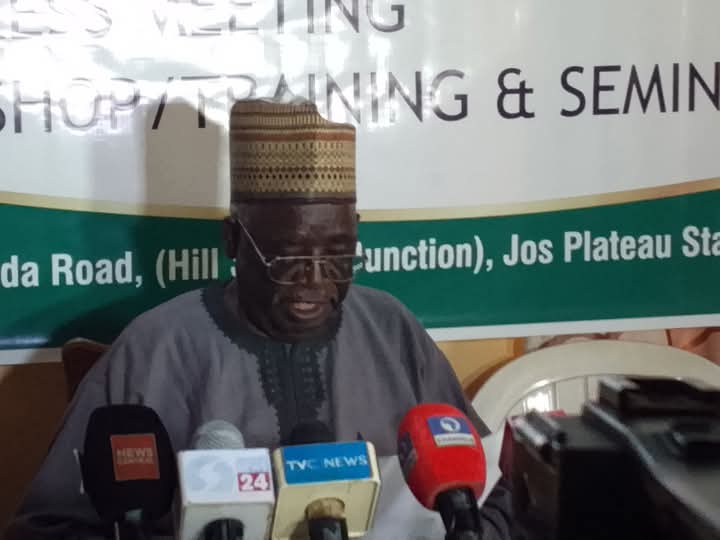
Prof. Peter Lassa
By CHRISTIANA LOT, Jos –
Renowned educationist and policy expert, Professor Peter Lassa (OON), has called for the creation of a new constitution, arguing that amendments to the 1999 Constitution will not address Nigeria’s core governance challenges.
With vast experience in various government sectors, including the Native Authority, Northern Region, and as Executive Secretary of the National Commission for Colleges of Education (NCCE), Lassa expressed concerns over the document’s origin and its impact on the nation’s democratic process.
He emphasized that the current constitution was not a product of popular consensus but rather imposed by the military.
“The 1999 constitution, which we still operate, is Decree 24, and was promulgated into law by General Abdulsalami Abubakar on May 5, 1999, and has been operative since May 29, 1999, till today.
“The preamble to the constitution states that, ‘We the people of the Federal Republic of Nigeria… do hereby make, enact and give to ourselves the following Constitution.’ Contrary to what we are made to believe by the preamble to the constitution, it is safe to say that over 95% of the citizens of Nigeria didn’t have a say in the drafting of this document. It was rather forced down their throats by the Military and has been in force till today,” he said.
Lassa further criticized the constitution’s inability to reflect the people’s aspirations, noting that it has led to governance inefficiencies and increased agitation for regional autonomy. One key issue, he pointed out, is the contradiction surrounding local government autonomy.
“On the issue of Local Government autonomy, recently the Supreme Court gave judgment in favor of the autonomy of Local governments, but the issue is that it is inconsistent with the provisions of the 1999 constitution as amended. The whole constitution needs to be reviewed to avoid conflict,” he said.
He cited political crises, particularly in Edo State, as an example of how constitutional ambiguities have led to governance failures.
“Our present Constitution with several amendments has created more confusion than correcting some lapses,” he stated. “In Edo State, Governor Godwin Obaseki did not allow the majority of elected members into the State House Assembly for four years. Constitutional provisions, courts, and INEC failed to resolve the situation.”
Beyond political governance, Lassa raised concerns over the lack of clarity in power distribution among the federal, state, and local governments, stressing the need for a more balanced federal structure. He also lamented that the judiciary’s independence, though constitutionally guaranteed, is frequently undermined.
Addressing judicial inconsistencies, he remarked, “The independence of the judiciary, as guaranteed by the 1999 constitution, is often undermined.” He pointed to conflicting judgments and ambiguous legal language as major issues affecting the credibility of the judicial system.
Lassa also advocated for legal provisions to criminalize political defection, arguing that elected officials should not switch parties for personal gain without facing consequences.
“The National Assembly must act as true representatives of the people. In a country with a 70,000 Naira minimum wage, where pensioners are often owed their pension payments, how does the NASS explain their alleged huge allowances and emoluments?” he questioned.
He called for a new constitution that genuinely reflects the will of the Nigerian people, advocating for a referendum to ensure inclusivity.
“We need a new constitution that emanates from the people which will obey it,” he said. “We need a referendum where everyone’s voice will be heard. We are all Nigerians, and no one should be more Nigerian than another.”