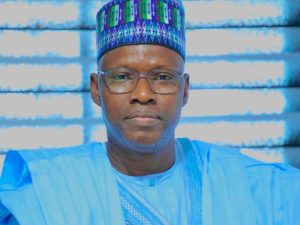
Jerry Adams meets with Governor Uba Sani to discuss fiscal reforms and Kaduna’s development agenda.
By STEVEN KEFAS
In the complex political landscape of Kaduna State, where tribalism and party loyalty often create insurmountable divides, one man stands apart as a beacon of accessible leadership and genuine human connection. The Executive Chairman of Kaduna State Internal Revenue Services (KADIRS), Jerry Adams, has defied the conventional political playbook to forge a leadership style that prioritizes people over party politics.
Shattering the Status Quo
Since 1999, Southern Kaduna has witnessed a troubling pattern among government appointees. Upon assuming office, many build metaphorical fortresses around themselves, becoming inaccessible to ordinary citizens. This pattern transcends party lines, though it intensified during the previous administration under Governor Nasir El-Rufai, when appointees often severed communal ties to demonstrate unwavering loyalty to the administration.
Against this backdrop, Jerry Adams emerged as the exception that proves the rule is breakable.
“In a political environment where loyalty to leadership often means turning against your own people, Adams has demonstrated that effective governance doesn’t require abandoning one’s roots,” notes a political observer familiar with Southern Kaduna dynamics.
The People’s Executive
What distinguishes Adams is his remarkable accessibility. Testimonies abound of citizens who have reached out to him at odd hours, only to receive prompt attention. Even more telling is his willingness to engage constructively with critics—a rarity in contemporary Nigerian politics.
This approach was vindicated when El-Rufai’s administration launched a smear campaign against Adams. The spontaneous outpouring of support from young people across political divides spoke volumes about the genuine relationships he had cultivated. In an era of manufactured social media campaigns, the organic defense of Adams by citizens stands as testament to his authentic leadership.
Building Bridges Beyond Politics
Adams’ approach to leadership extends beyond mere accessibility. His attendance at my wedding—despite my known criticism of his party—exemplifies his understanding that humanity transcends political affiliations. By showing up unannounced and staying until the end, he demonstrated that genuine relationships needn’t be casualties of political differences.
“Jerry Adams doesn’t just talk about unity; he lives it daily through his interactions with people across the political spectrum,” remarks a community leader who has observed Adams’ leadership style.
Transforming Revenue Generation
Jerry Adams, the Executive Chairman of the Kaduna State Internal Revenue Service (KADIRS), has significantly transformed the state’s revenue generation landscape. With a robust academic background, including a Master’s Degree in Business Administration, a Postgraduate Diploma in Accounting, a Postgraduate Diploma in Management, and a Bachelor of Science in Sociology, Adams is currently pursuing a Ph.D. in Public Governance and Leadership at the University of Abuja. His professional experience spans over 23 years, covering both private and public sectors, where he has excelled as a seasoned tax administrator, chartered accountant, business development expert, and marketer.
Adams has introduced innovative strategies that have markedly increased Kaduna’s internally generated revenue (IGR). Under his leadership, KADIRS achieved a record N62.49 billion in IGR in 2023, making Kaduna the highest IGR earner in Northern Nigeria, and further improved to N70 billion in 2024, with a target of N112 billion set for 2025. Key initiatives include the launch of ‘Project CRAFT’ (Cross-Systems for Revenue Administration and Fiscal Transparency) and the PAYKADUNA Portal, which leverage advanced data analytics and automation to enhance revenue collection, curb leakages, and improve service delivery. These platforms have streamlined tax administration, enabling seamless, transparent, and accessible revenue processes, contributing to significant recoveries, such as N20 billion from back duty audits and N18 billion from non-tax revenue sources.
Beyond his technical expertise, Adams’ commitment to transparency, taxpayer engagement, and financial inclusion has fostered voluntary tax compliance, aligning with Governor Uba Sani’s policies to create a business-friendly environment. His strategic vision and leadership have positioned KADIRS as a model for revenue administration in Nigeria.
An Asset to Governor Uba Sani
Adams’ unique ability to maintain relationships across political divisions makes him an invaluable asset to Governor Uba Sani’s administration. In a region historically characterized by political tensions, Adams serves as a bridge builder whose approach has garnered the current administration support from unexpected quarters.
As 2027 approaches, Governor Sani would be wise to recognize the political capital that Adams represents. His ability to transcend tribal and political divides through genuine human connection offers a template for governance that resonates with citizens weary of divisive politics.
Humility as a Leadership Strategy
Perhaps most remarkable about Adams is his humility. Despite his elevated position, he carries himself with a down-to-earth demeanor that makes him approachable to both young and old. This quality has attracted diverse followers who see in him a different kind of leader.
“His office door is always open, and he treats everyone with the same respect regardless of status,” says a staff member at KADIRS. “It creates a work environment where people feel valued and motivated.”
A New Political Paradigm
Jerry Adams represents more than just effective leadership; he embodies a new political paradigm for Southern Kaduna and Nigeria at large. His example challenges the false dichotomy between political loyalty and community responsibility.
For those who have long believed that all Southern Kaduna people in the APC are antagonistic to communal interests, Adams offers a compelling counternarrative. He demonstrates that one can serve in government while maintaining authentic connections to one’s community.
As Nigeria continues its democratic journey, leaders like Jerry Adams provide hope that a more inclusive, accessible, and humane political culture is possible—one relationship at a time.
Steven Kefas is a political commentator and community advocate based in Kaduna State.