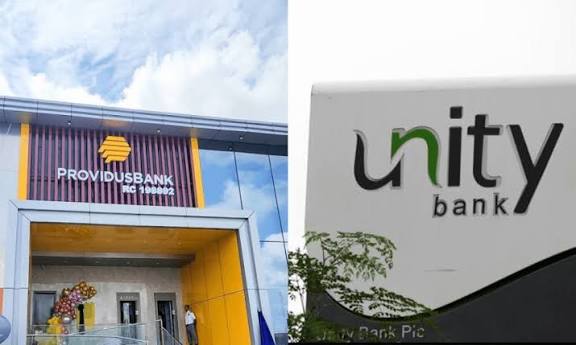
Shareholders and Boards of Directors of Providus Bank and Unity Bank have officially approved a merger between the two institutions, paving the way for the creation of a more formidable player in Nigeria’s banking sector.
The approval was secured during a court-ordered Extraordinary General Meeting (EGM) held on Friday, marking a key milestone in the consolidation process.
In a joint statement, both banks expressed appreciation to the Central Bank of Nigeria (CBN) for its strategic leadership and ongoing efforts to strengthen the financial system. They noted that the merger aligns with the CBN’s broader vision for a robust, inclusive, and future-focused banking industry.
According to the statement, the combined entity will emerge with a strong capital base and a network of approximately 230 branches nationwide—positioning it among the most accessible banks in the country.
While Unity Bank brings decades of legacy and nationwide reach, Providus Bank contributes cutting-edge digital solutions, innovation, and customer-centric services, creating a blend of tradition and transformation.
“The merger will deliver greater scale, reach, and capacity to support households, businesses, and government,” the statement said.
Addressing concerns about employment and workforce integration, both institutions assured stakeholders that the deal will protect existing jobs, open up new roles, and invest in talent development as part of a strategy to build a future-oriented financial institution.
“This historic transaction is not simply about numbers; it is about confidence in the Nigerian financial system,” the banks stated.
“By combining Providus Bank and Unity Bank, we are creating an institution of scale and substance that will give confidence to customers, strength to the financial system, and opportunity for our people.”
The new banking entity will be driven by values of innovation, empathy, and integrity, underpinned by enhanced capital strength and advanced technological infrastructure.
The banks emphasized that the merger is not just a consolidation of balance sheets, but a strategic move to serve as both a stabilizing force and growth catalyst within Nigeria’s evolving financial landscape.