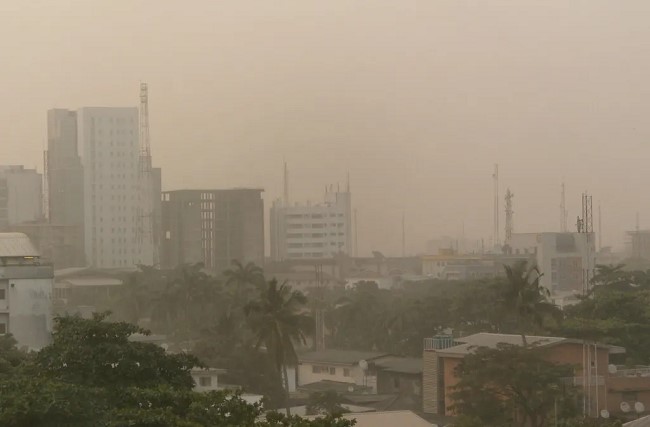
A telecommunications engineering professor at the University of Jos (UNIJOS), Danjuma Dajap, has said Nigeria’s environmental conditions, particularly the harmattan season and its tropical climate, significantly affect mobile network signals, often resulting in dropped calls and weak coverage.
He made this known while delivering the university’s 118th inaugural lecture titled “ From Signals to Intelligent Networks: A Journey in Telecommunications Engineering.”
According to Dajap, many of the propagation models used in telecom network planning were developed in Europe and Asia, where environmental conditions differ markedly from those in Nigeria.
He explained that during the harmattan season, fine dust particles in the air interfere with electromagnetic waves used in wireless communication. This leads to signal scattering and absorption, ultimately weakening signal strength.
“The presence of harmattan particles introduces additional losses in signal transmission and can significantly reduce cellular coverage,” he said.
He added that other factors such as vegetation, buildings, and atmospheric variations also influence how signals travel between base stations and mobile devices. In some cases, these conditions shrink coverage areas that were originally designed to span several kilometres, affecting service quality.
Dajap noted that his research, which began in 1995, focuses on understanding radio signal behaviour in tropical and savanna environments and adapting global models to better suit Nigeria’s conditions.
“Our findings show that traditional models do not accurately predict signal variations in the Nigerian environment. By refining them with locally measured data and introducing correction factors, we have improved their predictive accuracy,” he said.
He explained that these findings can help engineers design more efficient microwave and cellular networks in Nigeria and other regions with similar climates.
The professor also highlighted the growing role of artificial intelligence in telecom network planning and optimisation. He said AI based models developed through his research have shown greater accuracy in predicting performance indicators such as dropped calls, network congestion, and data throughput.
As the world moves toward fifth and sixth generation telecommunications systems, he noted that artificial intelligence will become increasingly important.
“Future networks will be intelligent systems capable of self configuration, self optimisation, and self healing without human intervention,” he said.
He also pointed to technologies such as software defined networks, network function virtualisation, and cloud computing as key to next generation communication systems.
In a related development, Dajap revealed that his team has developed one of the first drone video datasets in Africa focused on security applications. The dataset is designed to support artificial intelligence systems in detecting criminal activities such as kidnapping and banditry.
Looking ahead, he called for greater investment in research infrastructure at the University of Jos, including a wireless propagation measurement laboratory and an artificial intelligence research hub to strengthen innovation and postgraduate training.
He noted that telecommunications research is capital intensive, recalling that equipment worth about ₦700 million had previously been acquired to support research activities at the university.
Dajap stressed that reliable telecommunications systems are essential to modern life, noting that sectors such as banking, healthcare, commerce, and everyday communication depend heavily on stable digital connectivity.
Also speaking, the Vice Chancellor of the University of Jos, represented by the Deputy Vice Chancellor Administration, Professor Pic Charles Onwochei, described the lecture as timely, noting that it comes as Nigeria works to strengthen its telecommunications systems to address challenges such as crime and insecurity.