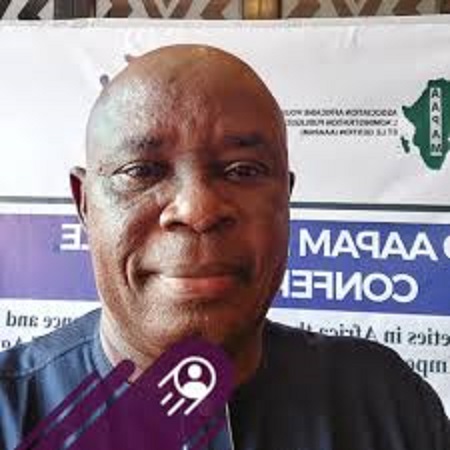
Prof Moti
There are moments when a nation is forced to look into the mirror—not the polished mirror of official statements, but the cracked, unforgiving mirror of truth.
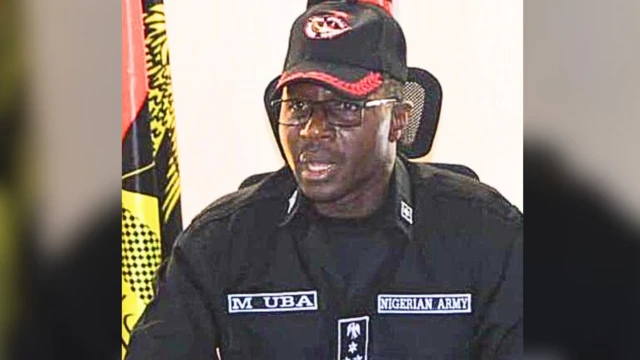
The death of Brigadier General Musa Uba is one of those moments that reechoed today on ARISE TELEVISION, The Morning Show.
And when Rufai Oseni broke down on live television recounting it, to me it was not weakness. It was not theatrics. It was the raw, unfiltered collective grief of a people watching, yet again, as the Nigerian state failed its own in Plateau, Nassarawa, Benue, Kaduna, Katsina etc during the weekend.
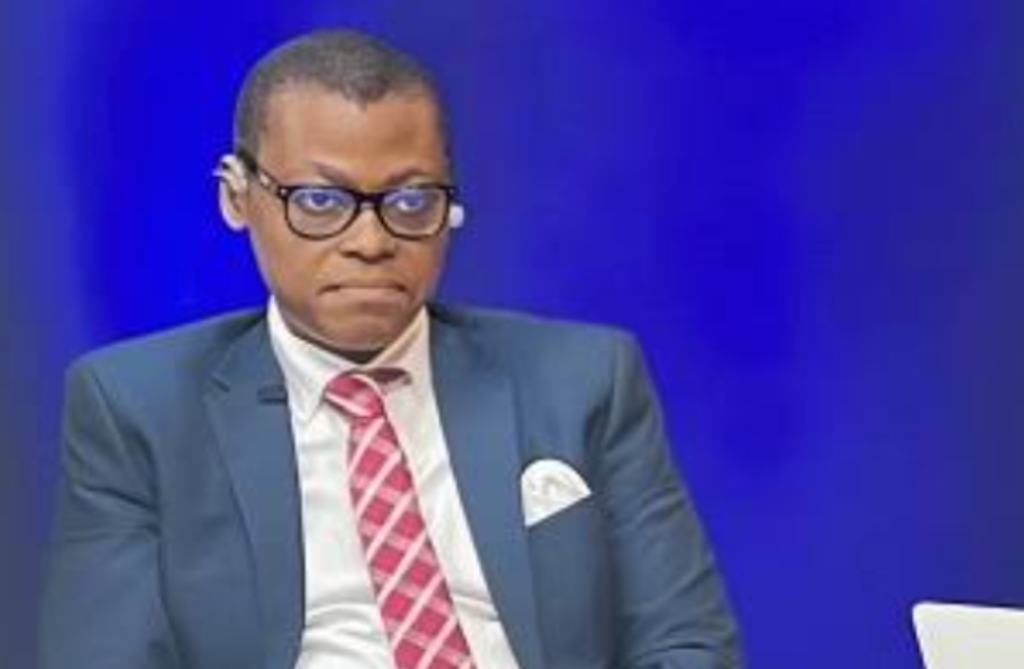
- OSENI
Uba was not an unnamed casualty in a distant field. A Brigadier General of the Nigerian Army—ambushed, isolated, calling for help, waiting for extraction (in his own country) that never came.
He had intelligence. The system had warning. The danger was not invisible. Yet the machinery of response—slow, disjointed, uncertain—arrived too little, too late.
In his final moments, General Uba was not just fighting insurgents; he was confronting the most devastating realization any soldier can face: that the state he served might not reach him in time.
Now place that beside the doctrine of the United States Armed Forces.
In that system, the capture of a single colonel—anywhere in the world, even in hostile territory like Iran—triggers a chain reaction of power. Satellites shift. Drones hover. Special forces mobilize. Diplomacy bends. The Preseident suspends his usual saturday golf. Billions can be spent. Risks are taken. Mistakes may happen, missions may fail, but one message is never in doubt: No one is abandoned.
That is not propaganda. It is policy. It is culture. It is belief made operational.
Nigeria, by contrast, sends a far more dangerous message—sometimes unintentionally, but unmistakably: You are on your own. And that message echoes far beyond the battlefield and the affected communities.
It emboldens insurgents who now understand that striking hard and fast may not be met with overwhelming, coordinated retaliation.
Terrorism feeds not only on ideology and weapons—but on perceived weakness.
The killing of General Uba as recollected by Rufsi today is not just a tactical loss; it is a strategic signal. A signal to insurgents that the Nigerian state can be surprised, that its intelligence can be ignored, that its response can falter. A signal to citizens that if the highest-ranking officers are not beyond vulnerability, how about you?.
This is why the tears of Rufai Oseni mattered. They were not just for one man. They were for the accumulating weight of avoidable tragedies, for the pattern Nigerians can now predict with painful accuracy: intelligence ignored, attacks executed, statements issued, silence restored—until the next incident.
Nigeria must decide—urgently—what kind of nation it wants to be in the face of terror.
A nation that reacts, or a nation that anticipates.
A nation that mourns, or a nation that prevents.
A nation that explains failure, or one that makes failure increasingly impossible.
The war against terrorism is not merely a contest of firepower. It is a contest of systems, of will, of values made visible under pressure.
General Uba’s death and that of many others has handed Nigeria a brutal but necessary question:
Do Nigerian lives matter? Or are they expendable variables in a slow, uncertain war?
Until that question is answered not in speeches, but in structure, doctrine, and action, the tears will not stop.
And neither will the killing.