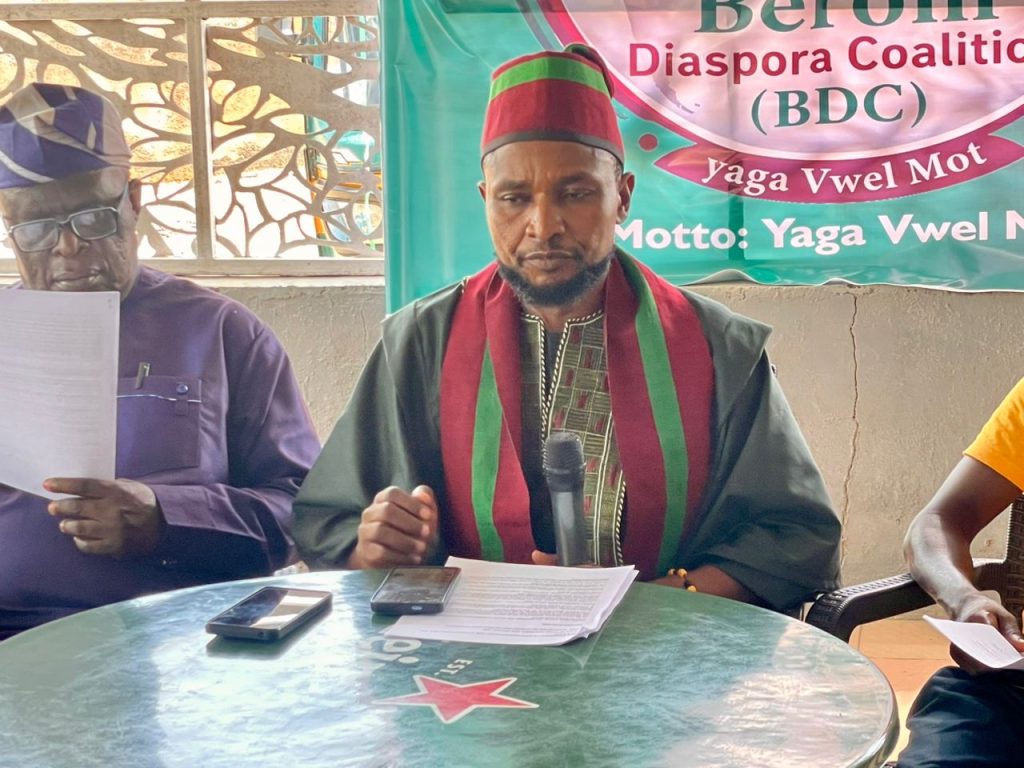
Berom Diaspora Coalition (BDC), in collaboration with allied groups, on Tuesday raised fresh alarm over escalating violence in Plateau State, claiming that more than 500 people have been killed between November 2025 and April 2026 despite assurances by government to end the attacks.
The groups, which include the Berom Community Organisation (BECO), Berom Youth Movement (BYM), Berom Educational and Cultural Organisation (BECO) and Berom Women Development Association (BEWDA), made the disclosure at a press conference held in Jos under the theme,
“Reclaiming Our Lost Ancestral Lands and Resettlement of Our People.”
Speaking at the briefing, a representative of the coalition, Barnabas Dazi, expressed concern over continued violence, displacement and what he described as a worsening humanitarian crisis affecting Berom communities across Plateau State.
He said the killings, which he attributed to armed groups, have persisted across several local government areas, including Barkin Ladi, Riyom, Jos South, Bokkos and Bassa, with recent attacks extending into parts of Jos North.
“Between November 2025 and April 2026, over 500 people have been brutally killed, many others maimed, while houses and farmlands worth millions of naira have been destroyed without provocation,” Dazi said.
“What is happening in our land resembles a horror scenario where innocent people are attacked daily and forced to flee their homes.”
He referenced the March 29 attack in Angwan Rukuba, Jos North, which reportedly claimed about 30 lives, describing it as part of a broader pattern of violence that has continued despite public assurances by both federal and state authorities to restore peace.
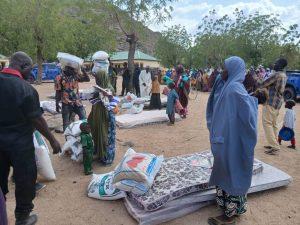
Dazi noted that the situation has led to large-scale displacement, with many communities abandoned and residents left vulnerable.
“We had earlier raised alarm that over 70 Berom villages have been displaced, with some allegedly occupied by armed elements. This has created a deep humanitarian crisis, increasing the number of widows, orphans and homeless persons in our communities,” he said.
“Our people remain displaced and destitute, while those responsible continue to operate with impunity.”
The coalition also raised concerns over the destruction of farmlands and restricted access to economic resources, particularly mining sites, which they said are critical to the livelihoods of affected communities.
While acknowledging efforts by security agencies, the group alleged uneven enforcement of the law, claiming that some community members who engaged in self-defence have been arrested.
Dazi called for the unconditional release of such individuals and urged authorities to ensure fairness in the handling of security-related cases.
The group further questioned the pace of ongoing prosecutions, urging the government to ensure that those responsible for attacks are brought to justice and that victims receive adequate compensation.
It also called on authorities to accelerate the resettlement of displaced persons, noting that previous commitments to return affected communities to their ancestral homes have yet to materialise.
The coalition renewed calls for stronger security measures, including the establishment of community-based security frameworks, and urged the government to take decisive action in areas identified by local groups as flashpoints of violence.
They also appealed to the international community and human rights organisations to intervene and support efforts aimed at ending the violence and addressing the humanitarian situation in affected areas.