Nigeria Democratic Congress (NDC) presidential candidate, Peter Obi, has reiterated his commitment to building a better Nigeria, declaring that “a new era of true democracy is possible” as the country marked the 2026 Democracy Day celebration.
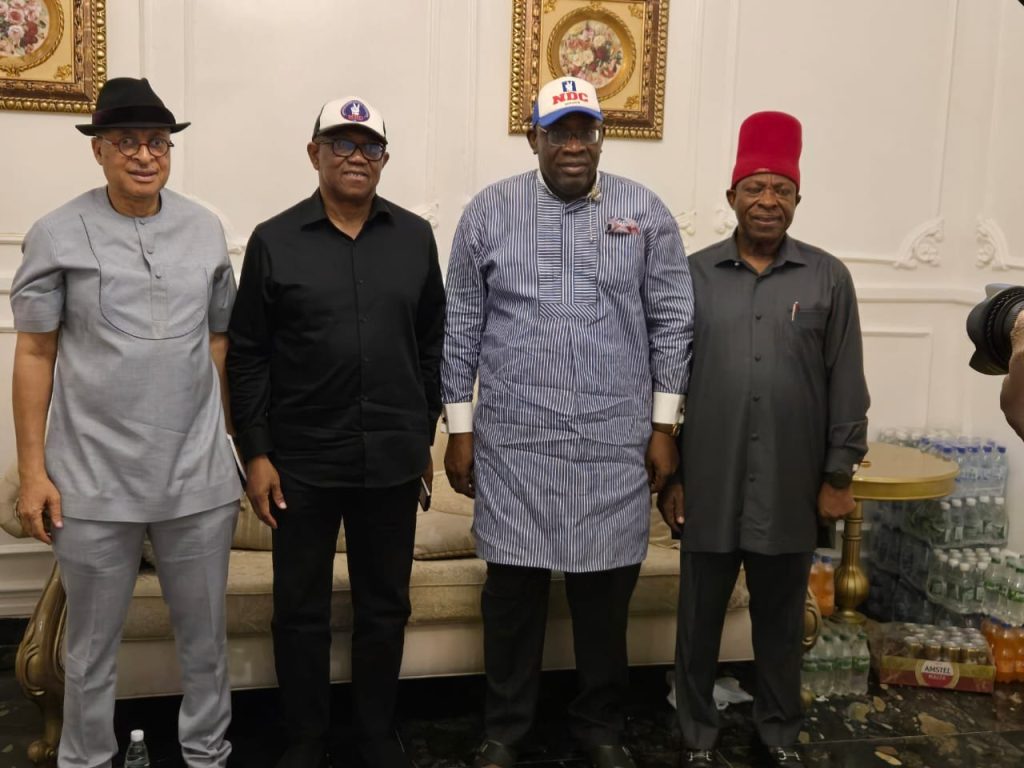
Obi made the remarks in a post shared on his official X account on Thursday following separate meetings with former Kano State Governor, Senator Rabiu Kwankwaso, and former Bayelsa State Governor, Senator Seriake Dickson.
According to Obi, the meetings provided an opportunity to discuss the future of Nigeria and the collective responsibility of political leaders in advancing democratic ideals and national development.
“On this June 12, Democracy Day, I had useful meetings with my partners in the building of the New Nigeria that is Possible: our great party’s National Leader, H.E. Senator Seriake Dickson, and our party’s Vice Presidential candidate, H.E. Senator Rabiu Kwankwaso,” Obi wrote.
He noted that despite being a relatively young political platform, the NDC remained focused on its long-term vision for the country.
“The NDC, as a party that is barely four months old, despite the challenges, remains the party of the future, and the fruitful discussions at the meetings clearly underscore this fact,” he stated.
Obi stressed the importance of unity, sacrifice and tolerance among political actors seeking meaningful change, saying leaders must be prepared to put collective interests above personal ambitions.
“The leaders and members of a committed political family must be willing to make sacrifices and show tolerance and accommodation, even in difficult circumstances. This shared understanding is essential for building trust, strengthening unity, and sustaining the vision we collectively hold for national transformation,” he said.
He added that members of the party remained united in their determination to deliver purposeful leadership and strengthen democratic governance in the country.
“We are all committed to this goal. The NDC remains the vehicle that will convey Nigeria through purposeful, compassionate leadership, with firm commitment to productivity and democratic ideals towards the New Nigeria that is Possible,” Obi added.
Reflecting on the significance of June 12, Obi described the day as a symbol of both Nigeria’s democratic struggles and aspirations.
“What June 12 Should Mean to Us Nigerians,” he wrote, noting that the annual commemoration offers citizens an opportunity to evaluate the state of the nation and the performance of democratic institutions.
“Today, we observe a day that should mean a great deal to us as a people who cherish democratic principles. Every year on June 12, the conversation inevitably turns to a critical assessment of the state of our nation.”
He posed a number of questions which, according to him, remain central to Nigeria’s democratic journey.
“Are our elections today as transparent as they were in 1993? Is the social contract being honoured? Are the institutions of governance truly serving the people?” he asked.
The former Anambra State governor described June 12 as a reminder of the power of the people’s collective will and the need to continue strengthening democratic institutions.
“Ultimately, June 12 is a powerful blend of reflection and aspiration. It honours a fractured past while serving as a constant and foundational reminder of the immense power inherent in the collective democratic will of the Nigerian people.”
He further stated that the date occupies a unique place in Nigeria’s history and democratic development.
“For us in Nigeria, June 12 is not merely a date on the calendar; it is the emotional and structural bedrock of our modern democratic identity. Officially recognised as Democracy Day, June 12 carries deep historical, political, and social significance, representing both a monumental tragedy and the ultimate triumph of the collective will of the people.”
Obi concluded by expressing optimism about the nation’s future, declaring that “a new era of true democracy is Possible.”