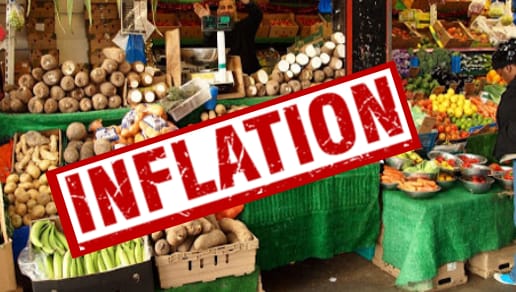
Nigeria’s headline inflation rate climbed to 15.93 per cent in May 2026, marking the third consecutive monthly increase, the National Bureau of Statistics reported on Monday.
According to the NBS Consumer Price Index report, the CPI rose to 140.7 in May from 138.3 in April, reflecting continued pressure on consumer prices. Annual inflation increased from 15.38 per cent in March to 15.69 per cent in April before reaching 15.93 per cent in May.
Despite the annual rise, the pace of price increases slowed on a month-on-month basis. Monthly headline inflation eased to 1.75 per cent in May from 2.13 per cent in April, a drop of 0.39 percentage points, the bureau said. “In May 2026, the headline inflation rate on a month-on-month basis was 1.75 per cent,” the NBS stated.
Year-on-year inflation remains far below 2025 levels. The May 2026 figure of 15.93 per cent is significantly lower than the 26.06 per cent recorded in May 2025. The 12-month average inflation stood at 18.36 per cent for the period ending May 2026, compared with 30.57 per cent in the corresponding period of 2025.
Food and non-alcoholic beverages continued to drive inflation, contributing 6.38 percentage points to the annual headline rate. Restaurants and accommodation services added 2.06 percentage points, while transport contributed 1.70 percentage points. Housing, water, electricity, gas and other fuels accounted for 1.34 percentage points.
Food inflation stood at 16.96 per cent year-on-year in May, down from 24.55 per cent in May 2025. Monthly food inflation also slowed to 2.98 per cent from 3.63 per cent in April. Price increases for onions, maize, melon, water yam, cassava flour, crayfish, fresh pepper, tomatoes, wheat grain, cassava tubers, yam tubers, sweet potatoes, ginger, plantain and cowpea were key drivers.
Core inflation, which excludes volatile food and energy prices, rose to 16.82 per cent year-on-year from 24.92 per cent a year earlier. On a monthly basis, core inflation accelerated to 1.94 per cent from 1.03 per cent in April.
Urban inflation was recorded at 16.07 per cent year-on-year with monthly urban inflation at 1.99 per cent, up from 1.86 per cent in April. Rural inflation stood at 15.60 per cent year-on-year, while monthly rural inflation slowed sharply to 1.17 per cent from 2.80 per cent.
State-level data showed wide disparities. Yobe recorded the highest annual headline inflation at 24.94 per cent, followed by Anambra at 23.29 per cent and Sokoto at 22.60 per cent. Niger had the lowest at 3.07 per cent. On a monthly basis, Benue posted the highest increase at 8.23 per cent, while Niger recorded a decline of 4.55 per cent.
The NBS said the figures underscore persistent inflationary pressures driven by food costs, services, insecurity and global market uncertainties, even as inflation remains well below the elevated levels seen in 2025.