Plateau State Government has reduced the number of stages required for processing Rights of Occupancy (R of O) and Certificates of Occupancy (C of O) from 46 to 25 as part of far-reaching reforms aimed at modernising land administration and improving ease of doing business in the state.
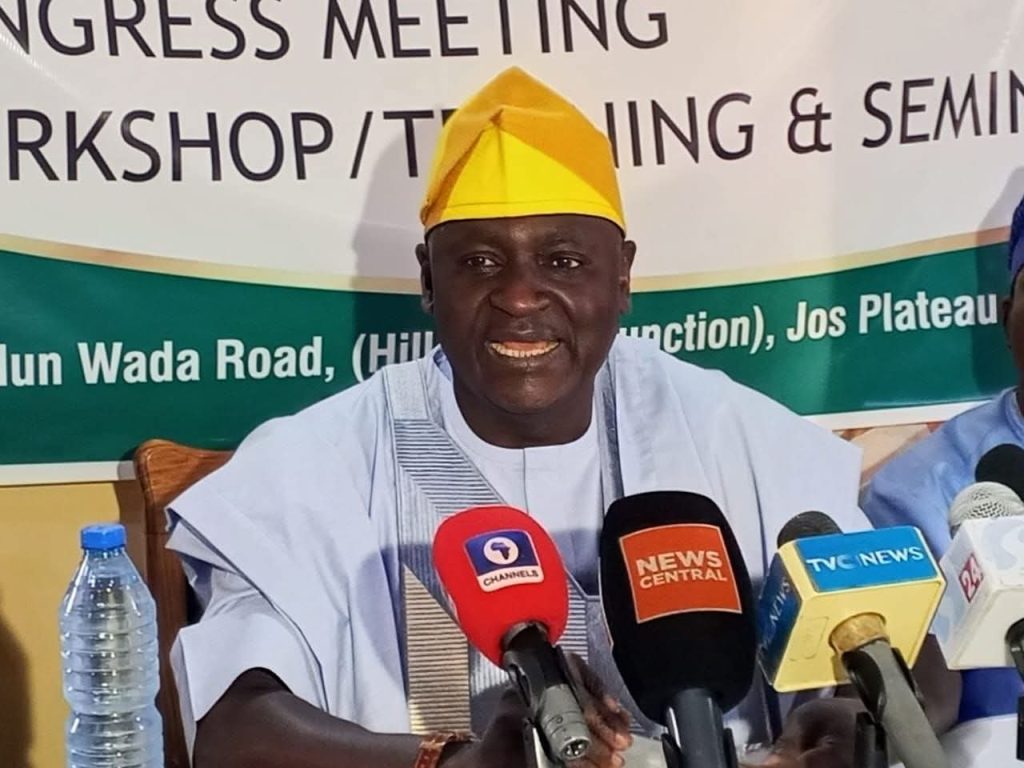
Commissioner for Lands, Survey and Town Planning, Barr. Peter Nyam Gai, disclosed this on Wednesday during a media briefing at the Nigeria Union of Journalists (NUJ) Secretariat in Jos, where he highlighted achievements recorded by the ministry under the Governor Caleb Mutfwang administration.
Gai said the reforms were designed to eliminate bureaucratic bottlenecks, improve service delivery and create a more efficient and investor-friendly land administration system.
The commissioner said the ministry inherited numerous challenges, including inadequate working tools and equipment, a stagnated Geographic Information System (GIS) platform, poor office accommodation, inadequate logistics support, low staff motivation, revenue leakages and slow service delivery processes.
He said the administration responded by embarking on comprehensive institutional reforms centred on digitisation, innovation and improved customer service.
“As part of our land administration reforms, we have gradually eliminated manual processes through digitisation and reduced workflow stages for processing Rights of Occupancy and Certificates of Occupancy from 46 to 25 stages. We have also introduced electronic signatures for Certificates of Occupancy, redesigned land documents with improved security features and established a centralised dispatch system to enhance efficiency and service delivery,” Gai said.
According to him, the ministry appointed two additional Deed Registrars to strengthen operations, improved the dispatch of demand notices through dedicated dispatch riders and introduced rebates and incentives aimed at encouraging compliance and supporting investors seeking land-related services.
He noted that the reforms were already yielding positive results through faster service delivery, improved public confidence and enhanced revenue generation.
The commissioner further disclosed that the ministry had acquired land to support both state and federal government industrial zones as part of efforts to stimulate economic growth and attract investment to Plateau State.
Beyond land administration, Gai said the ministry had strengthened survey and mapping operations through collaboration with licensed surveyors and professional bodies to restore survey control signals and improve compliance with survey and cartography standards.
He added that modern computer systems and additional software licences had been procured while in-house software solutions were developed to address processing delays and support the ministry’s digital transformation agenda.
On physical planning, the commissioner said the ministry played a key role in the development of the Greater Jos Master Plan covering Jos North, Jos South, parts of Bassa, Jos East, Riyom and Barkin Ladi local government areas.
The ministry, he said, also participated in the preparation of master plans for Riyom, Mangu and Heipang urban centres while strengthening development control through the use of aerial imagery, digital mapping and geographic coordinates for site inspections.
Speaking on revenue generation, Gai said automation and stronger accountability measures had helped to close leakages and improve internally generated revenue.
“The ministry has significantly improved internally generated revenue through automation and digitisation of processes, improved accountability mechanisms, reduction of revenue leakages and enhanced monitoring and compliance systems. These measures have increased public confidence in our services and enabled us to utilise available resources more effectively in carrying out our mandate,” he noted.
The commissioner also highlighted the establishment of a functional customer call centre and front desk services to improve public engagement and complaints management.
He added that the mediation unit had become an effective platform for resolving land-related disputes through faster and less expensive alternatives to litigation, thereby helping to preserve relationships and promote peaceful settlements.
Despite the achievements, Gai identified shortages of professional and technical personnel, obsolete equipment, inadequate operational funding, server downtime and the need for a comprehensive upgrade of the GIS platform as some of the challenges still confronting the ministry.
He, however, expressed confidence that sustained investment in technology, manpower development, infrastructure and logistics would consolidate the gains already recorded and further position the ministry as a key driver of sustainable development in Plateau State.