Allamin Foundation for Peace and Development (ALFOPED), with support from the European Union (EU) and the United Nations Development Programme (UNDP), has distributed multi-million naira livelihood support packages to 240 beneficiaries in Bama Local Government Area of Borno State under the SD3R project.
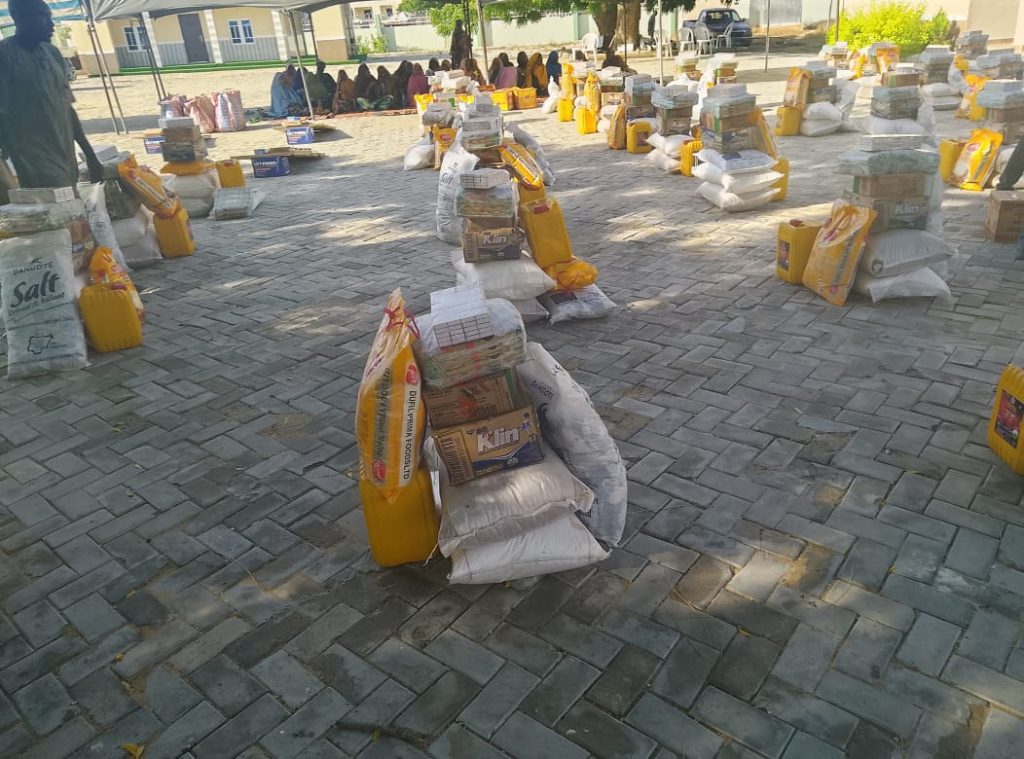
The beneficiaries, comprising adult men and women, received various empowerment items, including sewing and weaving machines, solar power equipment, generators, freezers, grinding machines, food processing kits, bags of rice, beans, vegetable oil, salt, spaghetti, detergents and other livelihood materials to help them rebuild their lives after years of insurgency.
Speaking at the event, the Executive Chairman of Bama LGA, Hon. Babagana Barma, commended ALFOPED, the EU and UNDP for implementing the project, urging beneficiaries to make productive use of the items and warning security agencies to arrest anyone found selling the empowerment packages.
Barma noted that the intervention was aimed at restoring livelihoods destroyed by insurgency and appealed for more development projects in Bama, encouraging beneficiaries to become self-reliant and create employment opportunities for others.
The Executive Director of ALFOPED, Hajiya Hamsatu Allamin, welcomed participants and expressed appreciation to community leaders, stakeholders, the EU and UNDP for their support in ensuring the successful implementation of the programme.
Representing the Shehu of Bama, HRH Alhaji Umar Kyari El-Kanemi, the Secretary of the Bama Emirate Council, Alhaji Makinta Usman, praised the intervention and advised beneficiaries to use the items to improve their living standards rather than sell them.
Representing the Borno State Commissioner for Reconstruction, Rehabilitation and Reintegration (RRR), the Special Adviser to the Governor on RRR, Engr. Ali Mohammed Gini, said the state government would continue collaborating with humanitarian and development partners to improve livelihoods across post-insurgency communities.
Programme Manager of ALFOPED, Alhaji Hamza Maigari, said 410 people were profiled while 240 beneficiaries were selected based on vulnerability, explaining that the exercise concluded with a cultural festival, traditional performances and the symbolic presentation of the empowerment items by dignitaries.