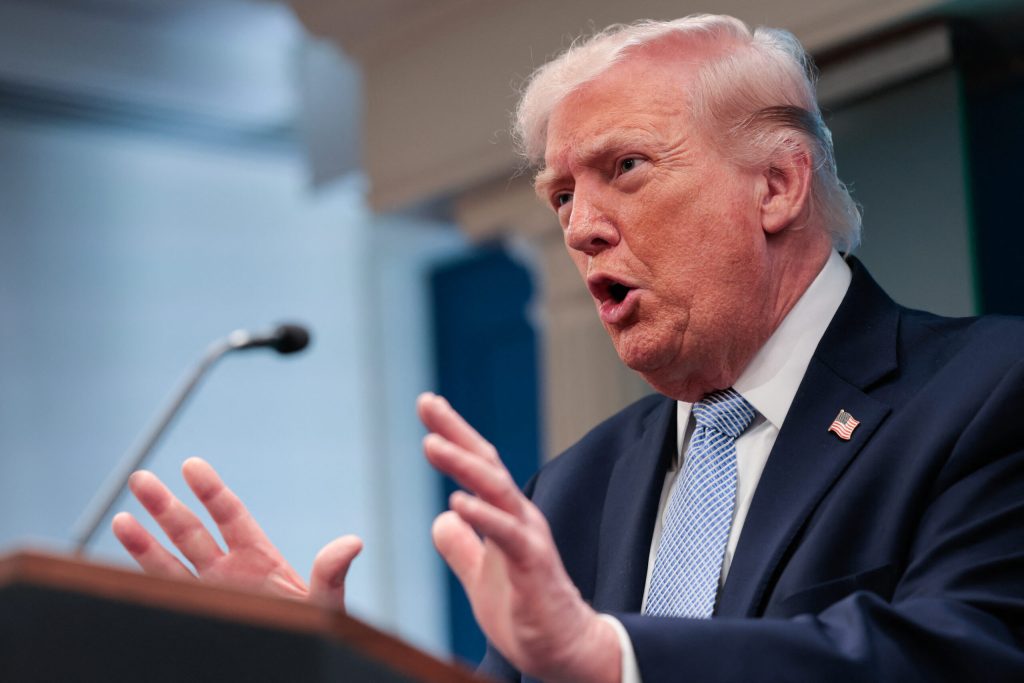
US President Donald Trump speaks about the conflict in Iran in the James S. Brady Press Briefing Room of the White House on April 6, 2026, in Washington, DC. (Photo by Kent Nishimura / AFP)
Nigeria is among 60 countries affected by fresh United States tariffs that came into effect on Friday after an earlier temporary import duty expired.
The new tariffs range from 10 per cent to 12.5 per cent, with Nigeria falling under the countries facing the measures introduced by President Donald Trump.
The policy also affects major trading partners such as China, India, Japan, South Korea and the European Union, although some countries secured limited exemptions through existing trade agreements.
US Trade Representative Jamieson Greer said, “The United States has had a forced labour import ban for nearly a century and rigorously enforces it; it’s well past time for our trading partners to do the same.”
The new tariffs replace a previous 10 per cent duty that expired after 150 days and were introduced following a US investigation aimed at making the policy more legally sustainable.
For Nigeria, the tariffs could reduce the competitiveness of some exports to the US market and increase pressure on businesses that rely on trade with American buyers.
The measures may also discourage new export opportunities and affect foreign exchange earnings if demand for Nigerian products declines.
China condemned the decision, warning that trade wars benefit no country, while Japan described the tariffs as regrettable and Australia called them unjustified.
The US, however, exempted products already covered by sector-specific tariffs, some energy products, fertilisers and goods traded under the US-Mexico-Canada Agreement.
Analysts say the latest tariffs signal a more protectionist US trade policy that could reshape global commerce and create fresh challenges for countries, including Nigeria, seeking greater access to the American market.