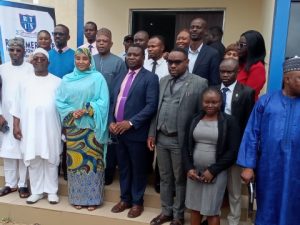
The leader of the African Cities Research Consortium (ACRC), Professor Diana Metlen
By SADIQ ABUBAKAR, Maiduguri –
The leader of the African Cities Research Consortium (ACRC), Professor Diana Metlen, highlighted the organization’s achievements in Maiduguri during a press briefing at the Nigeria Union of Journalists (NUJ) Press Center.
Metlen emphasized ACRC’s commitment to improving urban living conditions through systematic land management and enhanced geographic data collection ¹.
The briefing focused on ACRC’s collaborative efforts with the Borno Geographic Information Services (BOGIS) and the impact of various community programs.
Metlen noted that their partnership with BOGIS has streamlined property registration processes, facilitating urban development in Maiduguri and the surrounding Jere Local Government Area.
The ACRC’s anti-drug campaigns and community awareness initiatives were also discussed. These programs aim to combat substance abuse and its effects on local communities.
“Through advocacy and mobilization of residents, we are working to raise awareness about the dangers of drug abuse, fostering a more informed and resilient community.
“The ACRC has also engaged in various community orientation programs through various teams designed to inform residents about available resources and support services”.
“Education is key,” she said, “and by providing residents with adequate information, we empower them to make informed decisions regarding their health and well-being”, she said.
The partnership between the ACRC and various stakeholders, including academia, civil society organizations (CSOs), media, community leaders, and the Borno Geographic Information Services (BOGIS), has been instrumental in enhancing the effectiveness of ACRC’s programs.
During the briefing, community leaders, media practitioners, researchers, and officials from BOGIS expressed their commitment to supporting ACRC’s initiatives. They emphasized the importance of collaboration, accurate information sharing, and data-driven community interventions.
However, members of the press raised critical questions about the ACRC program’s impact, legal implications, and sustainability. They also highlighted concerns about environmental sanitation, demolition of houses, land compensation, and the involvement of people living with disabilities.
ACRC’s leader in her response encouraged community participation, stressing that resident involvement is crucial for the success of these programs. “We are here to serve you, but your involvement is crucial for the success of these programs,” she urged.
The event concluded with a call to action, encouraging community members to engage with local leaders and support ongoing advocacy efforts. These efforts aim to create awareness, improve development, and enhance urban facilities, ultimately improving living conditions and promoting a healthy environment in the face of climate change.
The ACRC team includes notable members such as Professor Ismail Ibrahim of LASU, Prof. Abubakar Monguno of UNIMAID, and Prof. Wilson Joseph of Masscom Dept Unimaid, among others.