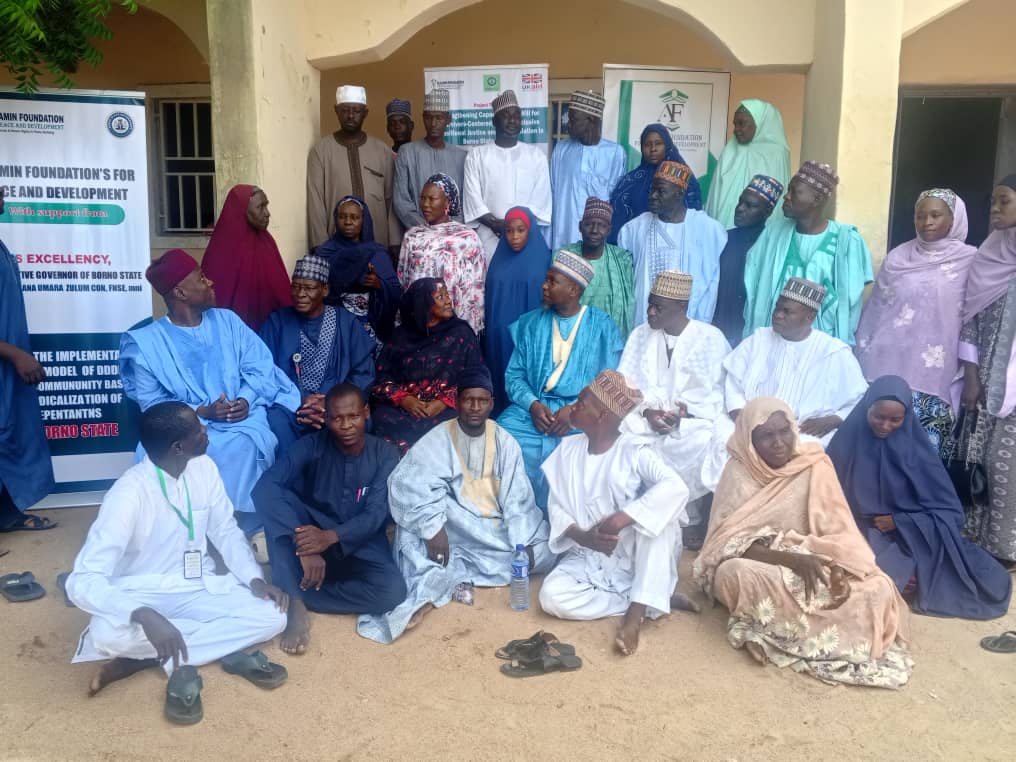
Allamin Foundation for Peace and Development (ALFOPED) on Sunday held a one-day capacity-building workshop for 25 Community Advocates for Transitional Justice (CATJ) at Soye/Shettimari Primary School, Old Bama UBE, in Bama, the headquarters of Bama Local Government Area.
The initiative aimed to equip community leaders with skills to promote survivor-centered, gender-inclusive transitional justice and reconciliation, supporting the Borno Model of Demobilization, Disarmament, Deradicalization, Rehabilitation, Reintegration, and Reconciliation (DDDRRR).
ALFOPED’s Executive Director, Hajiya Hamsatu Allamin, opened the workshop, stating its goal to strengthen stakeholders’ abilities to foster peace and reconciliation in communities impacted by over a decade of insurgency.
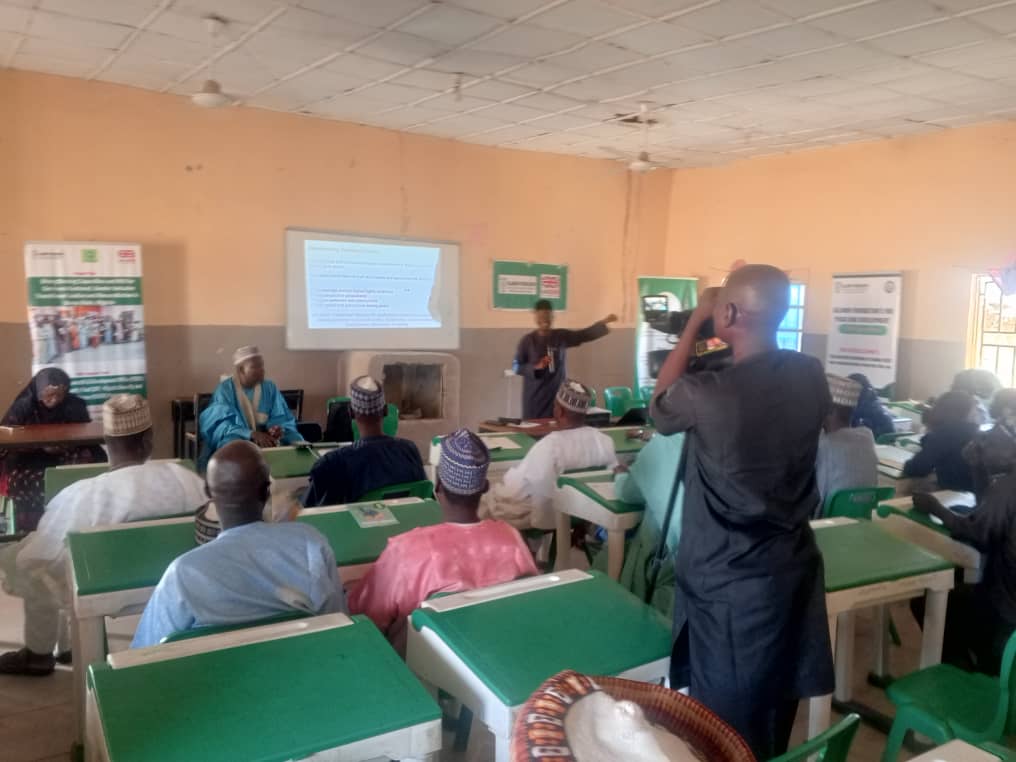
The program, supported by the Foreign Commonwealth Development Office (FCDO) through its Integrated Security Fund (ISF) UKAID, focused on community engagement strategies, traditional justice principles, human rights, and reconciliation methods.
The 25 participants, comprising 15 males and 10 females, were selected from five wards in Bama: Mairi, Hausari (Old Bama District), Gomari, Tandari, and Shehuri/Waziriri (New Bama District), with each ward contributing three males and two females.
Two facilitators led the training: Sheikh Ali Ibrahim Mustapha and Dr. Mohammed Abdullahi from the University of Maiduguri.
Sheikh Mustapha emphasized peace, unity, and forgiveness, drawing on Islamic teachings, Quranic verses, and Hadiths to highlight the importance of ethical conduct, obedience to authorities, and harmonious coexistence.
He urged participants to promote trust, honesty, and accountability in their communities, reflecting the values exemplified by Prophet Muhammad (SAW) and his companions.
Dr. Abdullahi delivered a PowerPoint presentation on transitional justice, covering its goals, pillars, and community engagement strategies.
He advocated for victim-centered approaches, gender-inclusive initiatives, and trauma-informed practices, emphasizing truth-seeking, reparation, and reconciliation to achieve lasting peace.
The trained advocates are tasked with educating 80 additional individuals in their wards, spreading knowledge on peacebuilding and reintegration to foster community development.