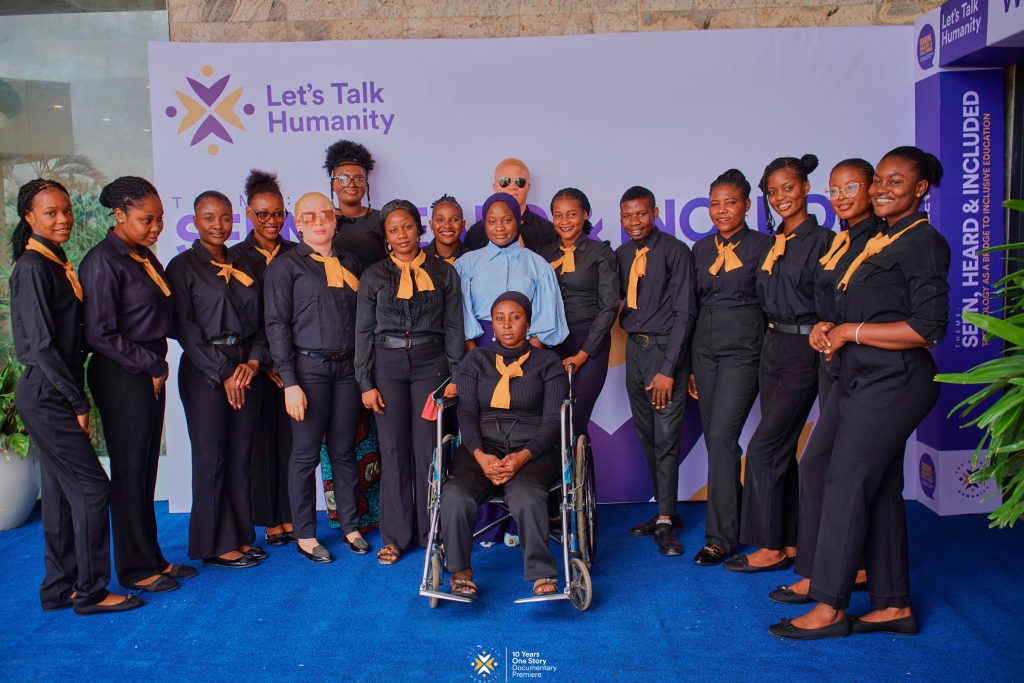
Among the Ushers at the occasion were products of the Special Needs School promoted by the LTHi
Once pushed to the margins of society and too often defined by limitation rather than potential, persons living with disabilities in Nigeria are finding renewed hope through the work of the Let’s Talk Humanity Initiative (LTHI), led by Fatima Ganduje-Abiola Ajimobi. With a growing focus on inclusion, empowerment and human dignity, the organisation is not only challenging deep-rooted stigma but also creating pathways for opportunity, independence and social acceptance for some of the country’s most vulnerable citizens. CHRIS NWOKOCHA writes.
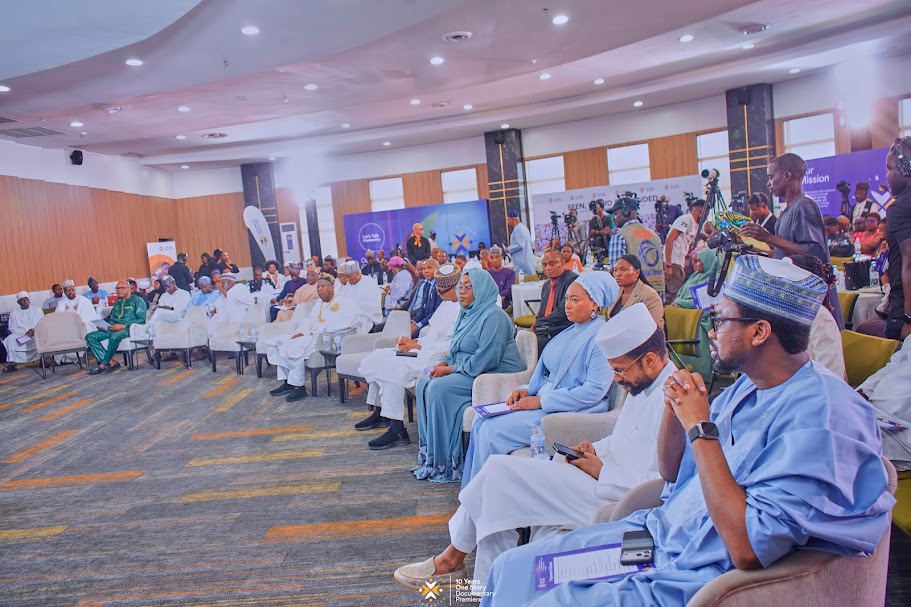
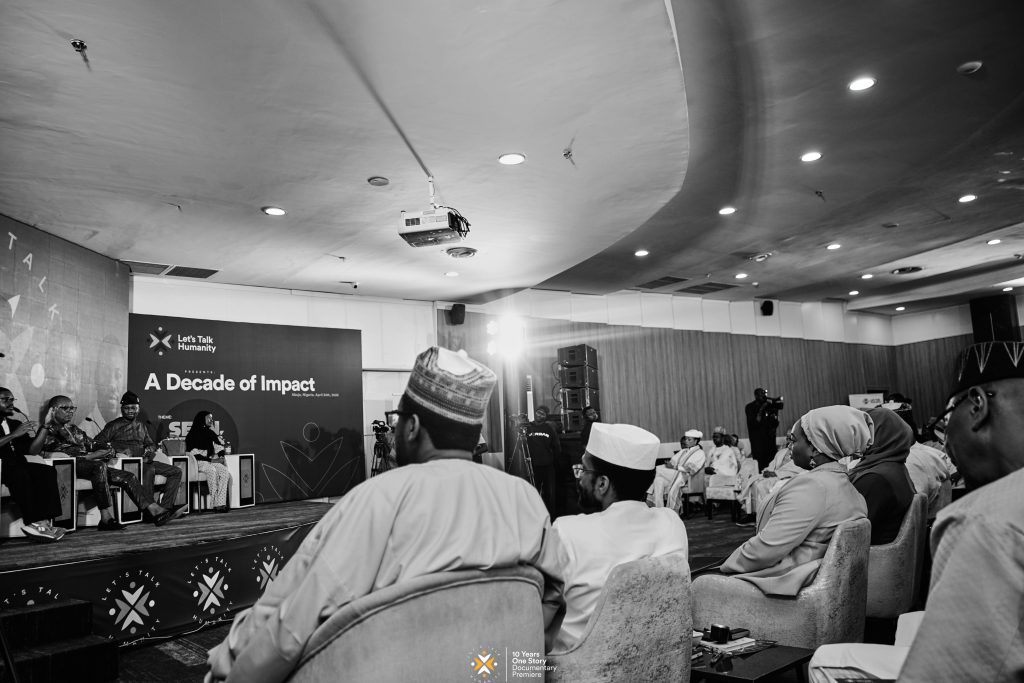
On a pleasant morning in Abuja last Friday, a quiet but powerful revolution took centre stage. At a well-attended gathering of policymakers, educators, development partners and advocates, the Let’s Talk Humanity Initiative (LTHi), marked its 10th anniversary with the unveiling of a documentary titled Seen, Heard and Included. More than a retrospective, the event was a statement of intent, an affirmation that inclusion is not charity, but a right, and that the future of Nigeria must be built on systems that recognise the dignity and potential of every citizen, regardless of physical ability.
Behind this vision stands Fatima Ganduje Abiola-Ajimobi, a seasoned Social Development and Safeguards Specialist whose work over the past decade has consistently bridged policy, impact, and community realities. With experience spanning Nigeria and the wider African continent, her expertise lies in embedding inclusion (across gender, disability, and youth) into large-scale development frameworks. She is widely regarded for designing social safeguards systems that meet international donor standards while remaining firmly rooted in local context.
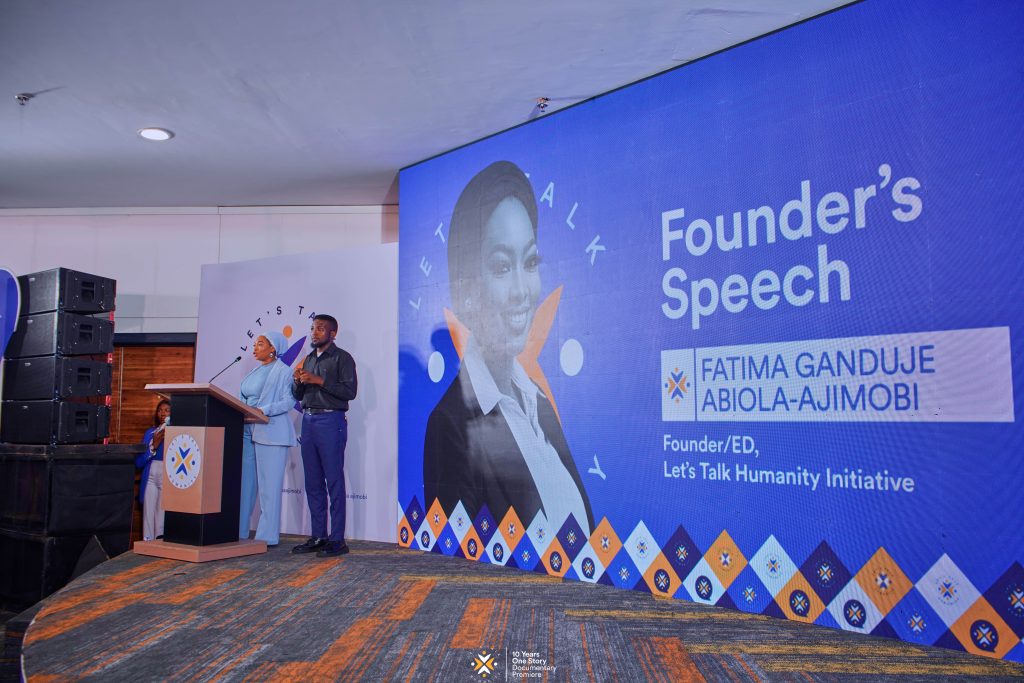
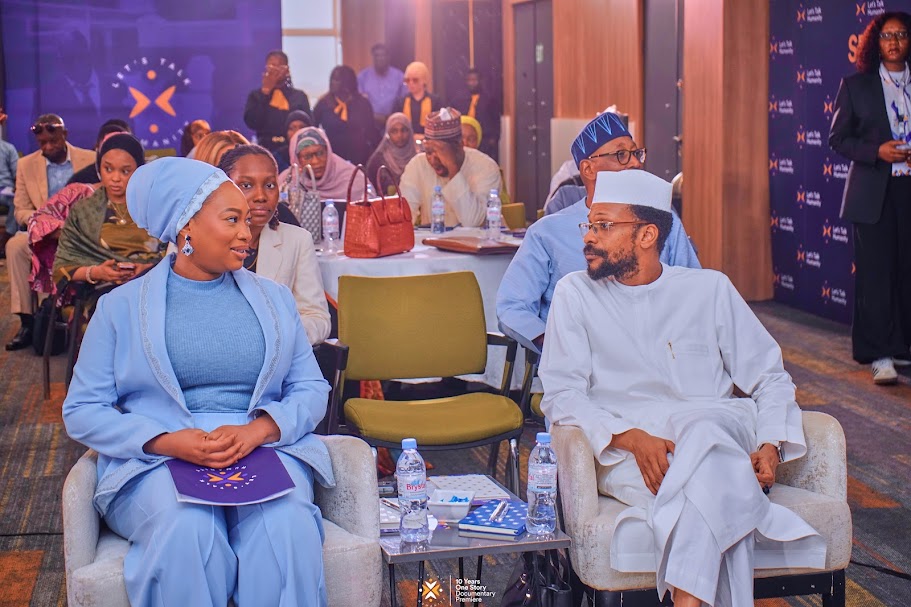
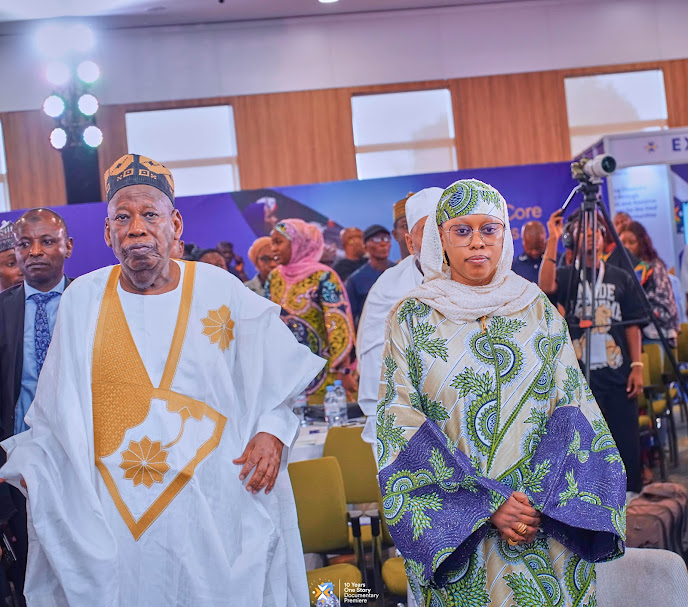
- Fatime, giving her Founder’s speech as her husband and Senior Special Assistant to President bola Ahmed Tinubu on Livestokc Development, Idris Ajimobi Abiona, Guests and her father, Abdullahi Umar Ganduje – a former Governor of Kano state, all listing with great admiration
- Beyond the nonprofit space, Abiola-Ajimobi’s influence has extended into governance, where she served as Special Assistant on NGOs and Civil Societies to the Speaker of Nigeria’s 9th National Assembly, helping to strengthen participatory governance and civic engagement. Academically grounded, with a First-Class degree in International and Comparative Politics and ongoing postgraduate studies in Public Policy and Management, Ajimobi represents a rare blend of intellectual depth and operational leadership, qualities that have come to define the trajectory of LTHI.
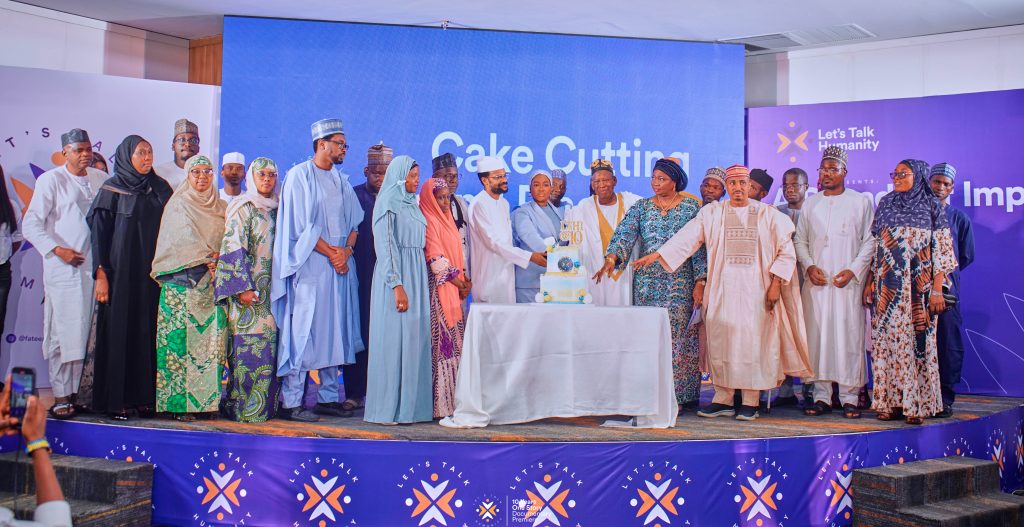
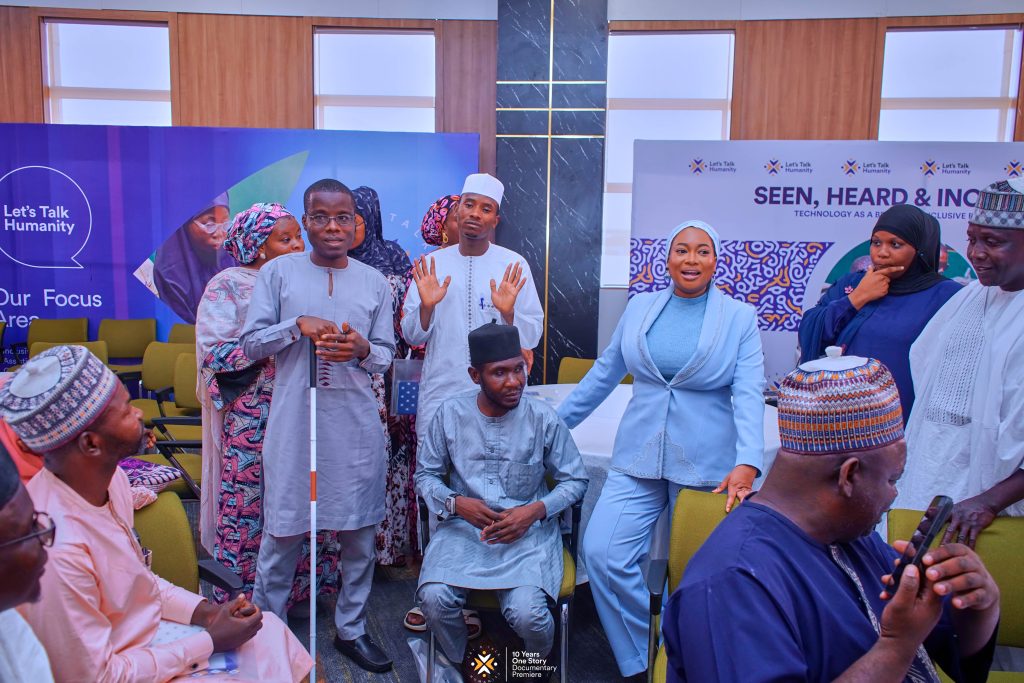
- Cutting the cake to mark the 10th Anniversary of LTHi and its works (above) and Fatima (standing 3rd from right) with some of the disabled graduates from the Kano Special Needs School (courtesy of her LTHi)
- At the heart of LTHI’s work is its decade-long partnership with the Tudun Maliki Special Needs School in Kano, a relationship that has become a blueprint for what inclusive education can achieve when backed by intention and innovation. Over the past ten years, the organisation has established two fully equipped ICT laboratories tailored to students with visual and hearing impairments, while also investing in teacher training and institutional capacity building. The results have been striking. Students who once struggled with systemic barriers are now passing national examinations, gaining admission into tertiary institutions, and graduating with distinction. According to Ganduje Abiola-Ajimobi, there has been a 500 per cent increase in tertiary enrolment from the school, an achievement that moves the conversation from hope to evidence.
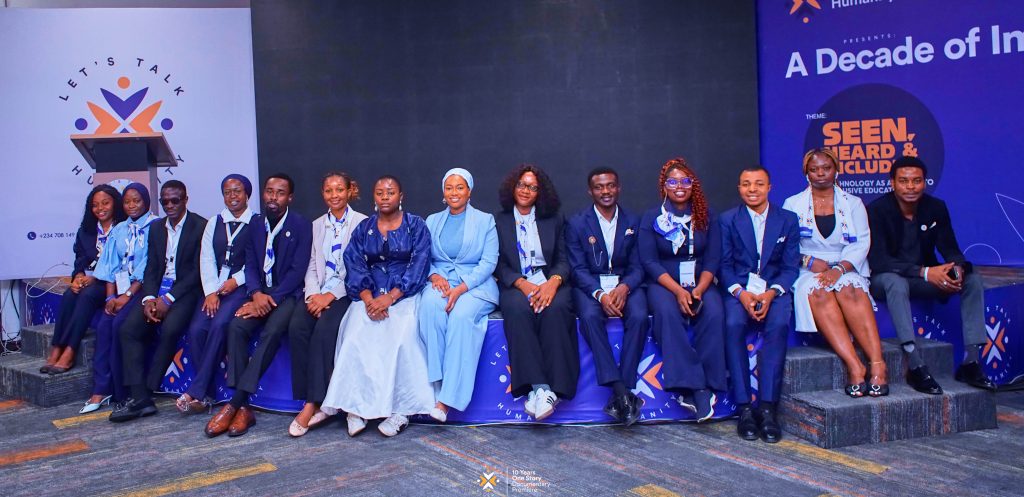
- Beyond statistics, the real impact of LTHI is best understood through human stories. Beneficiaries speak of transformation not just in academic outcomes, but in confidence, identity, and purpose. A visually impaired student who once faced repeated failure in national exams now thrives in university. Another, who lost his hearing to illness, has transitioned from student to teacher, reclaiming a future he once thought was lost. These are not isolated successes, they are proof of concept. They demonstrate what becomes possible when access replaces exclusion and when systems are designed with inclusion in mind.
- Yet, as speakers at the event made clear, these successes exist against a troubling national backdrop. Across Nigeria, particularly in the northern region, persons with disabilities remain among the most marginalised populations. Limited access to education, inadequate infrastructure and deep-rooted social stigma have created a cycle of poverty and exclusion. The visible rise in street begging among people with disabilities is not, as many assume, an inevitability of circumstance, but a symptom of systemic neglect.
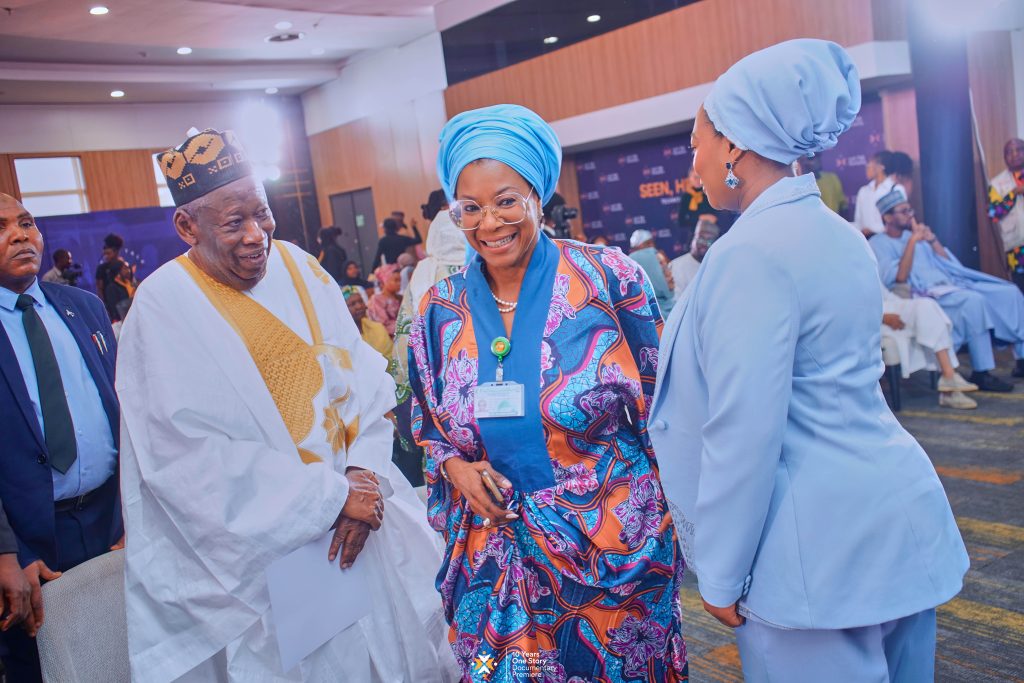
- Former Kano State Governor and father of the LTHI founder, Abdullahi Umar Ganduje, captured this reality starkly in his speech at the event, warning that the proliferation of beggars on the streets is directly linked to years of underinvestment in disability inclusion. He described the situation as a “sorry story,” pointing out that many persons with disabilities are relegated to lives of dependency not because they lack ability, but because society has failed to provide the tools and opportunities they need to thrive. And yet, what he witnessed at the LTHI event offered a glimpse of an alternative future, a “silent revolution” where those once excluded become contributors, innovators, and even employers of labour.
- This paradox of immense potential coexisting with systemic neglect defines the challenge ahead. While Nigeria has made policy commitments toward inclusive education, the lived realities of many disabled students tell a different story. Examination systems such as the Joint Admissions and Matriculation Board (JAMB), and the West African Examinations Council (WAEC), remain largely inaccessible, with limited availability of Braille materials, inadequate sign language interpretation, and poorly equipped centres. Physical infrastructure often excludes rather than accommodates, and coordination between educational authorities remains inconsistent. These barriers not only hinder academic progression but reinforce a broader culture of exclusion.
- It is precisely these structural gaps that LTHI is now positioning itself to address in its next phase. Building on its success at Tudun Maliki, the organisation has outlined an ambitious roadmap that includes advocating for inclusive examination reforms, establishing pilot accessible examination centres, and creating a National Resource Centre for persons with sensory impairments. This proposed centre aims to connect Nigeria to global best practices, ensuring that local solutions are informed by international standards in assistive technology and inclusive education.
- But scaling this vision will require more than passion. It will demand sustained collaboration across sectors, including government, private enterprise, civil society, and individual citizens. As Nigeria’s Minister of Humanitarian Affairs, Bernard M. Doro, emphasised at the event, inclusion must move from being an afterthought to being embedded in design. Technology, infrastructure, and policy frameworks must be developed with accessibility at their core, not retrofitted as an afterthought. In his words, inclusion is not optional, it is an obligation.
- For organisations like LTHI, this presents both an opportunity and a challenge. On one hand, there is growing awareness and a clear evidence base demonstrating what works. On the other, there remains a significant gap between intention and action. Funding constraints, policy inertia, and societal attitudes continue to limit the pace of change. Without broader support, even the most successful pilot programmes risk remaining isolated successes rather than becoming national standards.
- This is why the call to action at the Abuja event was so emphatic. LTHI is not merely seeking recognition, it is seeking partnership. It is calling on governments to prioritise inclusive policies and allocate resources accordingly. It is urging private sector players to invest in assistive technologies and inclusive innovation. It is inviting individuals to move beyond awareness and become active advocates for change. Because the truth is simple: inclusion cannot be achieved in isolation.
- The significance of LTHI’s work extends beyond the lives it directly impacts. It challenges deeply ingrained narratives about disability in Nigeria. For too long, disability has been framed through the lens of pity or charity. LTHI reframes it as a matter of rights, dignity, and national development. It insists that when people with disabilities are excluded, society as a whole loses – economically, socially, and morally. Conversely, when they are included, the benefits ripple outward, creating more resilient communities and a more equitable nation.
- As the documentary Seen, Heard and Included played to an attentive audience, it did more than tell stories; it posed a question. What kind of society does Nigeria want to be? One where potential is stifled by neglect, or one where every individual is given the opportunity to thrive?
- For LTHI, the answer is clear. The past ten years have proven what is possible. The next ten will determine whether that possibility becomes reality at scale. And that, as Ganduje Abiola-Ajimobi reminded her audience, depends on what happens after the applause fades.
- Because awareness, on its own, is not enough. What matters now is action.
@CATTIGAN.COM