Federal Executive Council (FEC) on Monday June 29 approved a comprehensive financing package totaling approximately $2.96 billion, €200 million, and ₦215 billion to support critical sectors of Nigeria’s economy, including transportation, agriculture, power, infrastructure, and micro, small, and medium enterprises (MSMEs).
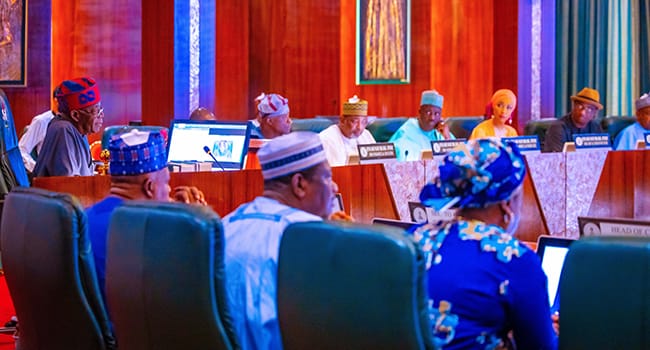
The announcement was made by the Minister of Finance and Coordinating Minister of the Economy, Mr. Wale Edun, during a briefing with State House correspondents following the council meeting chaired by President Bola Tinubu at the Presidential Villa, Abuja.
According to Edun, the approvals were contained in 14 memoranda presented by the Ministry of Finance, strategically grouped into five key areas aimed at driving economic growth and improving the welfare of Nigerians.
For Transportation Sector Investment, FEC approved ₦215 billion to complete investments under the Presidential Compressed Natural Gas (CNG) initiative. This funding will facilitate the procurement of CNG buses, electric vehicles, CNG-powered tricycles, and the establishment of vehicle conversion centers. The initiative is expected to reduce transportation costs and promote the use of cleaner, more affordable energy in public transport.
The council approved $900 million in financing to support Agricultural Sector especially rural technical and vocational training, Special Agro-Industrial Processing Zones (SAPZ), and agricultural value-chain development projects. These investments are designed to boost agricultural productivity and rural development.
For Power Sector Development,
a $160 million financing facility was approved for rural solar energy projects in Niger State. The Islamic Development Bank will provide $150 million, with the Niger State Government contributing $10 million as counterpart funding. This project aims to expand access to renewable energy in rural communities.
Infrastructure Expansion
FEC got $1.2 billion financing facility for Section Two of the Sokoto-Badagry Super Highway, a major infrastructure project that will traverse 11 states. The highway is expected to improve connectivity, logistics, and economic activities across the country.
Support for MSMEs
to enhance access to finance for small businesses, the council approved €200 million and an additional $500 million in financing through the Development Bank of Nigeria (DBN).
These funds will expand affordable credit options for MSMEs, which are vital for economic growth and job creation.
Addressing Fuel Price Concerns,
Minister Edun addressed recent concerns over rising petrol prices, explaining that the government is engaging petroleum marketers and regulators to ensure fuel pricing reflects global crude oil price movements fairly and transparently.
He noted that while price increases happen quickly due to replacement costs, reductions take longer because of existing inventory.
The minister stressed that the Federal Competition and Consumer Protection Commission (FCCPC) and the Nigerian Midstream and Downstream Petroleum Regulatory Authority (NMDPRA) are actively monitoring the situation under the Petroleum Industry Act framework.
Edun highlighted that the Tinubu administration has eased the burden on consumers by suspending Value Added Tax (VAT), excise duty, and other surcharges on petroleum products.
He pointed out that fuel prices in neighboring countries remain 20 to 50 percent higher due to these taxes.
The minister urged transport operators benefiting from the government’s CNG program, including those receiving subsidized vehicle conversion kits, to pass on cost savings to commuters rather than maintaining fares charged by petrol-powered vehicles.
He emphasized the government’s substantial investments in the CNG initiative and called on all stakeholders to ensure Nigerians fully benefit from this intervention.
This financing approval marks a significant step in the government’s efforts to stimulate economic growth, enhance infrastructure, and improve the quality of life for Nigerians across multiple sectors.